
Description
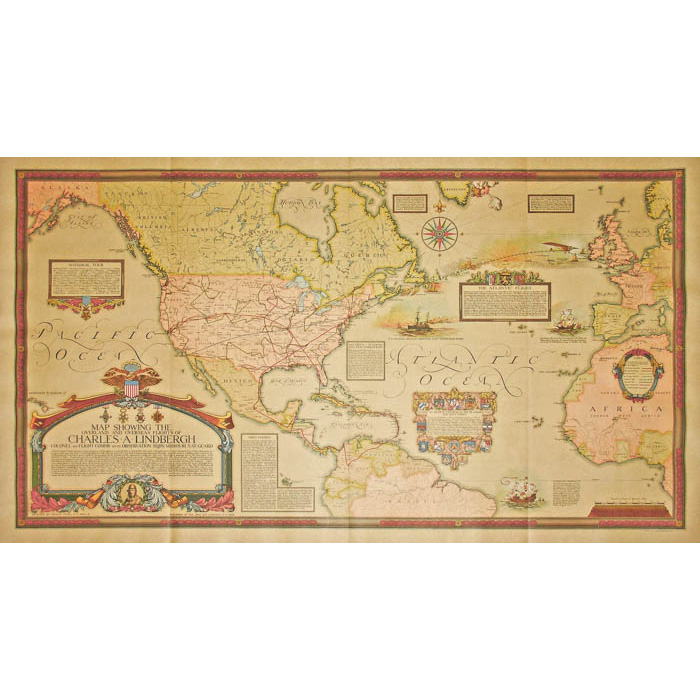
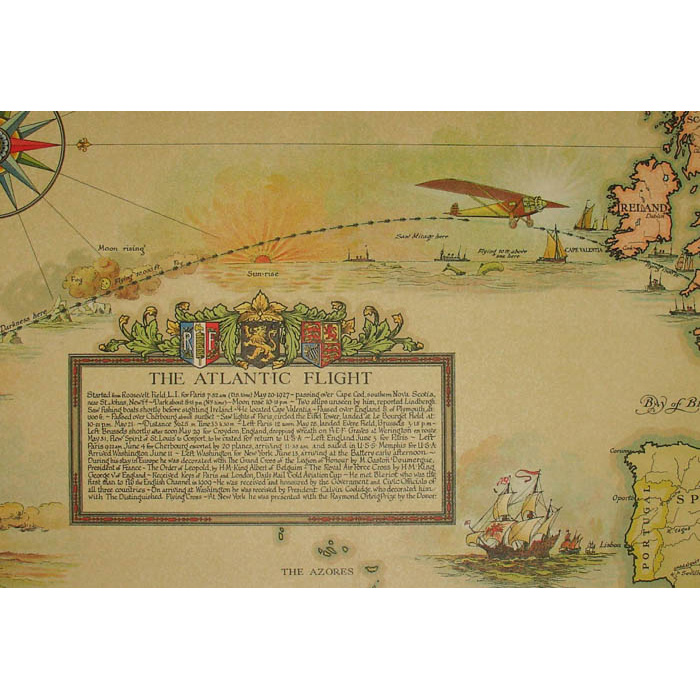
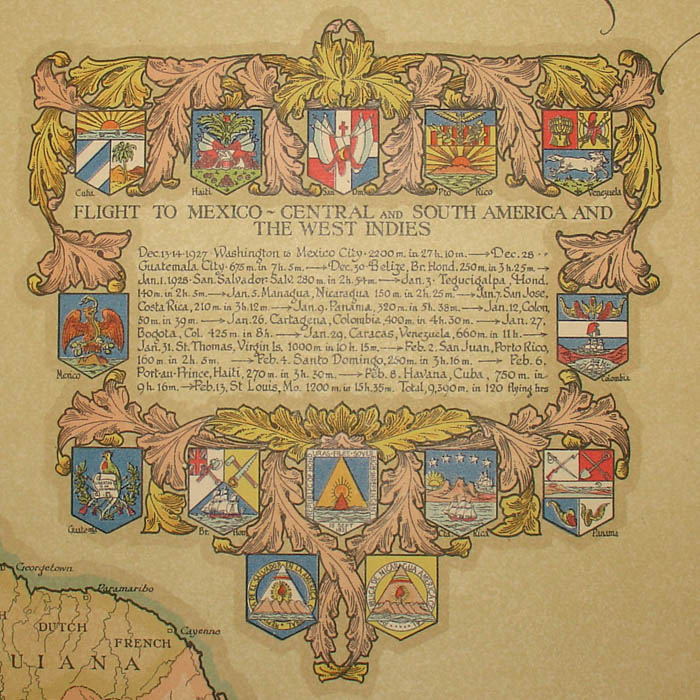
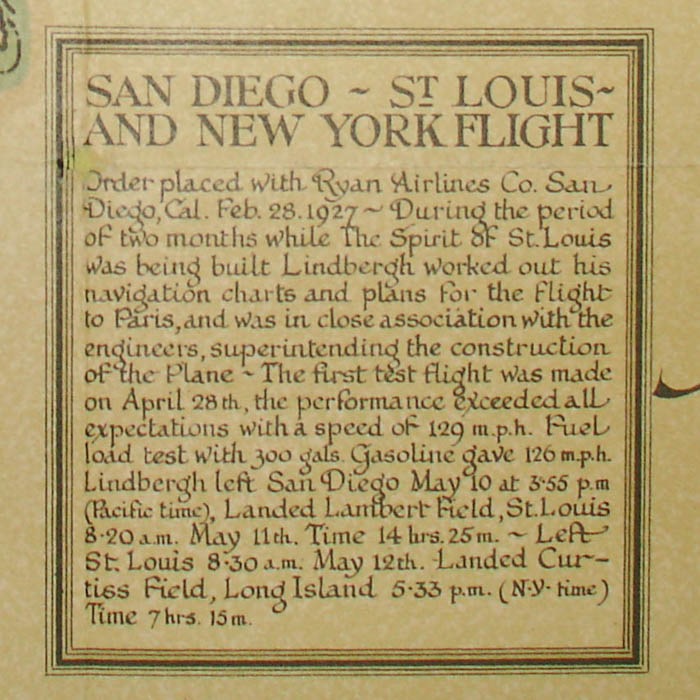
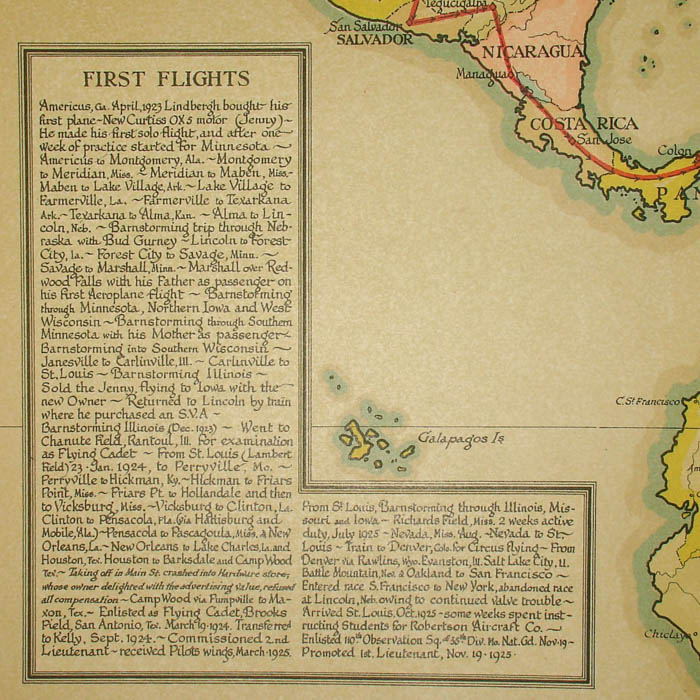
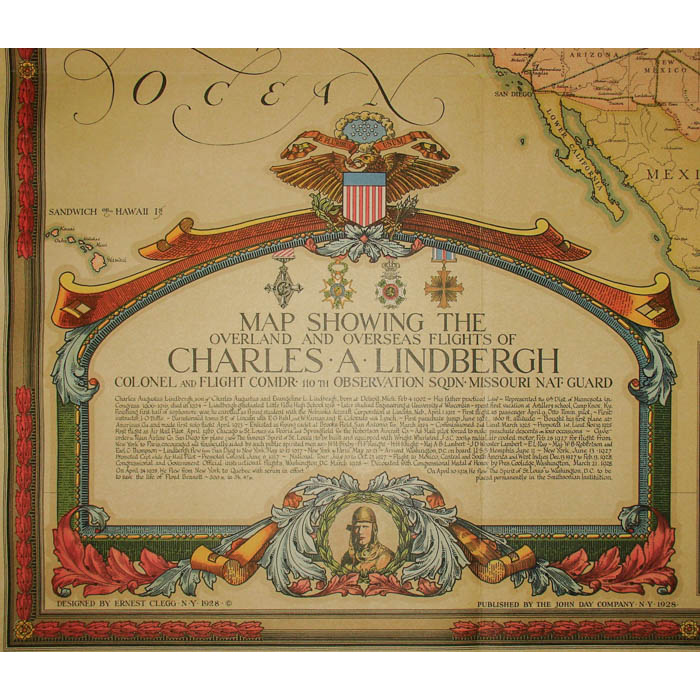
In the spring of 1927, a number of pilots and airplane designers aspired to be the first to cross the Atlantic between New York and Paris nonstop, spurred on by ambition and the $25,000 Orteig prize offered by a New York businessman. It was a dangerous undertaking and other crews had disappeared or crashed to their deaths preparing for the attempt. The 25 year-old Lindbergh’s rivals were more seasoned and experienced than he, including Commander Richard E. Byrd, a Navy aviator and renowned polar explorer. The competitors gathered at the airfield on Long Island in mid May and waited for the right weather conditions. The impending event captured the public imagination, and crowds showed up each day hoping to see the start of an historic event. Lindbergh took off on May 20. After 33 hours in the air — flying solo, without sleeping, and coping with adverse weather conditions — he touched down at an airfield outside Paris. The event transformed the hitherto obscure airmail pilot into an international celebrity and hero. Although Lindbergh’s distance record was broken only a few weeks later by another pilot who made it to Berlin, it was Lindbergh whose story captured the popular imagination. In addition to the Orteig Prize, he received the Medal of Honor, the United States’ highest military decoration. Lindbergh went on to become an advocate for commercial aviation, a prize-winning author, international explorer, inventor and conservationist.
Ernest Clegg was a cartographer, painter, designer and illustrator. Born in England, he studied at the Birmingham School of Art there. In World War I he served as a captain in Bedfordshire Regiment of the British Army. Clegg was wounded during the Battle of Somme in 1916, but recovered and was able to witness the surrender of the German Navy in 1918. After the war, he returned to his Manhattan home, where he had earlier immigrated, and resumed his art career. During World War I he had witnessed firsthand the Battle of Jutland, which he commemorated in a painting about 20 years later, as reported in a 1937 article in Time. Clegg also drew upon his World War I experience to illustrate a limited edition publication of John McCrae’s famous poem In Flanders Field (1921), reissued in an expanded edition by Nabu Press in 2010.
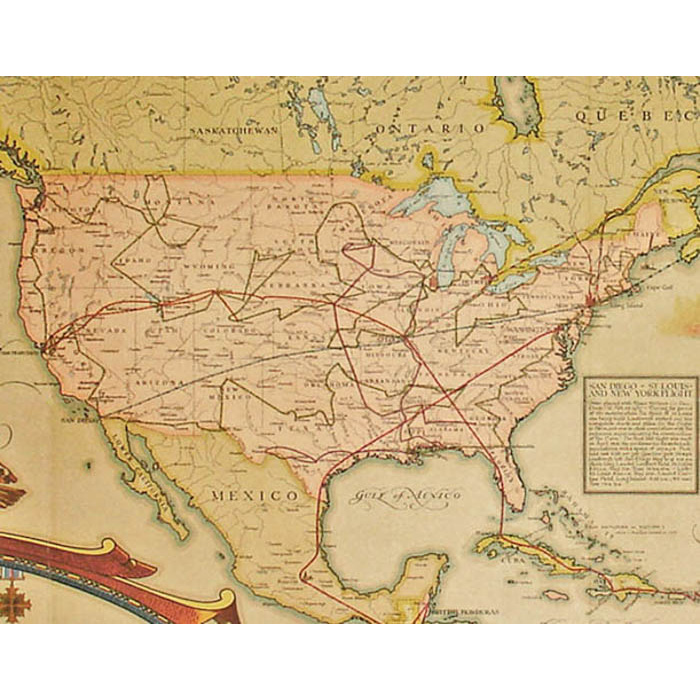
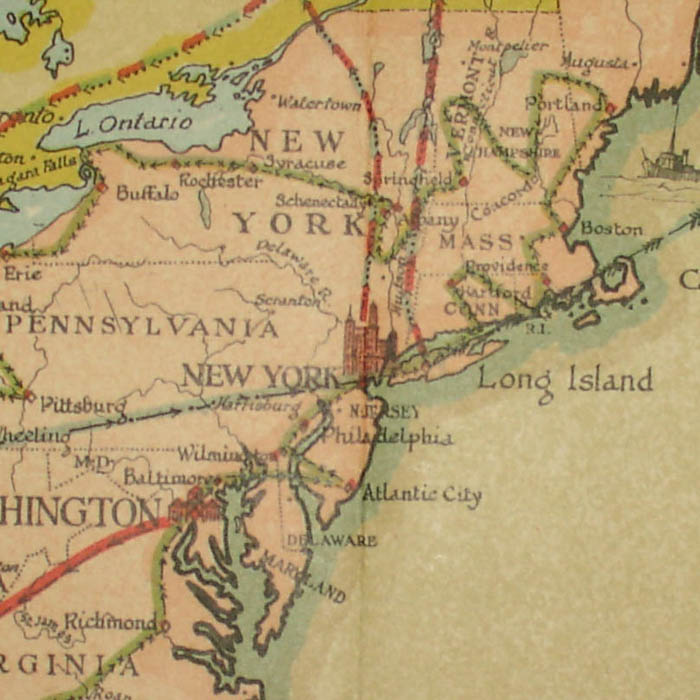
Clegg is probably best known for his pictorial maps that combined precise illustrations with historical facts and accuracy. His most renowned is A Map of Lindbergh’s Flights (1928), published as a wall map on rollers or folding. His other pictorial maps include the Ticonderoga Colonial battlefields, Washington, D.C. and environs (for the bicentenary of George Washington), a chart of the site for the America’s Cup Yacht Races of 1934, and a series of county maps of Great Britain published by The Countryman (1945-47).
Condition: Generally very good with only minor toning and handling. Folds as issued, now professionally flattened and backed on line with faint remaining crease lines from the folds.
References:
Allen, C.B. and Lauren D. Lyman. The Wonder Book of the Air. Chicago and Philadelphia: John C. Winston Co., 1939. 112-124.
“Art: Jutland on Canvas.” Originally in Time, February 8, 1937. Online at http://www.time.com/time/magazine/article/0,9171,883586,00.html (19 November 2010).
Falk, Peter Hastings, ed. Who Was Who in American Art. Madison, Connecticut: Sound View Press, 1985. p. 118.


![Isaac F. Pheils Map of the World with U. S. Supplement [Map Clock]](https://www.georgeglazer.com/wpmain/wp-content/uploads/2016/12/pheils-clock-map-300x300.jpg)
