

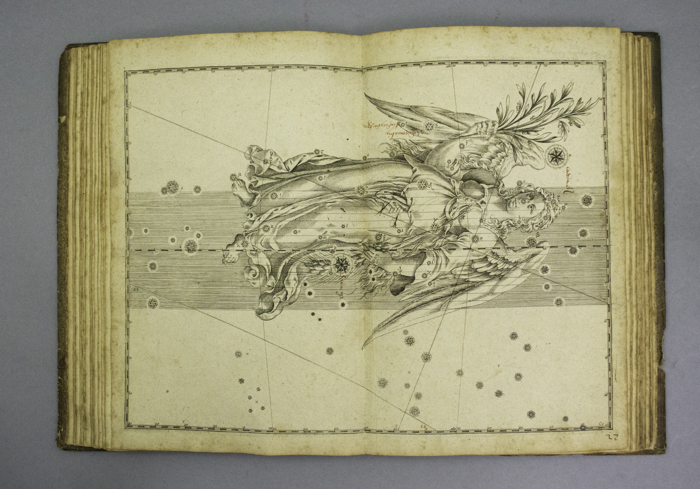
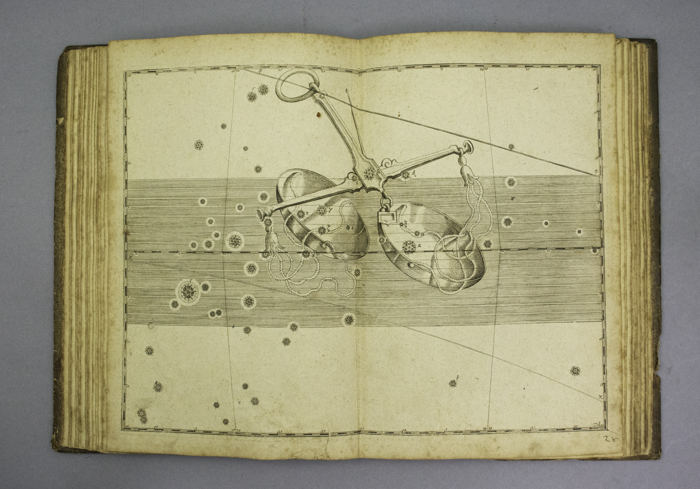
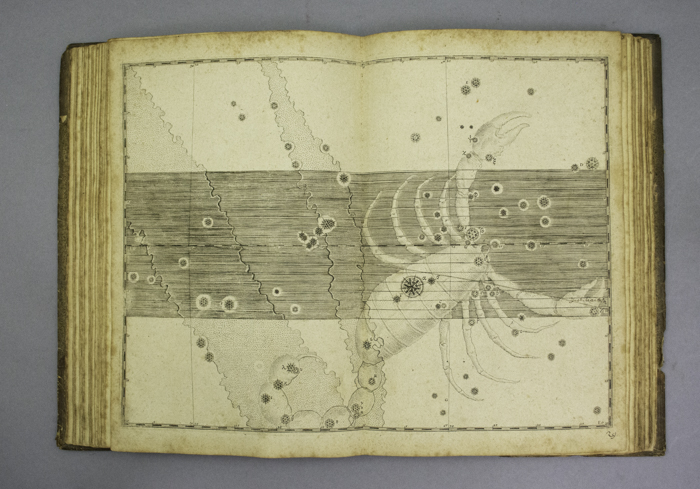
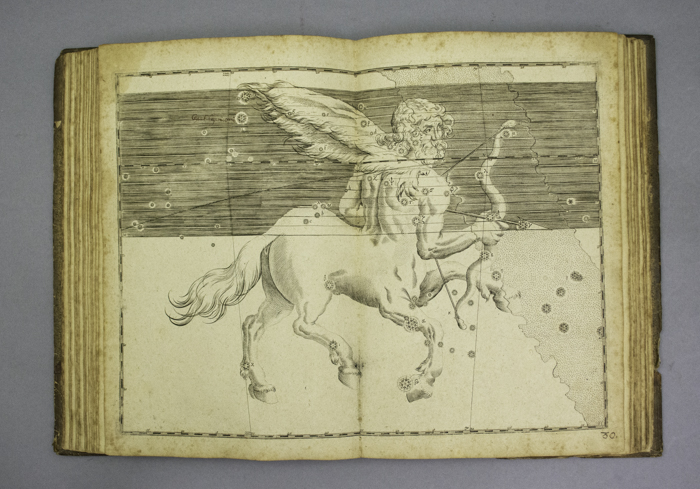
Description
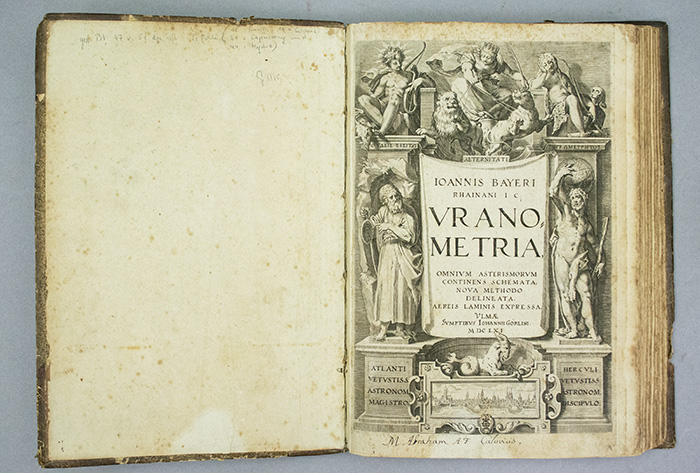
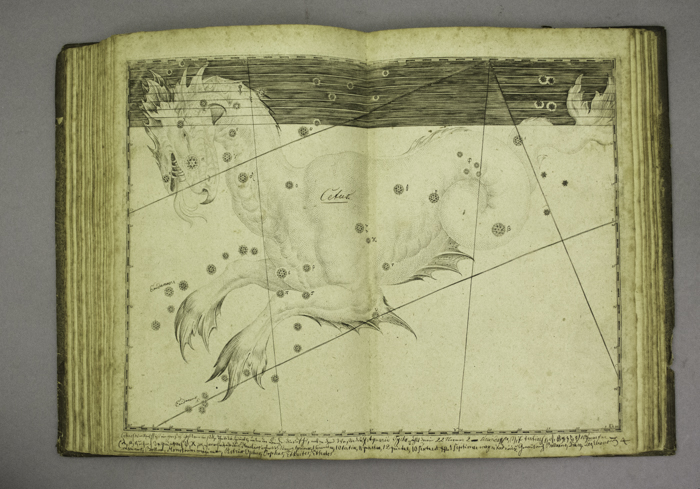
Notably, based on contemporaneous manuscript inscriptions in this particular atlas, it originally belonged to Abraham Calovius (1612-1686) a major German theologian, philosopher, and author. Thereafter it belonged to two significant German men of science: Christian Vater (1651-1732) and then Christoph Arnold (1650-1719). Then it became the property of an anonymous owner in 1753. The last known owner of import was Oswald Weigel, a German antiquarian book dealer — whose stamp is on the inside front cover — around the turn of the 20th Century. This atlas, with this impressive provenance, contains 45 of the original 51 charts still tightly bound in early, probably original folio with leather spine and corners and speckled boards. The other 6 charts apparently were excised at some point. Some of the celestial maps bear interesting contemporaneous ink manuscript astronomy notes in the margins and on the maps, almost certainly by one of the prior owners.
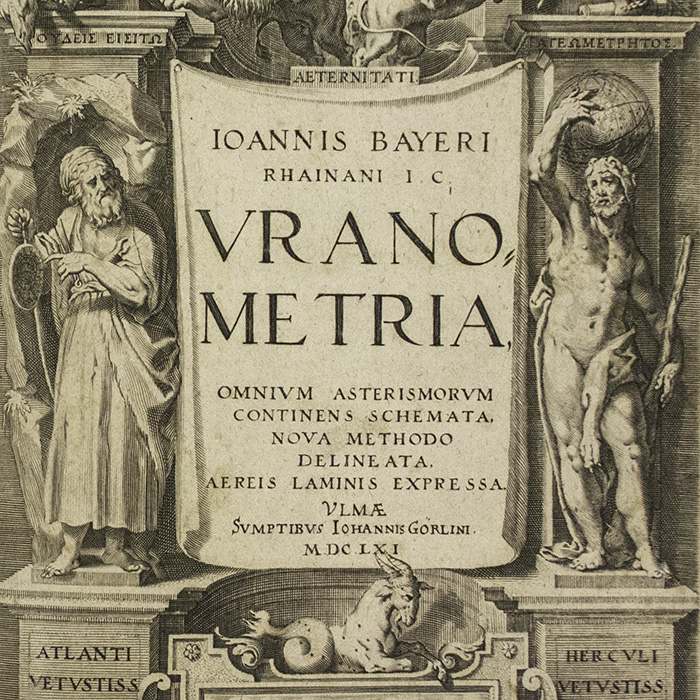
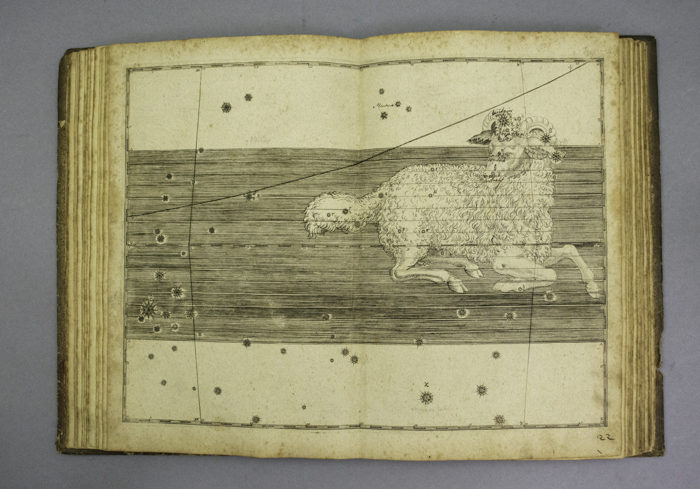
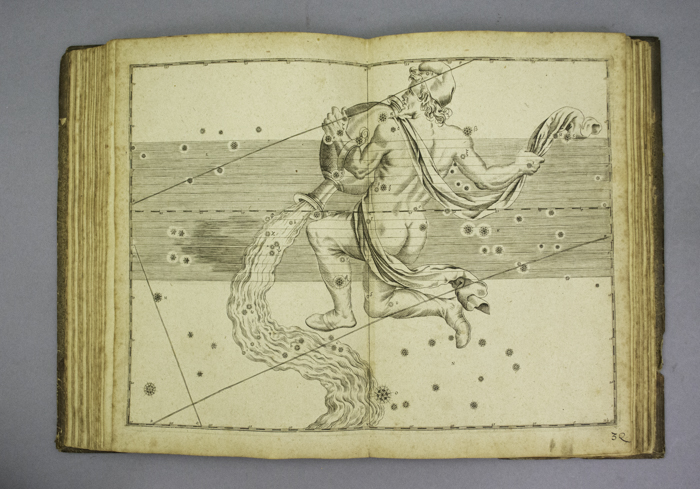
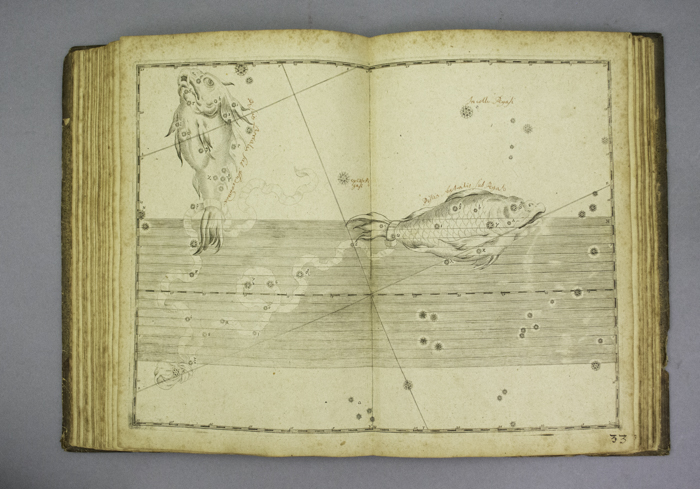
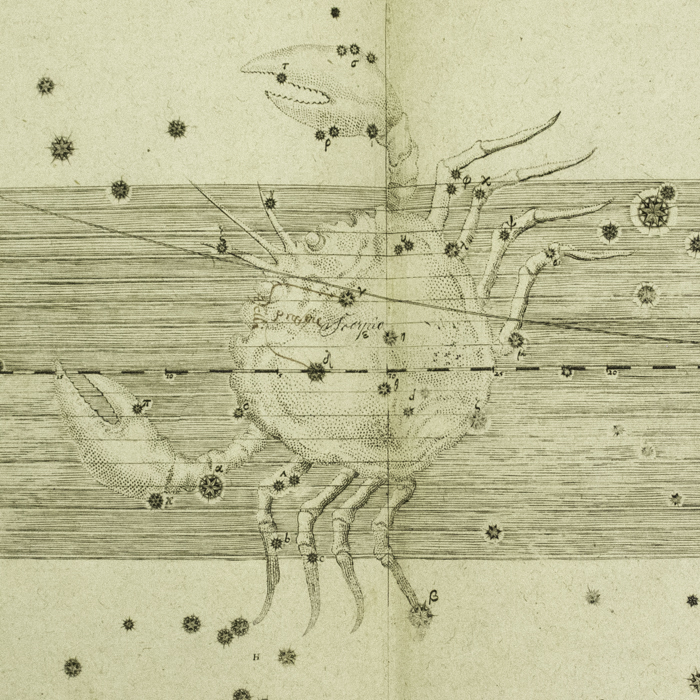
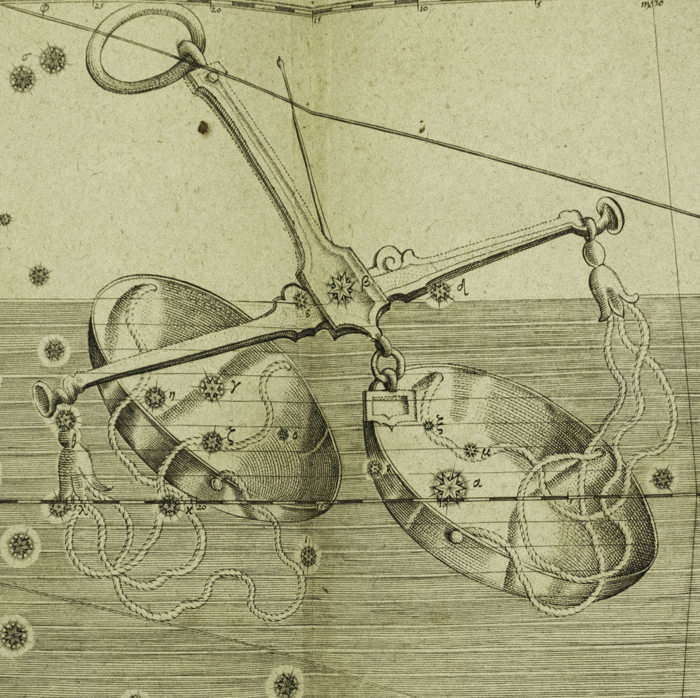
Bayer is listed on the title page as “Ioannis Bayeri Rhainani I.C.” which translates roughly to “Of Johann Bayer the Rhinelander, Lawyer.” Bayer retained Alexander Mair who skillfully engraved the 51 large-format prints with beauty and scientific precision. For Uranometria, Bayer derived the star positions from the then recently expanded star catalog of the renowned astronomer Tycho Brahe (1546-1601), which had been available in manuscript since 1598. Brahe’s influence could also have been observed on the early Dutch celestial globes of Petrus Plancius, Jodocus Hondius, and Willem Blaeu. The use of Brahe’s star observations enabled greater accuracy than that of preceding star atlases. One unusual aspect of Uranometria was that many of the constellations depicted as mythological persons or gods were engraved as seen from behind, as if the viewer were beyond the celestial spheres. Indeed, this method was often employed on celestial globes. Conversely, celestial charts traditionally had been rendered as facing the earth, as one would observe them looking up at the night sky. Uranometria was also innovative in introducing the practice of labeling stars by Greek and Latin letters, known as Bayer star designations, a system which is still used today. In the first edition of Uranometria, a table of stars was printed on the back of each engraving. Subsequent editions published in the 17th century, including one in 1639 and this example in 1661, changed this practice, instead printing the tables in a separate catalogue. This 1661 edition bears the legend “Sumptiru Johannis Gorlini” on the title page. This Latin inscription indicates that it was published by Johann Görlin (1635 -1663), a German printer and bookseller active at this time in Ulm, Germany.
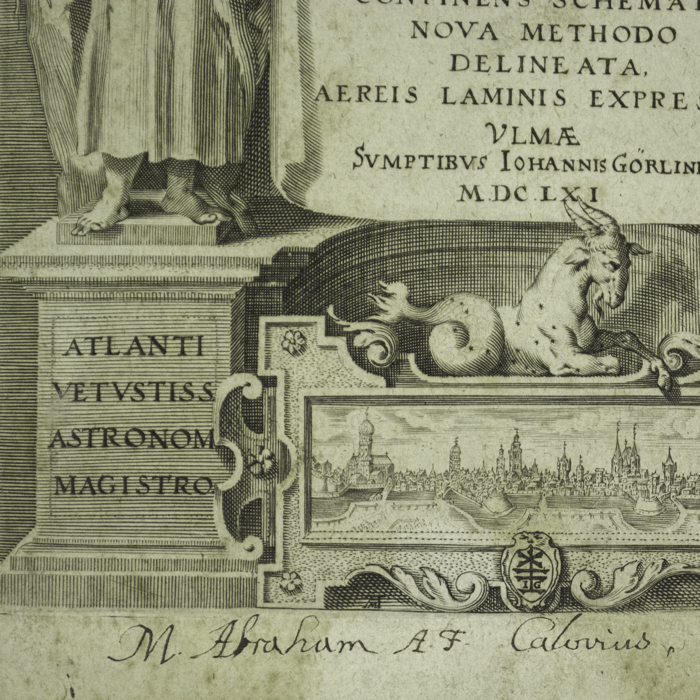
Remarkably, our particular atlas was originally owned by the famed theologian Abraham Calovius (1612–1686), an ardent defender of strict Lutheran orthodoxy. His name, likely in his own hand, is written in ink in the bottom margin of the title page as “M. Abraham AF Calovius.” “M.” likely stands for Magister, denoting a Master’s degree holder, common for academics/theologians. “A.F.” signifies Abrahami Filius, Latin for “Son of Abraham,” a common practice to distinguish lineages in historical records and signatures inasmuch as he was named after his father of the sme name. It is somewhat ironic that Calovius owned this Bayer atlas — a ground-breaking scientific work — in that he rejected the heliocentric model of the universe of Nicolaus Copernicus (1473 –1543) on religious grounds. Indeed, Colovius is famously known for saying “Who will venture to place the authority of Copernicus above that of the Holy Spirit?”
Calovius was born, in Mohrungen, Ducal Prussia (modern-day Morąg, Poland). He held several influential positions, including professor of theology at the University of Königsberg (1637–1643), rector and pastor in Danzig (1643–1650), and finally as a professor, general superintendent, and dean at the University of Wittenberg until his death. Calovius was an incredibly prolific author, most notably the following three works. Systema locorum theologicorum (12 volumes, 1655–1677) was his chief dogmatic work, considered the “climax of Lutheran scholasticism.” Biblia Illustrata (4 volumes, 1672–1676) was a massive exegesis on the entire Bible, defending the doctrine of verbal inspiration and refuting the more liberal views of the philosopher Hugo Grotius. Die Deutsche Bibel (The Calov Bible) was a popular commentary that combined Martin Luther’s writings and translation of the Bible in German with Calovius’s own analysis.
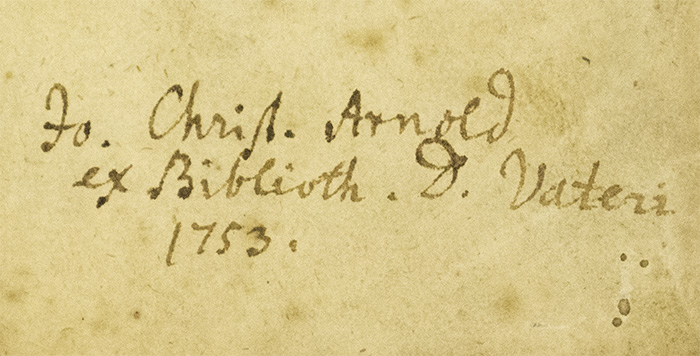
After Calovius, this book was owned by the German physician and botanist Christian Vater (1651-1732). This is indicated by an ink inscription on the front free end paper as follows: “Fo. Christ. Arnold ex Biblioth. D. Vateri 1753.” In other words Christoph Arnold acquired the atlas from the library collection of Vater. In this inscription “Fo.” is short for folio, referring to a large book in which the sheet of paper is folded only once. “Biblioth.” is a common abbreviation for the Latin word bibliotheca, in reference to a collection of books, often indicating ownership. “Ex” before Biblioth in the context of the inscription means it was formerly in that library or ownership. The “D.” in D. Vateri stands for Doctor (or the Latin Dominus for Doctor), signifying Vater’s title as a medical doctor and professor. Vateri is a Latinized version of Vater’s name, who was often referenced in historical texts as D. Christianus Vaterus or D. Christian Vater. He is best known for his influential medical career at the University of Wittenberg and as the father of the world-renowned anatomist Abraham Vater. We presume that the “Christ. Arnold” in the inscription is Christoph Arnold (1650-1719), the German astronomer known for his detailed observations of the Great Comet of 1683 and transit of Mercury in 1690 and for his correspondence with other astronomers. The date 1753 appearing in the inscription is after the death of both Vater and Arnold. It presumably is the notation of the unknown owner of the folio following Arnold, who recorded the above prior chain of ownership when he acquired it.
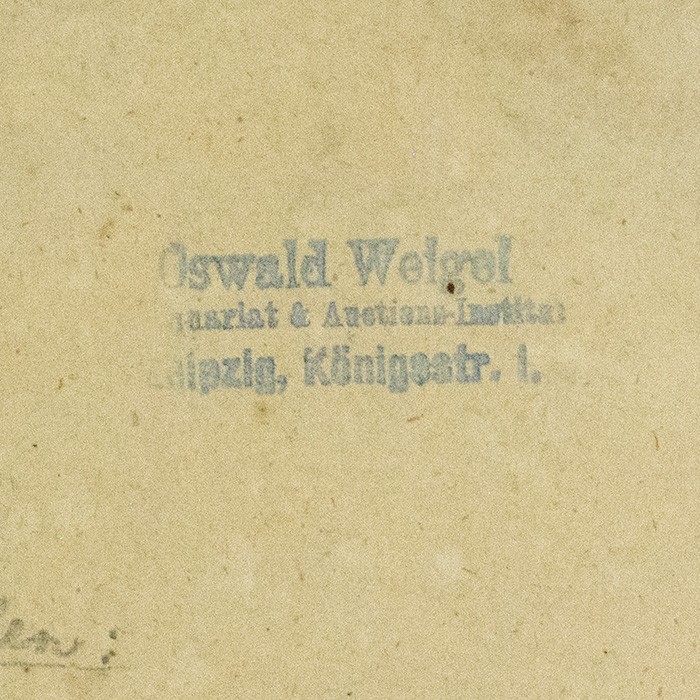
On the inside front cover is a blue ink ownership stamp reading “Oswald Weigel/ Antiquariat & Auktions-institut/ Leipzig, Kunigsstr. 1.” Oswald Weigel had a prominent antiquarian bookshop (Antiquariat) and auction house located in Leipzig, Germany at the turn of the 20th Century, specializing in scientific, natural history, and academic literature. The founder of this business, Theodor Oswald Weigel (1812–1881), was a well-known collector of early woodcuts and incunables.
Full title: Uranometria: omnium asterismorum continens schemata, nova methodo delineata, aereis laminis expressa. [Uranometria, containing charts of all the constellations, drawn by a new method and engraved on copper plates].
Inscription on title page in manuscript ink: “M. Abraham AF Calovius.”
Inscription on front free endpaper in manuscript ink: “Fo. Christ. Arnold ex Biblioth. D. Vateri 1753.”
Blue ink ownership stamp, inside front cover: “Owald Weigel/ Antiquariat & Auktions-institut/ Leipzig, Kunigsstr. 1.”
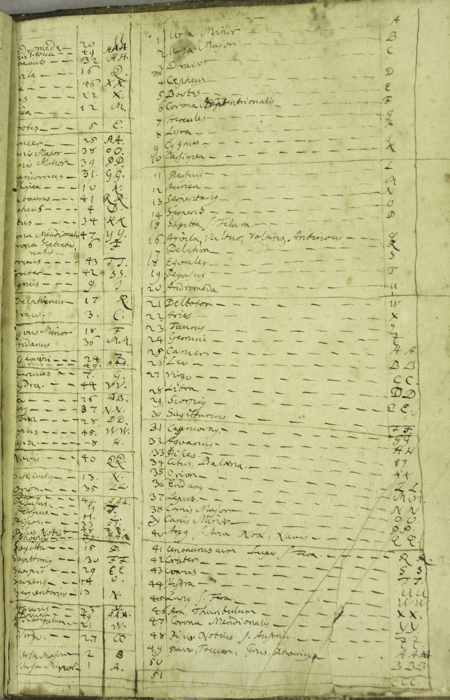
Condition: Contents generally very good with the usual overall light toning, wear, handling. Contemporaneous ink manuscript notes relating to astronomy on some of the maps, and contemporaneous manuscript index of maps on rear free end paper. Provenance inscriptions on front free end paper and title page. Blue ink ownership stamp on inside front cover. Leather spine, corners, and speckled boards considerably handled, abraded, chipped, dented and worn, but still solidly intact, the contents tight.
List of Plates
Northern Constellations (Plates 1-22)
Plate 1: Ursa Minor (Little Bear)
Plate 2: Ursa Major (Great Bear)
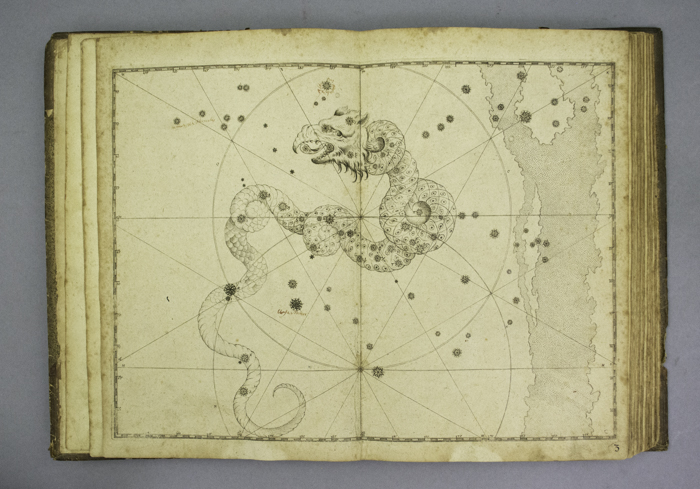
Plate 3: Draco (Dragon)
Plate 4: Cepheus
Plate 5: Boötes
Plate 6: Corona Borealis (Northern Crown)
Plate 7: Hercules
Plate 8: Lyra (Lyre) (1 of 6 plates lacking in offered atlas)
Plate 9: Cygnus (Swan)
Plate 10: Cassiopeia (1 of 6 plates lacking in offered atlas)
Plate 11: Perseus
Plate 12: Auriga (Charioteer) (1 of 6 plates lacking in offered atlas)
Plate 13: Ophiuchus (Serpent bearer)
Plate 14: Serpens (Serpent) (1 of 6 plates lacking in offered atlas)
Plate 15: Sagitta (Arrow)
Plate 16: Aquila (Eagle)
Plate 17: Delphinus (Dolphin)
Plate 18: Equuleus (Little Horse)
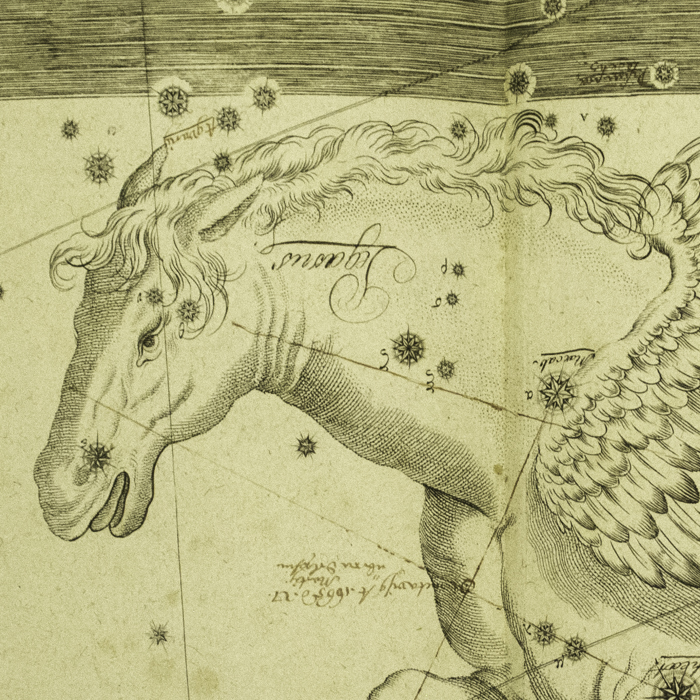
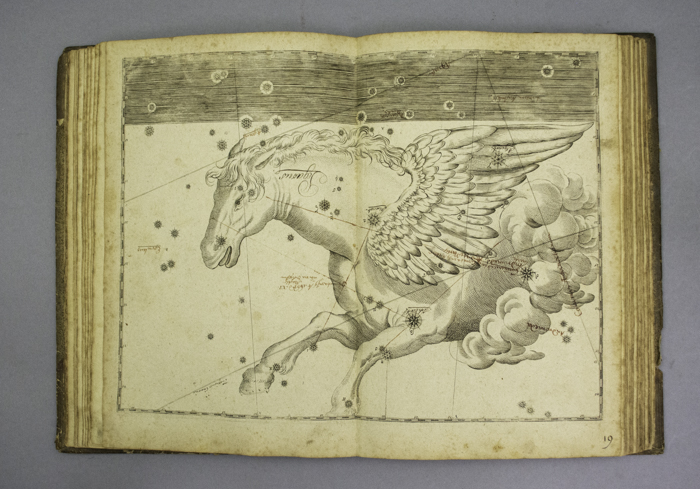
Plate 19: Pegasus
Plate 20: Andromeda
Plate 21: Triangulum (Triangle)
Zodiacal Constellations (Plates 23-34)
Plate 22: Aries
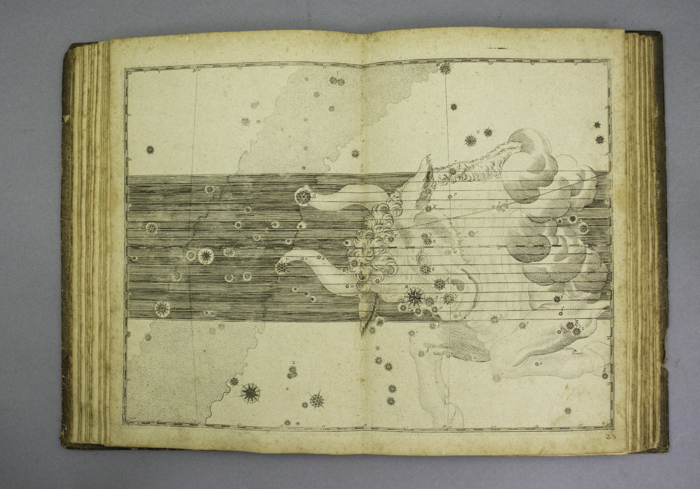
Plate 23: Taurus
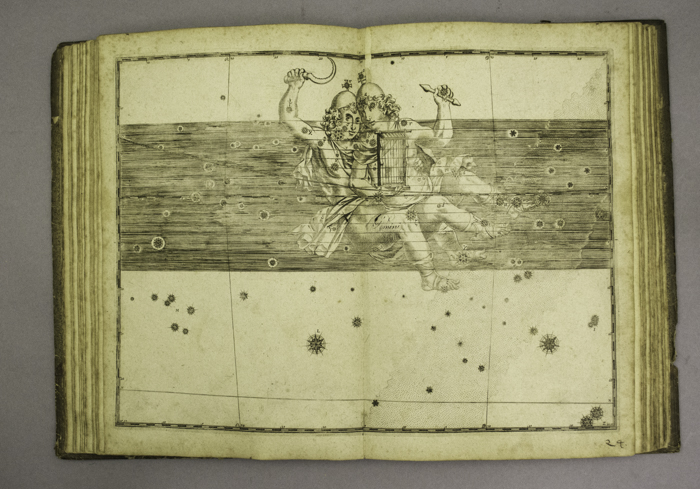
Plate 24: Gemini
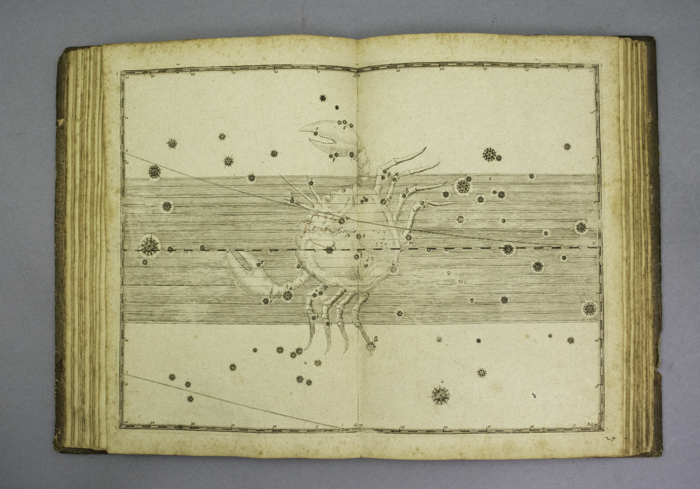
Plate 25: Cancer
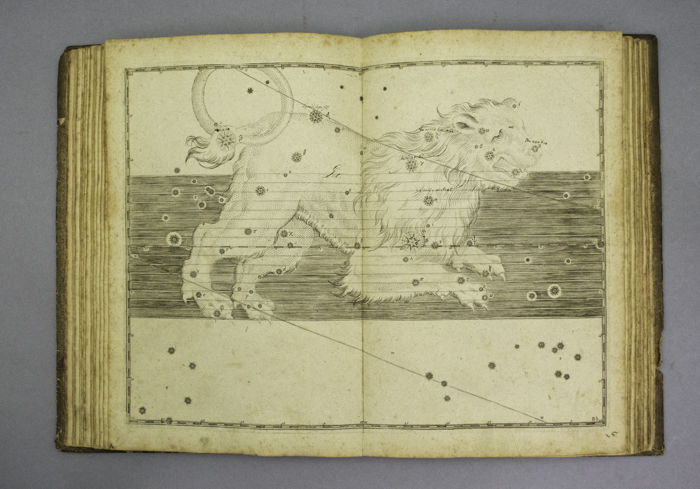
Plate 26: Leo
Plate 27: Virgo
Plate 28: Libra
Plate 29: Scorpius
Plate 30: Sagittarius
Plate 31: Capricornus (1 of 6 plates lacking in offered atlas)
Plate 32: Aquarius
Plate 33: Pisces
Southern Constellations (Plates 35-48)
Plate 34: Cetus
Plate 35: Orion
Plate 36: Eridanus (River)
Plate 37: Lepus (Hare)
Plate 38: Canis Major (Greater Dog)
Plate 39: Canis Minor (Lesser Dog)
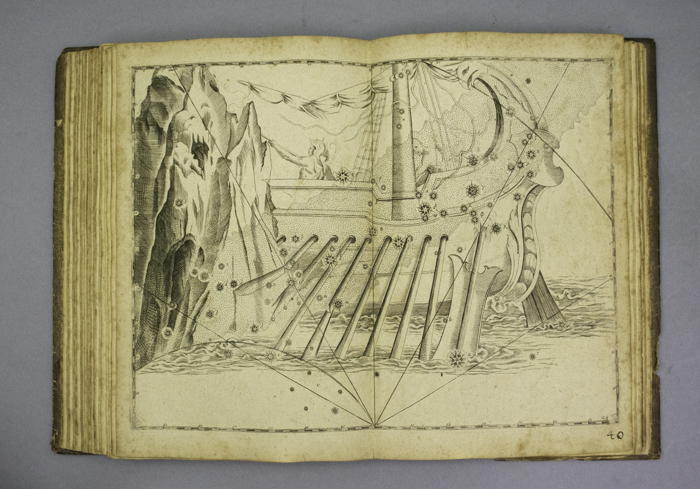
Plate 40: Argo Navis (Ship)
Plate 41: Centaurus
Plate 42: Crater
Plate 43: Corvus
Plate 44: Hydra (1 of 6 plates lacking in offered atlas))
Plate 45: Lupus (Wolf)
Plate 46: Ara (Altar)
Plate 47: Corona Australis (Southern Crown)
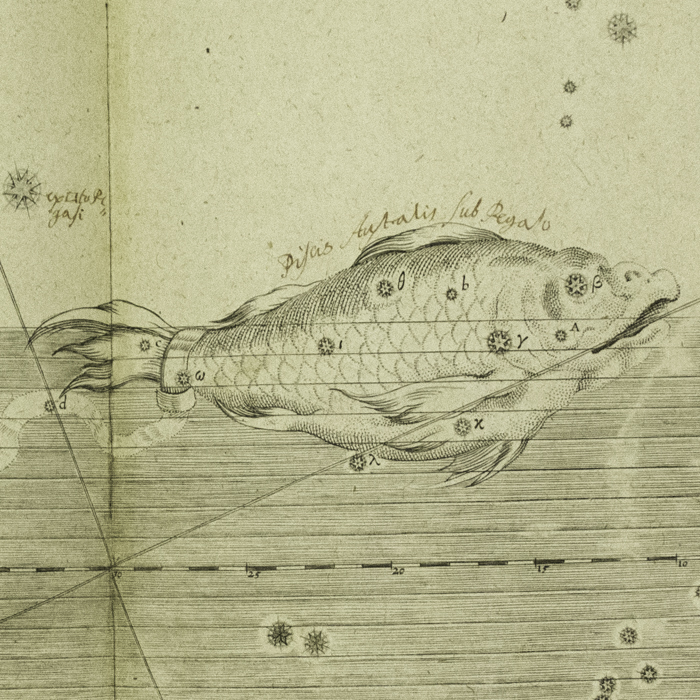
Plate 48: Piscis Austrinus (Southern Fish)
Supplementary Plates (Plates 49-51)
Plate 49: (The 12 new southern constellations discovered by Keyser/Houtman)
Plate 50: (Northern Hemisphere projection)
Plate 51: (Southern Hemisphere projection)
References:
WallHapp Catalogue, Johann Bayer, Uranometria, https://www.wallhapp.com/urano/johann-bayer (23 Dec. 2025)


