


Description
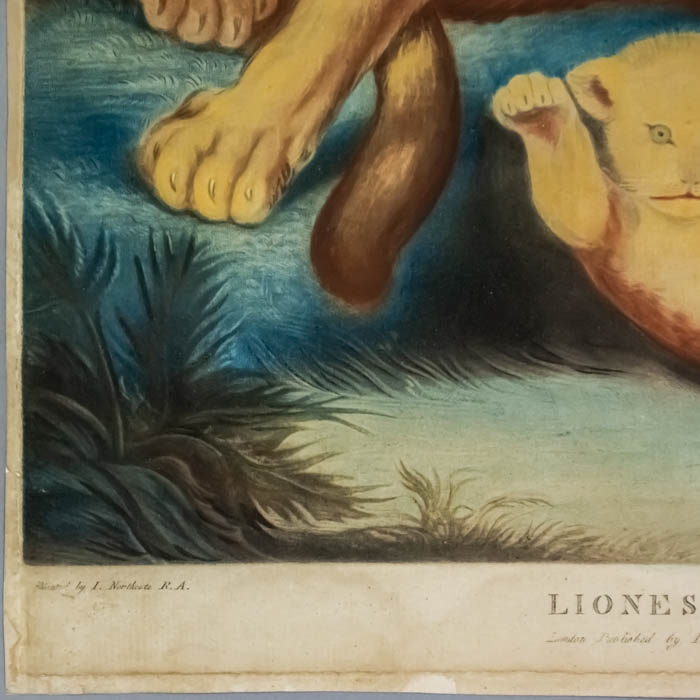
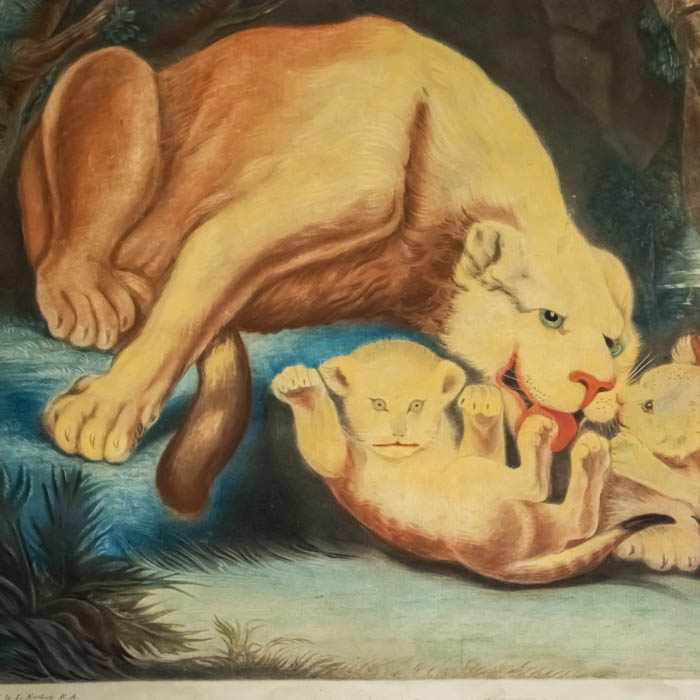
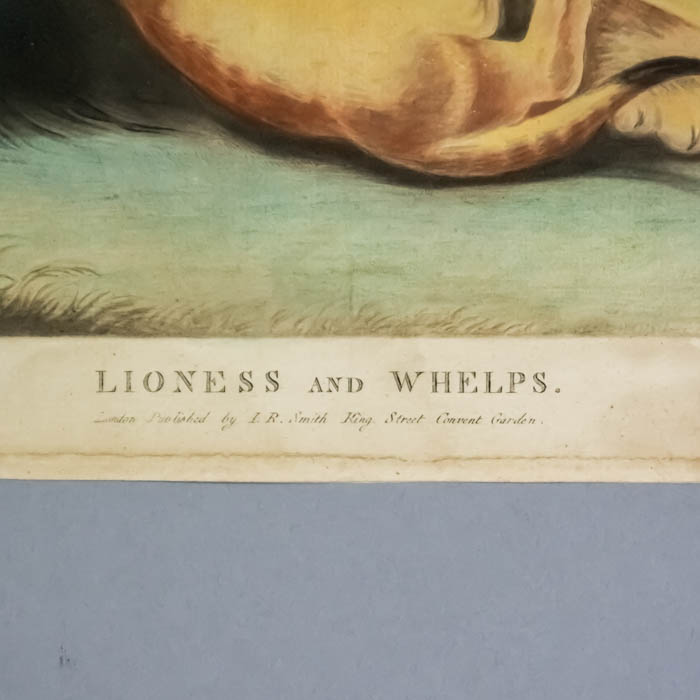
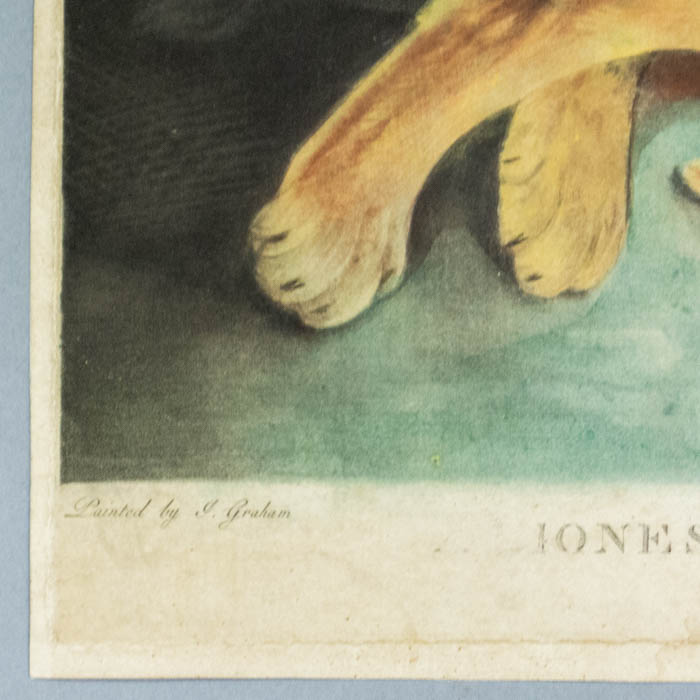
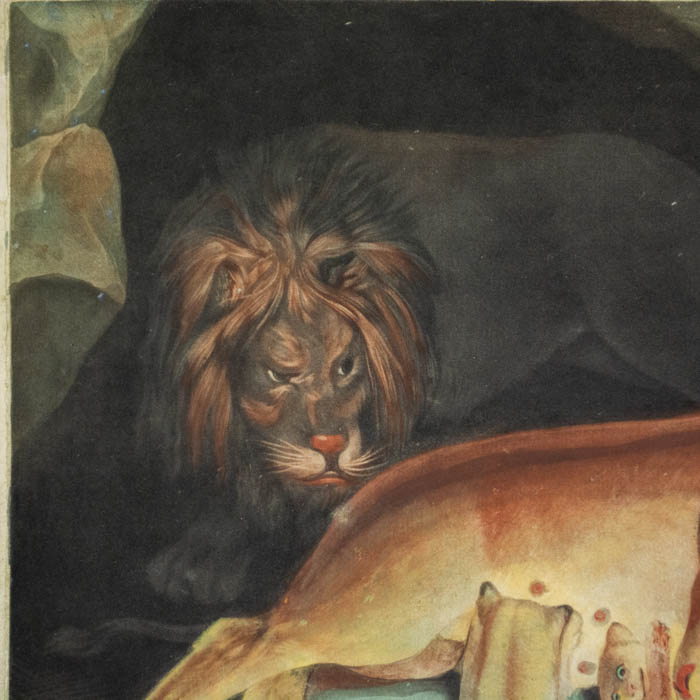
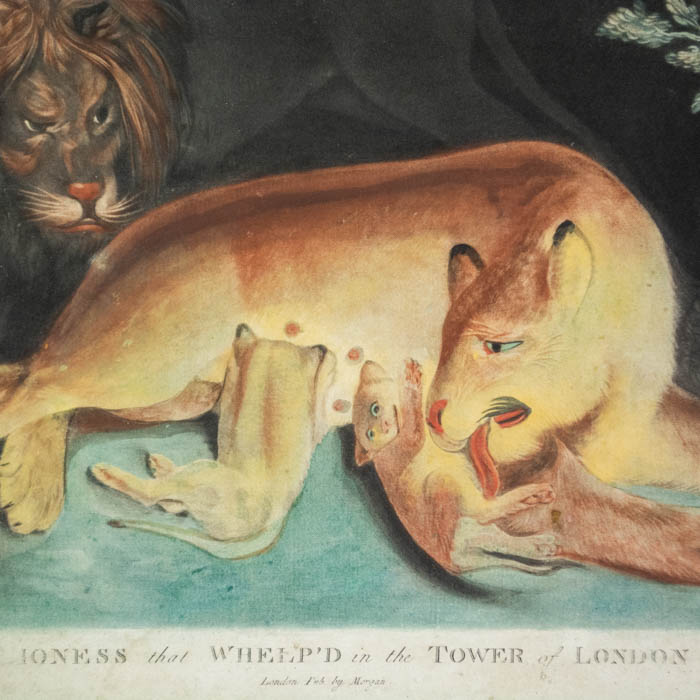
Commonly referred to as the “first zoo in London,” the Royal Menagerie was founded by King John of England (1199-1216) as a permanent site for the monarchy’s growing collection of exotic animals. Originating from a medieval tradition of exchanging rare and strange animals as courtly gifts, the Royal Menagerie at the Tower of London lasted for over 600 years as a display of the power and worldly knowledge of the British monarchs. These animals were both curiosities for the court and special attractions for everyday Londoners, who could pay to catch a rare glimpse of animals such as lions, tigers, monkeys, elephants, zebras, and even polar bears. The lions were held in position of honor at the western entrance to the Tower, known as the Lion Tower, and would greet visitors as a formidable and majestic symbol of the British monarchy. The Royal Menagerie was eventually closed in response to concerns over animal welfare in 1835, with the remaining animals sold to zoos.
John Graham (1754-1817) was an 18th century Scottish painter trained at the Royal Academy in London. After repeated failed attempts to obtain associate membership to the Royal Academy, Graham returned to Edinburgh, Scotland to work as a teacher of art while continuing to paint historical and biblical scenes, portraits, and landscapes.
James Northcote, R.A. (1746-1831) was an English painter and writer. Arriving in London in 1771 a self-taught artist, he entered the Royal Academy Schools and joined the eminent painter Joshua Reynolds as a pupil and assistant. He remained with Reynolds until 1776, during which time he exhibited portraits at the Royal Academy. Reynolds remained a major stylistic influence on Northcote through much of his career. Northcote’s later years focused on dramatized animal subjects in a natural survival setting, such as Leopards, Dogs and Heron and Lion, and Tiger and Crocodile. Northcote’s historically valuable Memoirs of Sir Joshua Reynolds were published in 1813.
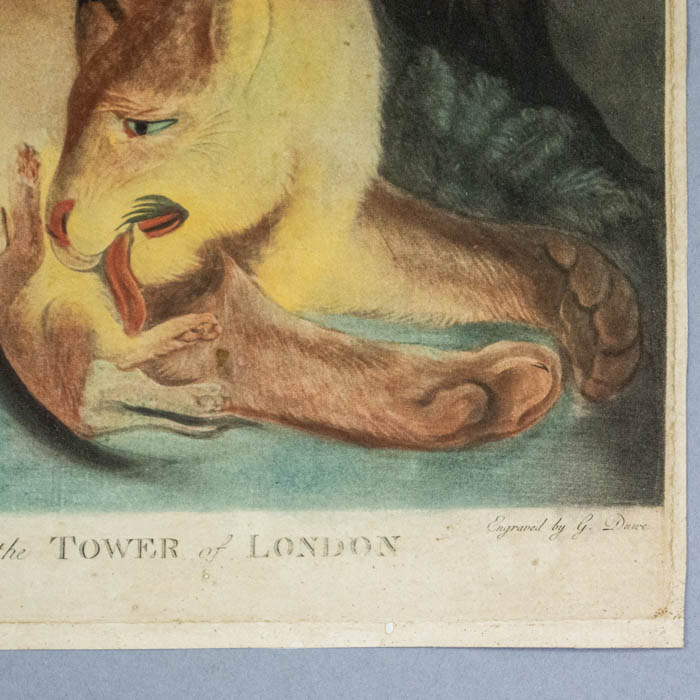
George Dawe (1781-1829) was an English painter best known for his extensive portraits of Russian generals who fought against Napoleon’s invasion of Russia. A graduate of the Royal Academy of Arts and recipient of the 1803 Royal Academy Schools Gold Medal, George Dawe was an associate member of the Royal Academy and a prolific scholar and collector, interested in old masters, linguistics, literature, and philosophy. After early work as a printmaker, Dawe was eager to finance his lifestyle through portrait commissions of European aristocrats. Upon arriving in St. Petersburg, he was commissioned by Russian Emperor Alexander I to paint over 300 commemorative for the military collection of the Winter Palace. Despite his British origins, Dawe’s art legacy is now tied to Russia: Most of his paintings now belong to the Hermitage Museum and Dawe remains a well-studied, respected art historical figure in Russia.
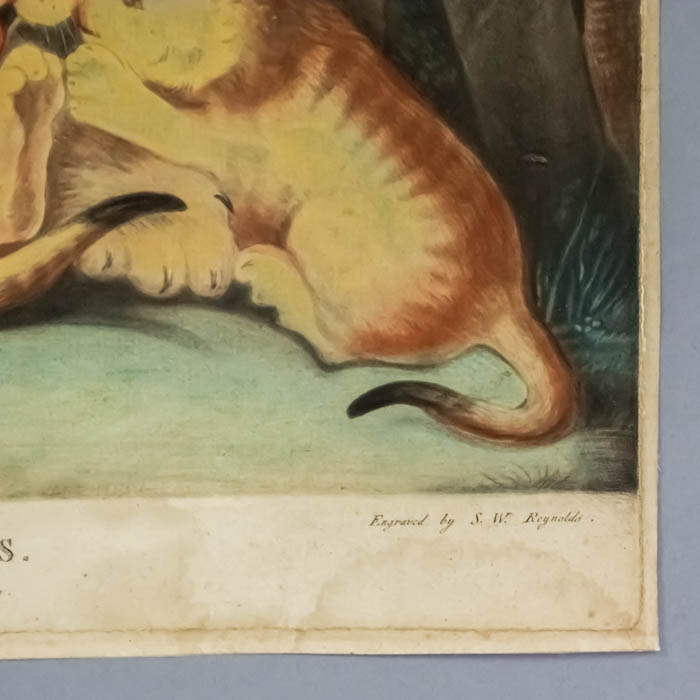
Samuel William Reynolds (1773-1835) was a mezzotint engraver and landscape painter popular in both Britain and France. He studied in the schools of the Royal Academy and trained under the famed mezzotint engravers Charles Howard Hodges and John Raphael Smith. Reynolds was a prolific engraver, known for his ability to combine techniques with ease, and commonly engraved Northcote’s animal paintings as well as portraits by contemporaries such as Sir Joshua Reynolds, and Old Masters. Today, there are over 400 examples of his works in the collection of the National Portrait Gallery, London.
References:
“A Lioness that Whelp’d in the Tower of London.” The British Museum. https://www.britishmuseum.org/collection/object/P_1872-0713-2 (9 December 2024).
“George Dawe.” The British Museum. https://www.britishmuseum.org/collection/term/BIOG24665 (9 December 2024).
“John Graham.” The British Museum. https://www.britishmuseum.org/collection/term/BIOG63468 (9 December 2024).
“Samuel William Reynolds.” Wikipedia.
https://en.wikipedia.org/wiki/Samuel_William_Reynolds (9 December 2024).
“The Royal Menagerie at the Tower of London.” Historic Royal Palaces. https://www.hrp.org.uk/tower-of-london/history-and-stories/the-tower-of-london-menagerie/#gs.ieu11j (5 December 2024).


