



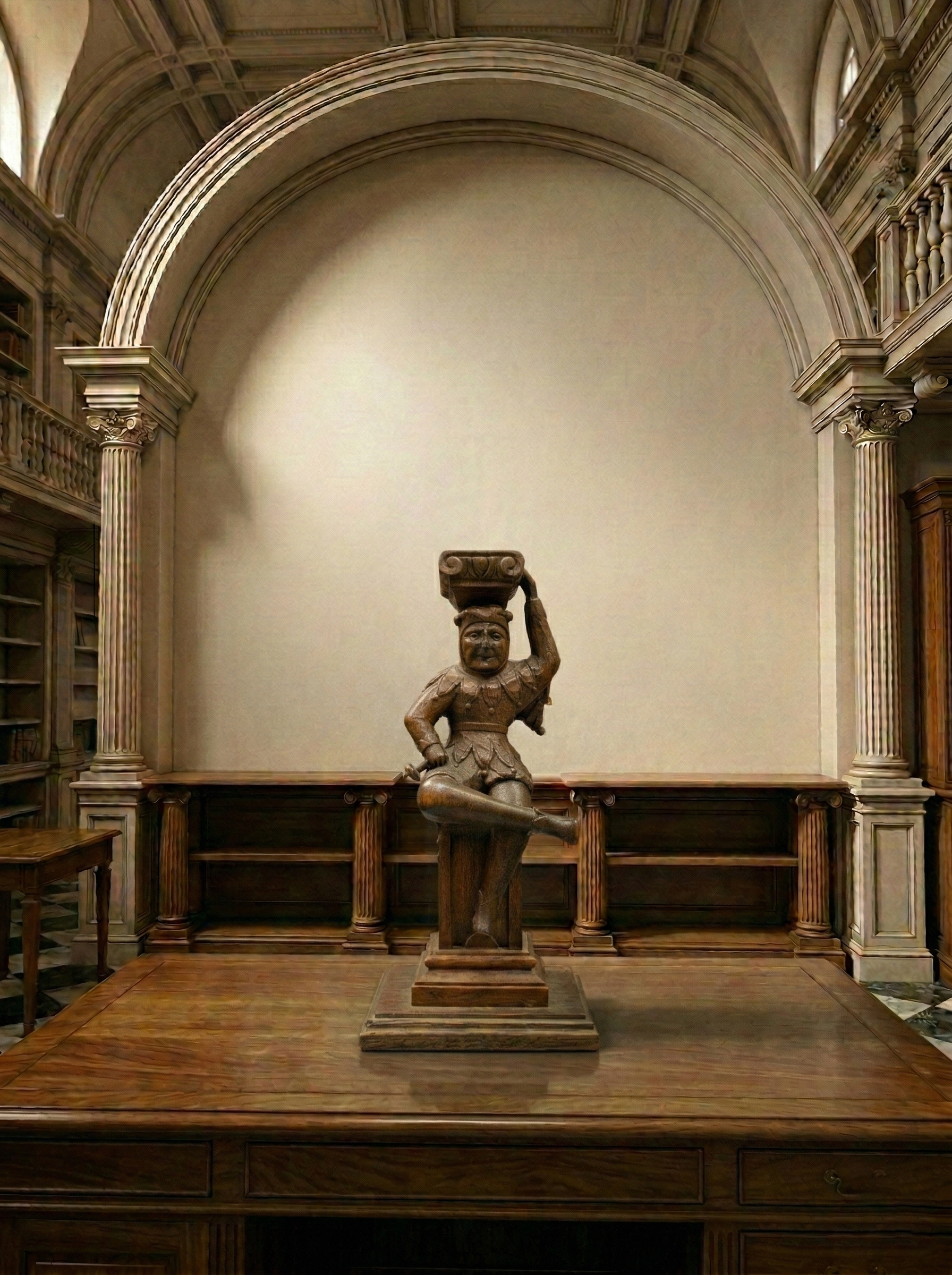
Description
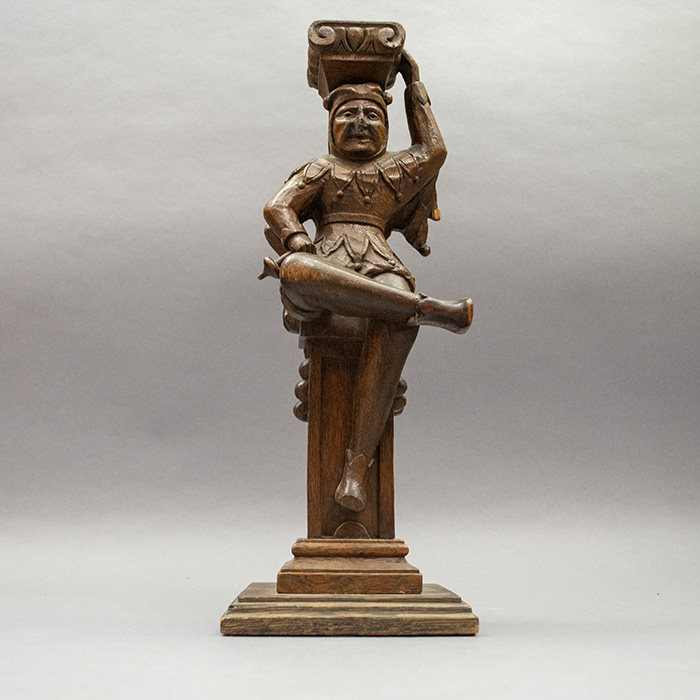
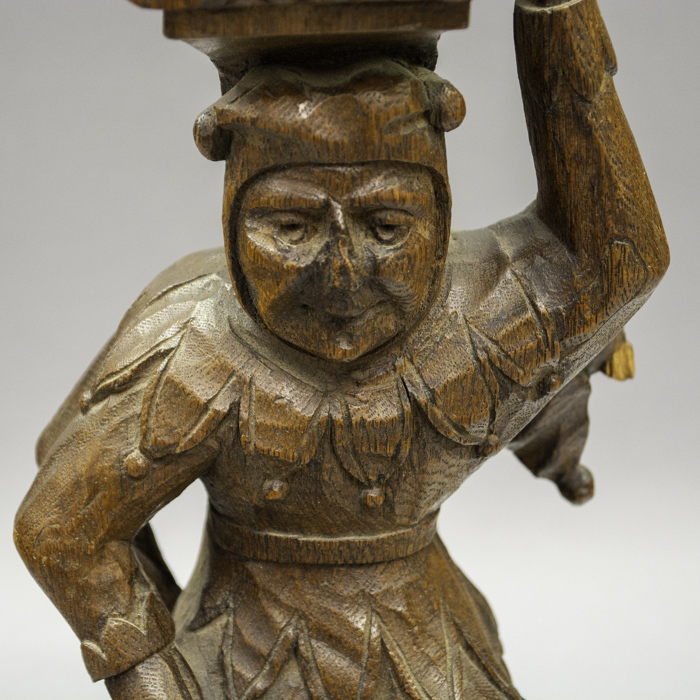
The fine detailed carving is characteristic of medieval motifs in Victorian Gothic revival and Jacobean furniture and architecture. In the 19th Century, the jester was a popular motif for dining rooms and libraries, often incorporated into the supports of court cupboards or sideboards. Unlike ecclesiastical carvings which often served moralizing purposes (such as in misericords), domestic carvings of this period were intended to evoke the joviality and feasting of the feudal hall.
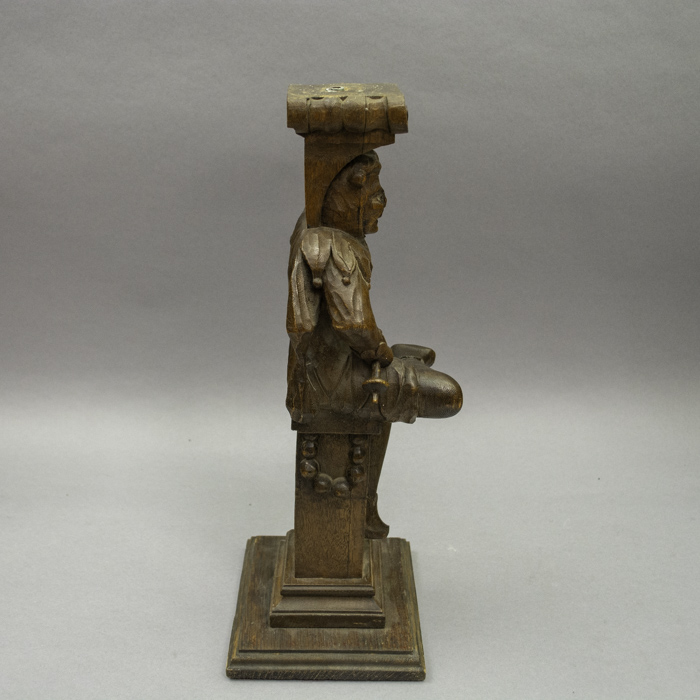
Historically, the court jester or “licensed fool” held a unique social position in the medieval and Renaissance courts. Shielded by the “insanity” implied by his motley, the jester was the only member of the court permitted to mock the monarch or speak uncomfortable truths without fear of retribution. The marotte carried by this figure acts as a satirical mirror to the King’s royal scepter; where the King’s scepter symbolized divine power, the fool’s bauble symbolized the absurdity of the human condition.
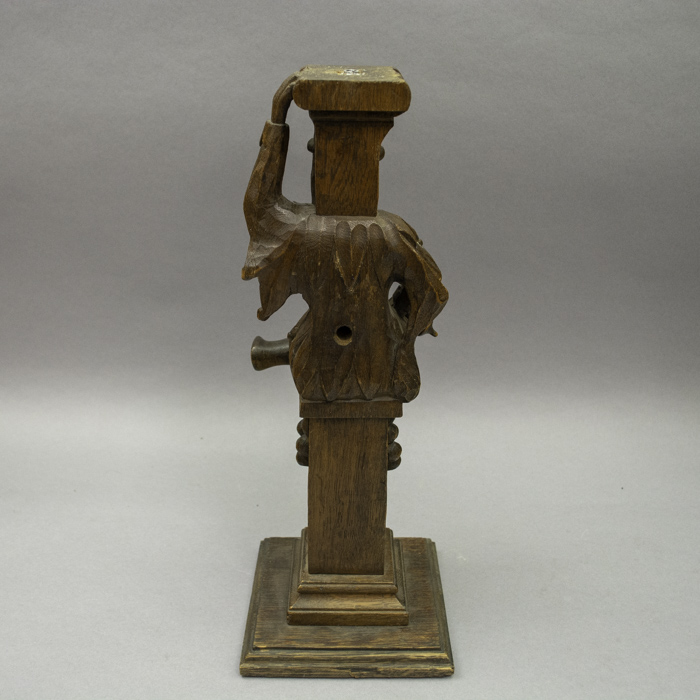
Condition: Generally very good antique condition commensurate with age and wear associated with furniture and architectural remnants. Some greater abrasions, wear, chipping, minor losses, particularly projecting and finer more vulnerable parts of the carving including the jester’s nose and a few tips of the cap. Hole later drilled in back and in top when it was mounted as a lamp. Overall presents nicely with a pleasant patina to the wood. We can have all of the losses and holes restored for approximately $300 additional.
References:
• “Lot 16: A late 17th Century Oak Press Cupboard (with later carved figures).” Bonhams, The Oak Sale, 2024. [Example of jester iconography in furniture supports].
• Southworth, John. Fools and Jesters at the English Court. Sutton Publishing, 1998. (See discussion on the iconography of the marotte).


