
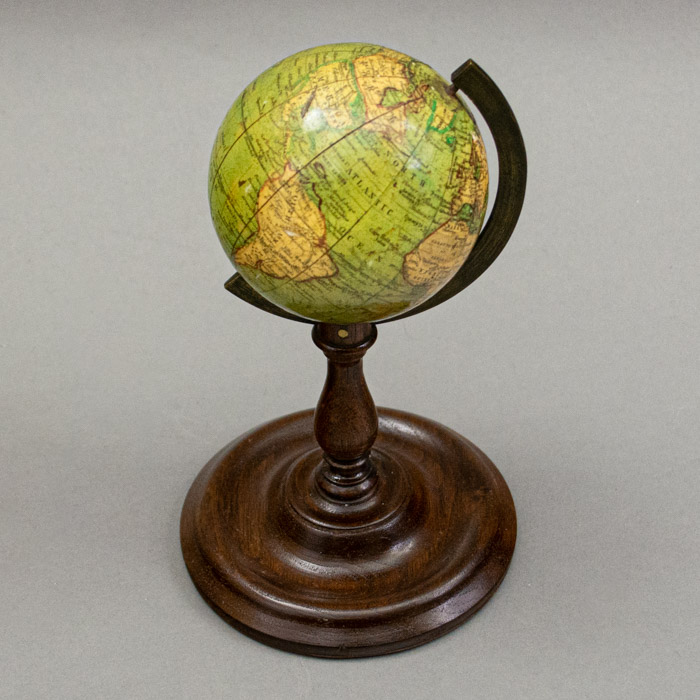
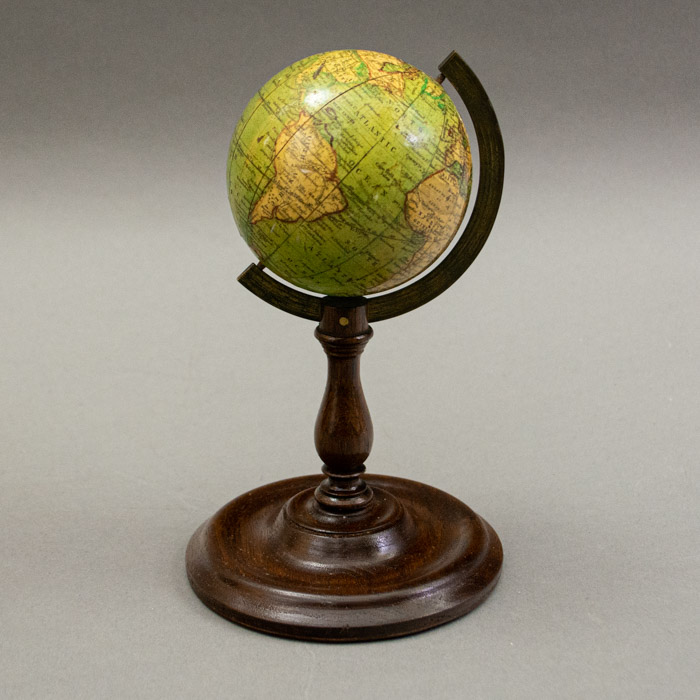

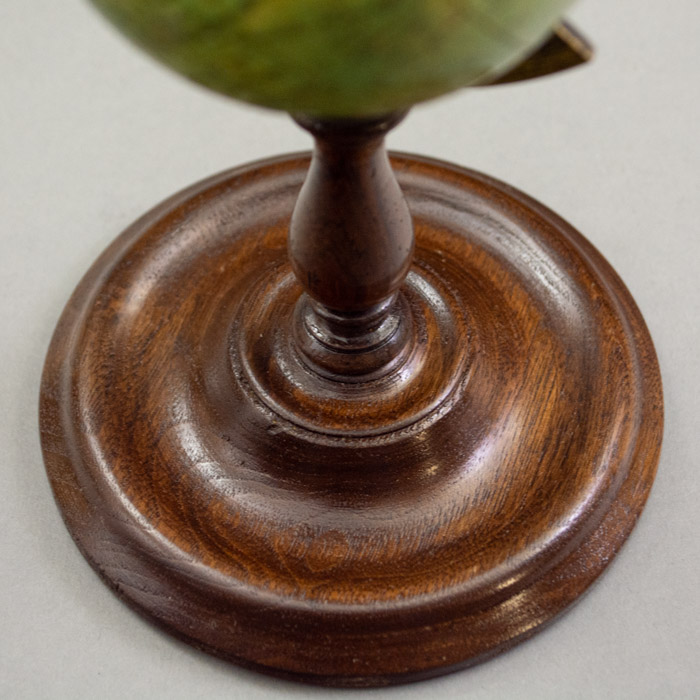
Description
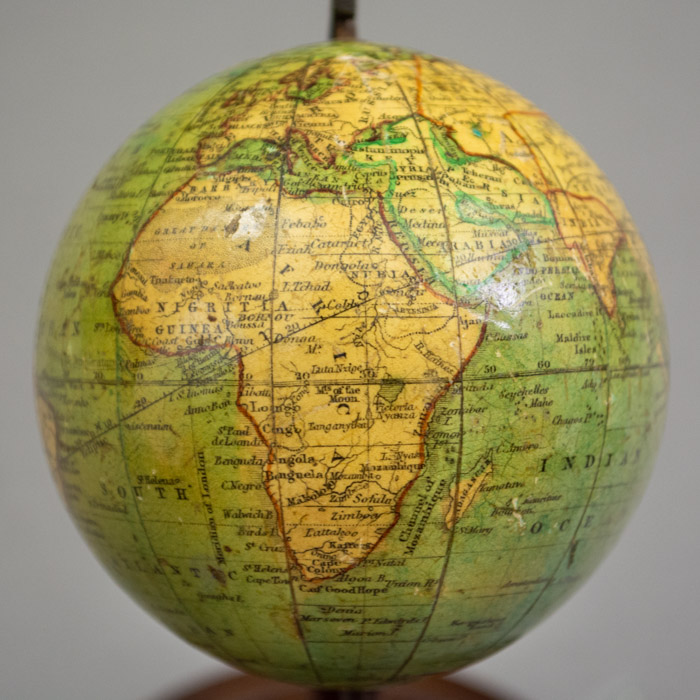
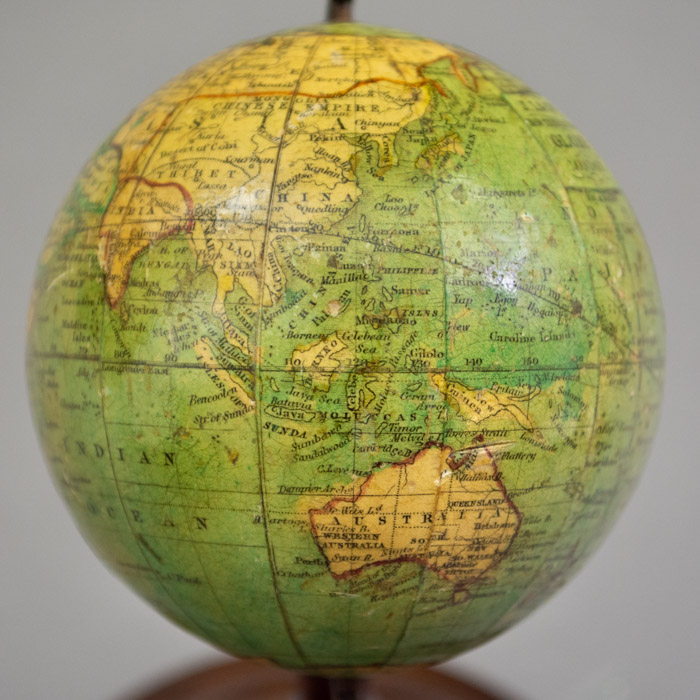
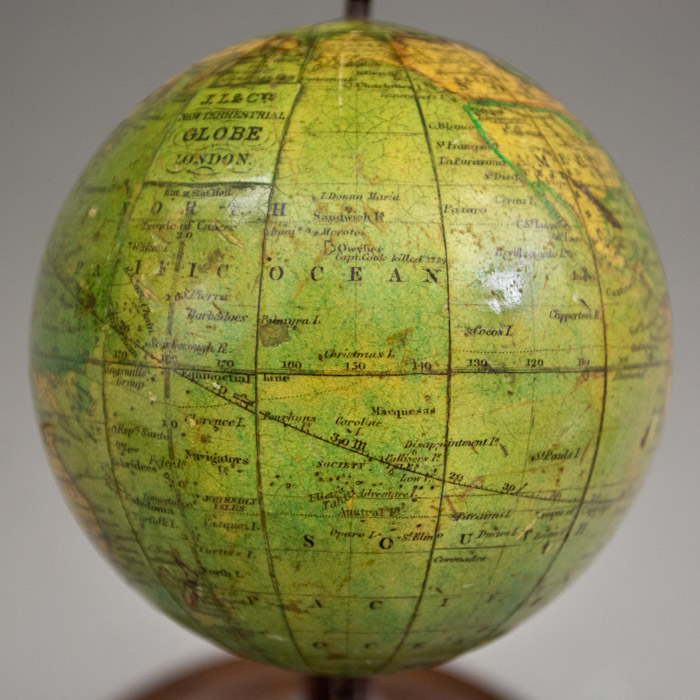
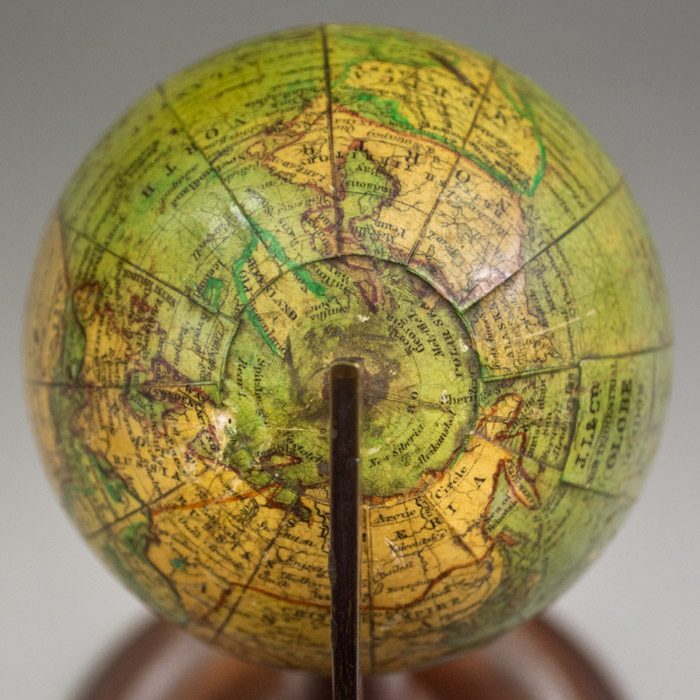
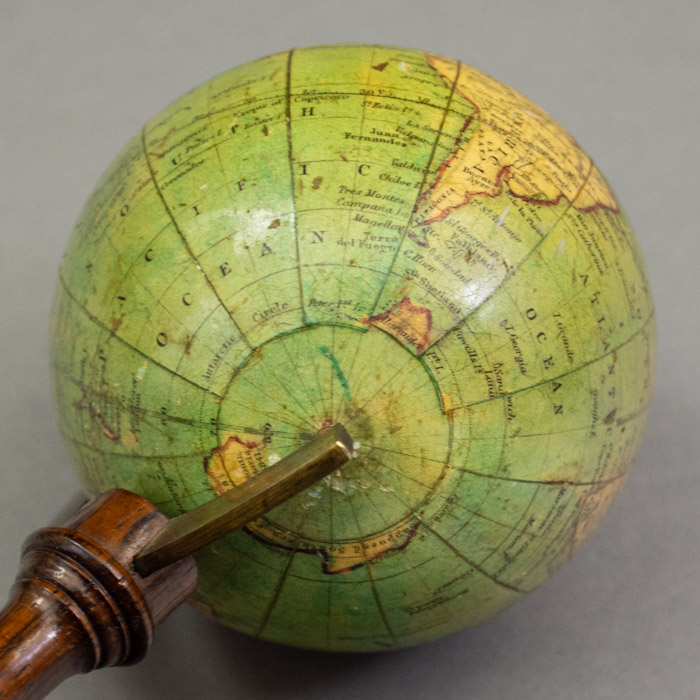
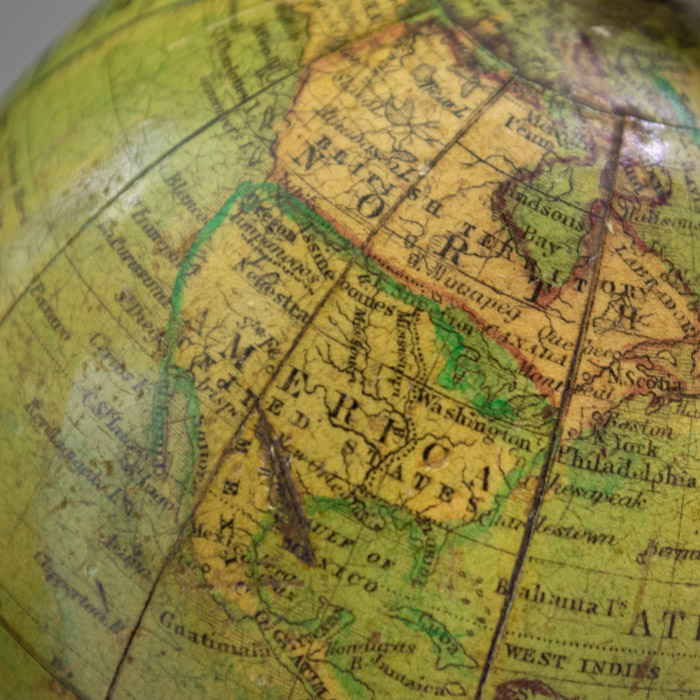
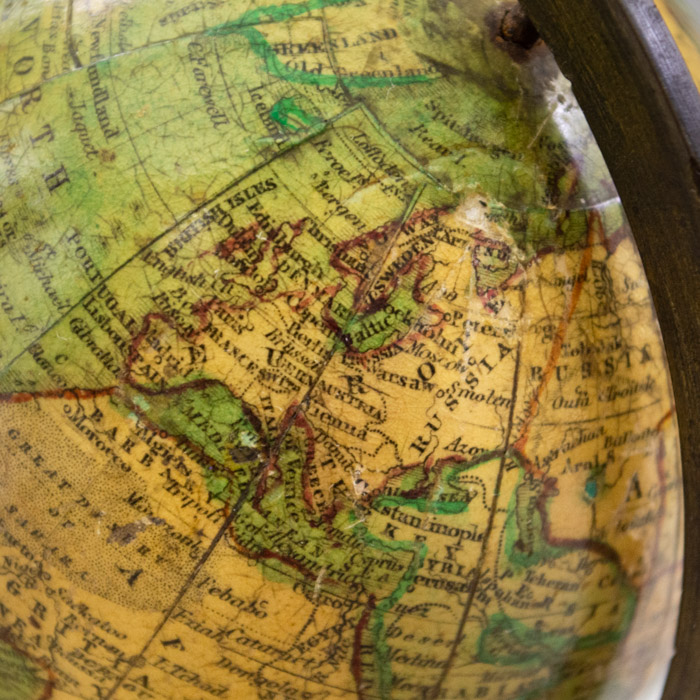
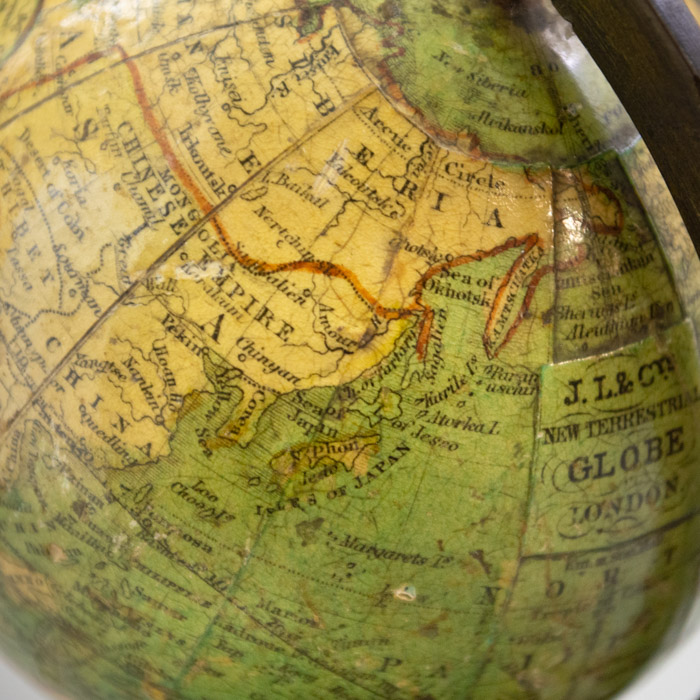
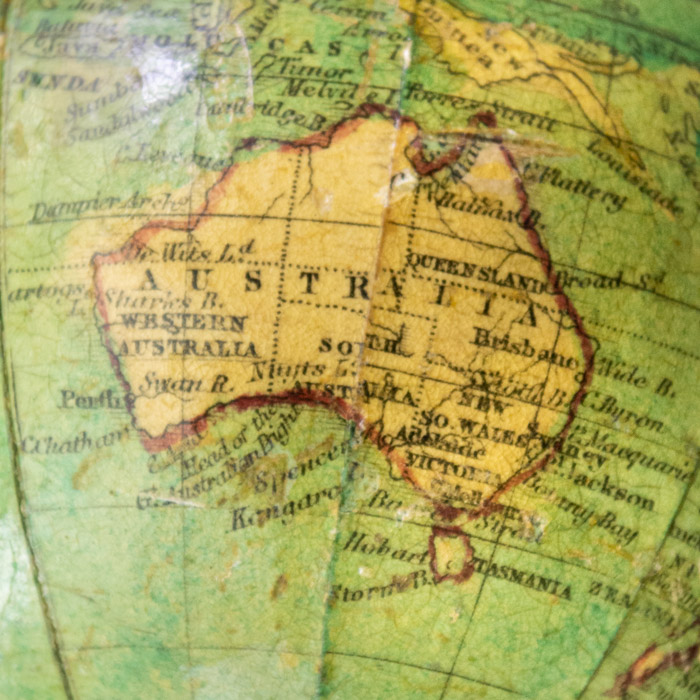
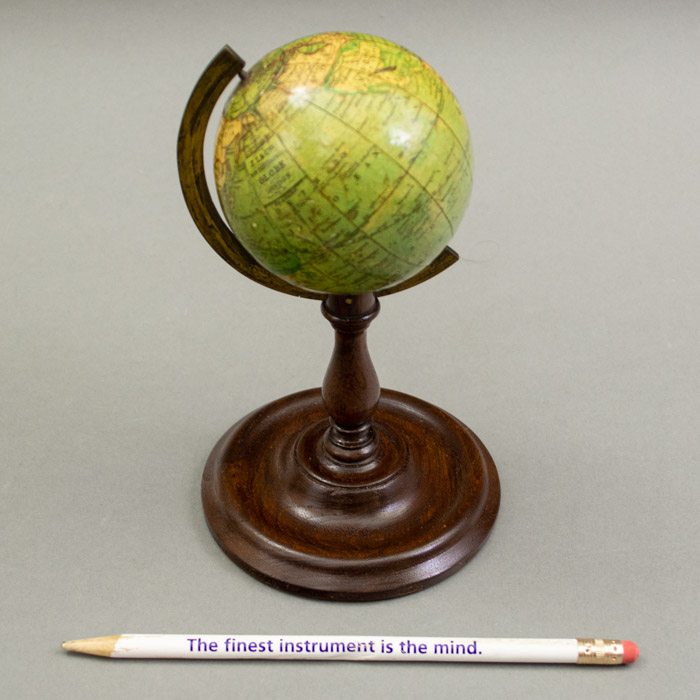
Geography is relatively simple, with oceans, continents, and some countries and cities labeled, although not outlined. Major rivers are shown. The “Great Desert of Sahara” is shaded with a dot pattern. Large lakes such as the Great Lakes and Lake Victoria are shaded with horizontal lines. and there is also faint shading along coastlines. The Great Wall of China is indicated. Hawaii is called the Sandwich Islands, with the main island labeled “Owehee/ Capt. Cook killed 1779.” Canada is labeled “British Territory.” In the United States, the territories of the indigenous tribes the Assineboines (Assiniboine) and Timpanogos are shown in the Northwest along with Oregon. A dotted line appears to show the original boundary of the Louisiana Purchase, following the Mississippi River and northern boundary the U.S. with Canada. The Antarctic coastline is partially mapped, reflecting geographic knowledge at the time. Australia is shown as such rather than as New Holland loosely indicating a date after about the 1850s. New Grenada is shown in the region of Colombia, possibly indicating a date before about 1858 to 1863.
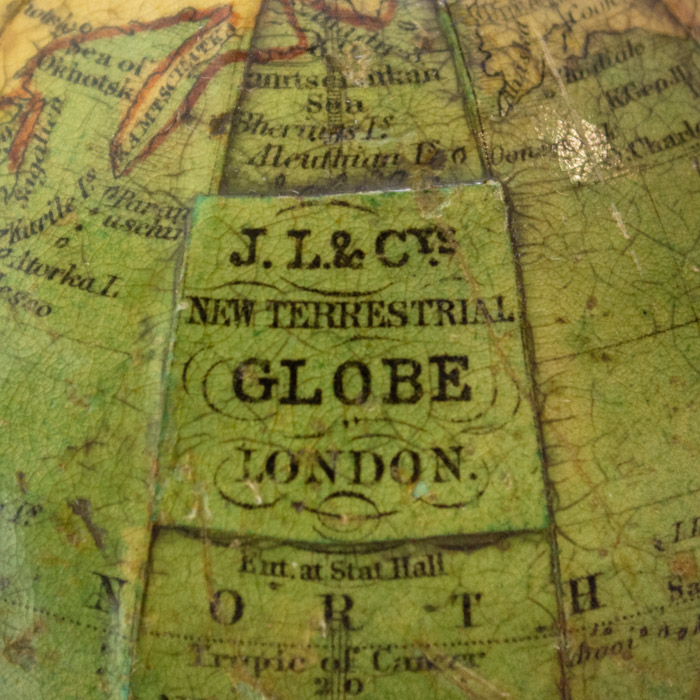
Lebègue was a Paris globe maker in the mid to late 19th and early 20th centuries, though information about this company is sparse. They also had a branch in Brussels under the name of A.H. Lebègue & Compagnie. This globe has an overlabel for the company giving a London location, which is unusual for a Lebègue globe. Beneath the overlabel it states it was entered at Stationer’s Hall, the British copyright registry.
Cartouche: J.L. & Cys./ NEW TERRESTRIAL/ GLOBE/ LONDON/ ENT. at Stat. Hall
Reference:
“A 7-inch terrestrial globe by Lebègue & Cie.” Sotheby’s. 2004. https://www.sothebys.com/en/auctions/ecatalogue/2004/clocks-scientific-instruments-l04821/lot.50.html (17 January 2022).


