
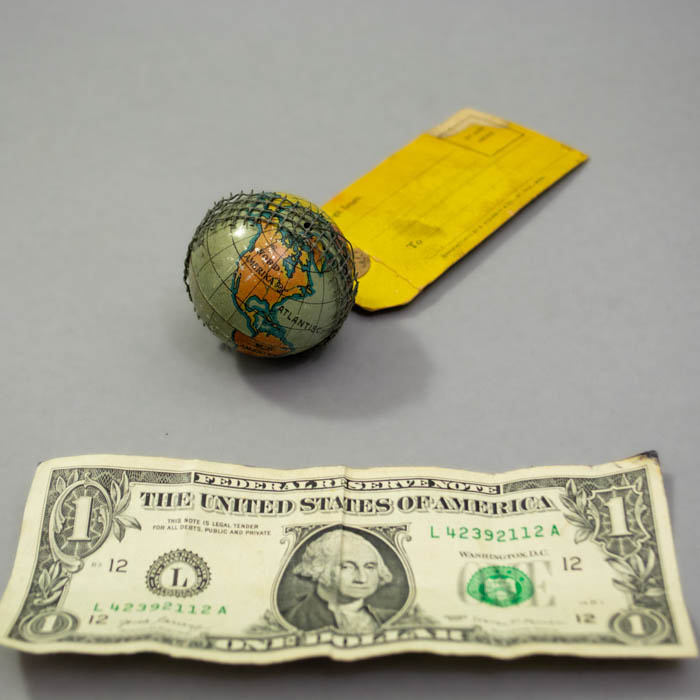
Description
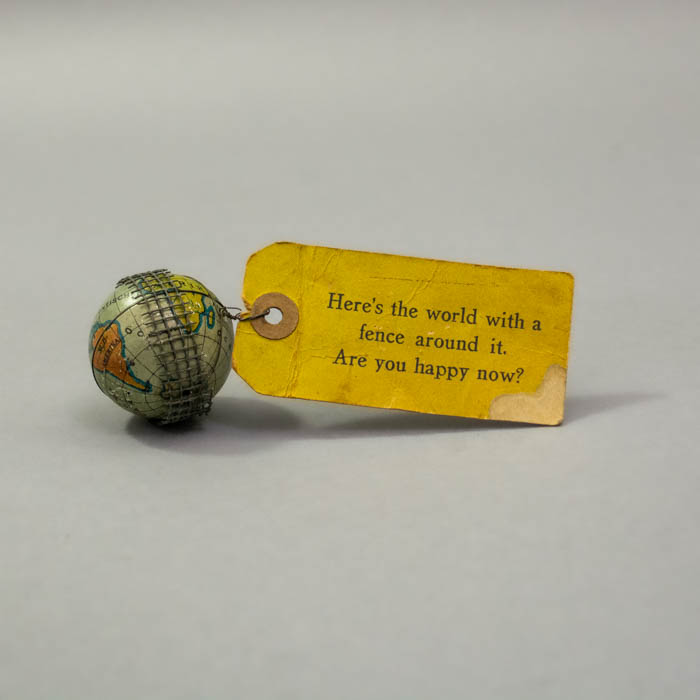
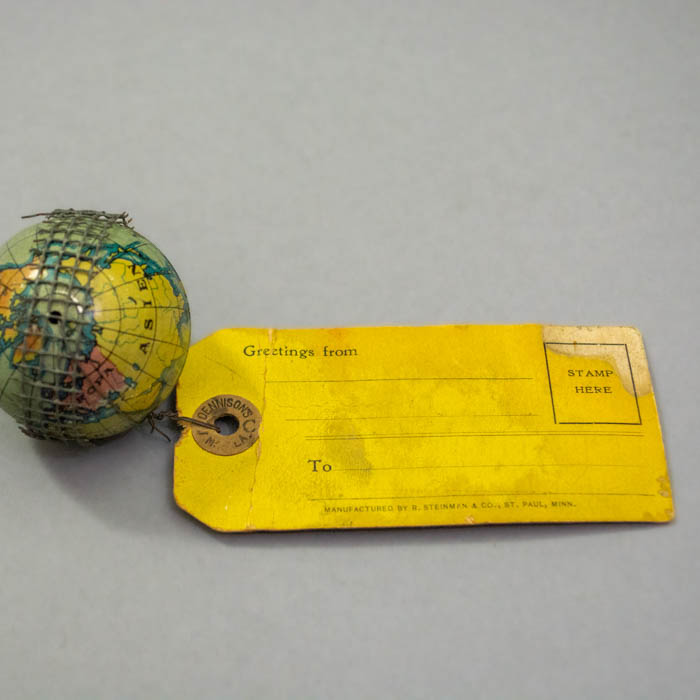
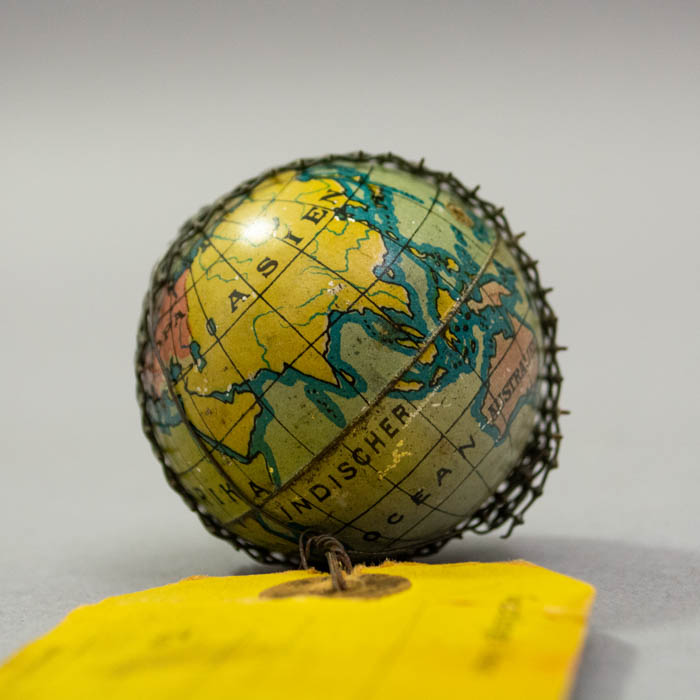
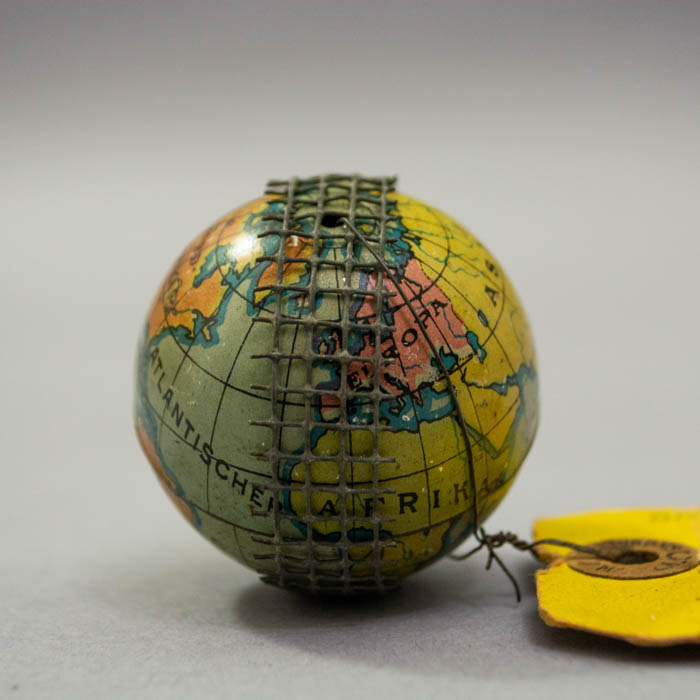
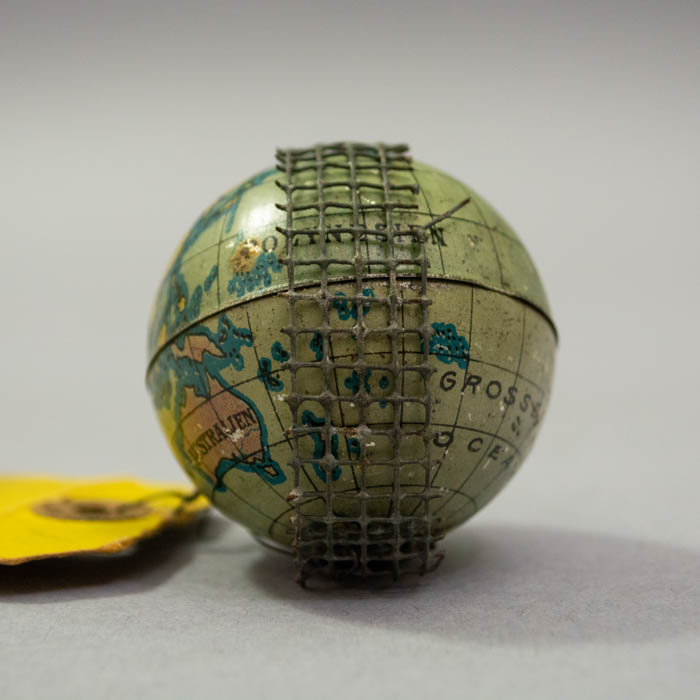
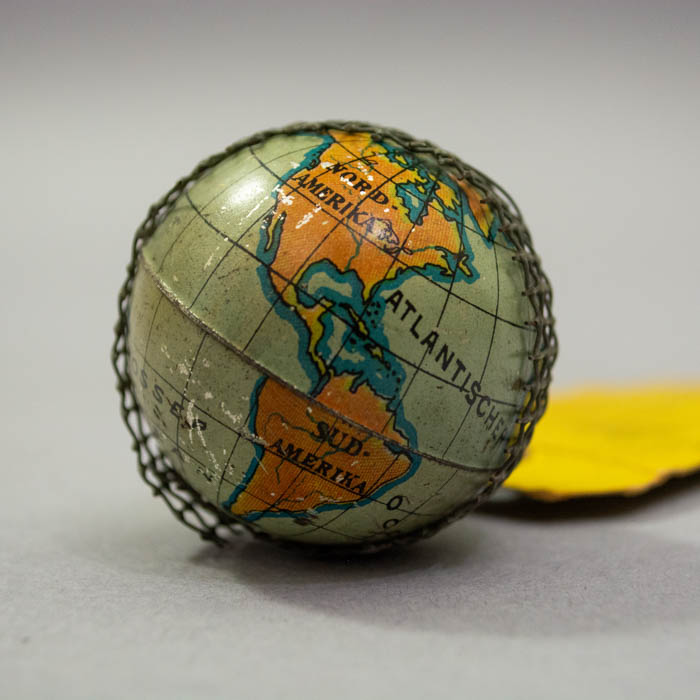
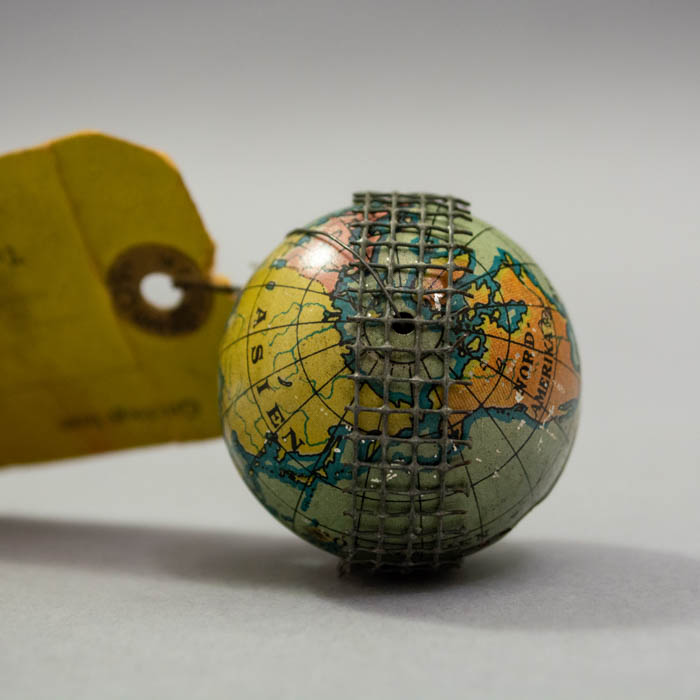
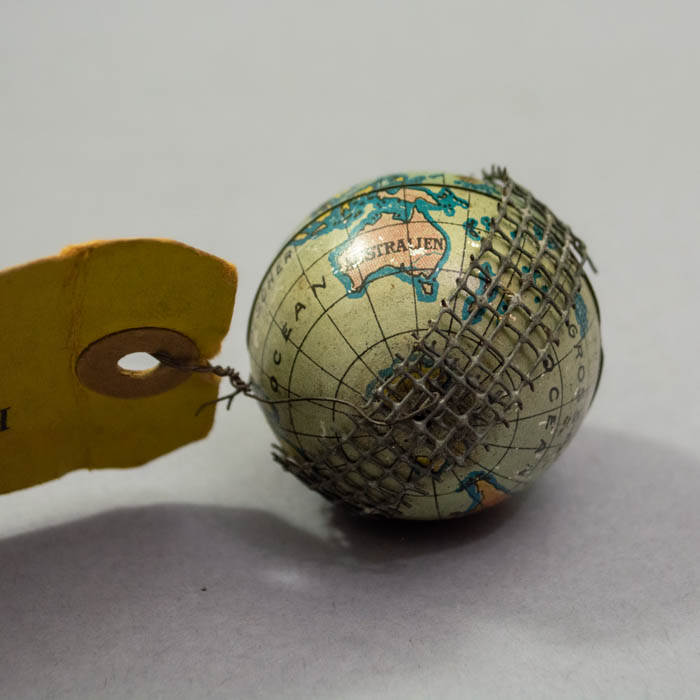
The globe is made in two halves, each transfer-printed, and permanently joined at the equator. The wire from the tag is attached to the fence on the globe (perhaps a later adaption where a string once held it). The globe has text in German and is typical of German tin globes of this period available in various novelty forms. Steinman presumably imported the globe from a German globe maker and then produced and marketed the overall mailable product with the address tag.
The geography of the globe is highly simplified and stylized, with generalized shapes of the continents outlined in black, highlighted with a wider blue colored line, and filled in with orange, yellow, and pink tones. Major rivers are indicated by blue lines. Oceans are in light blue. Continents and oceans are named in German, such as Nord Americka, Sud Amerika, and Indischer Ocean. No other place names are given. There are black longitude lines and four latitude lines per hemisphere.
Mailable souvenir globes were popular at the turn of the century as tourist souvenirs., including ones associated with a World’s Fair. Some were made so that the two halves that could be opened to reveal inside a folding accordion strip of photographic images of the site where it was being sold. Others had the two halves sealed at the equator. Novelty transfer-printed tin globes of this size were also made as pencil sharpeners or as little table globes on inexpensive stands. Others were incorporated into toys such as a wind-up tin cat with a globe. Based on numerous extant examples, many of the globes were manufactured in German, printed in English for export to the United States. These novelties were among the earliest globes manufactured by transfer painting on tin, which would become more popular in the 20th century in various sizes and styles, especially to produce inexpensive globes.
Condition: Globe generally very good, bright colors, having the usual scattered expected minor abrasions and indentations. Card good with the usual overall toning, wear, handling, soft creases.


