Click main image below to view enlargements and captions.

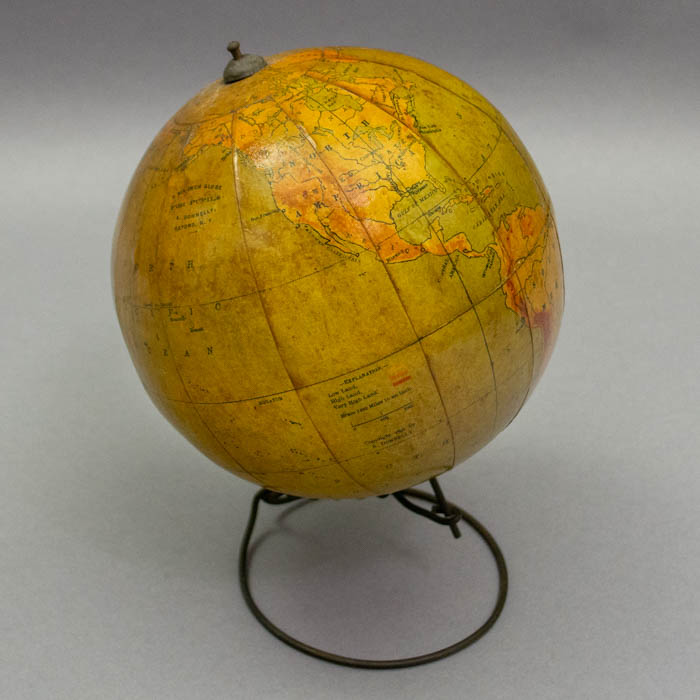
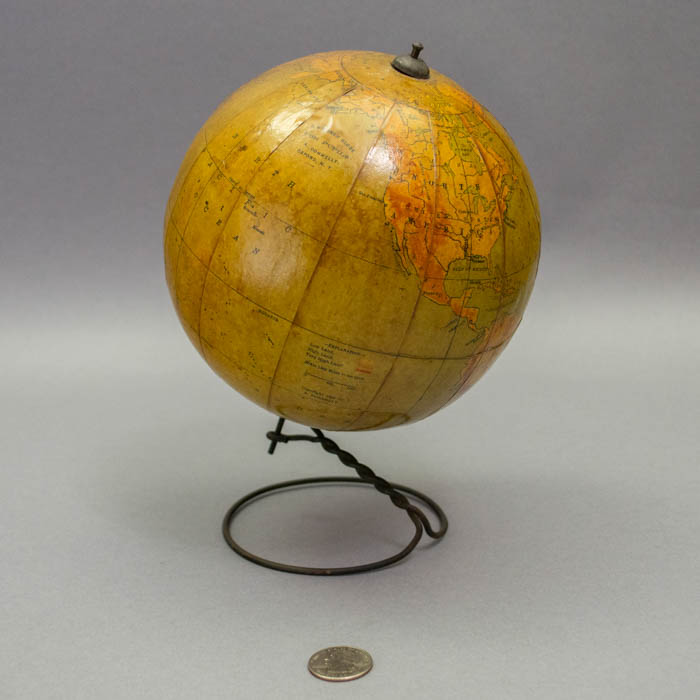
Globe, American, Donnelly, Terrestrial World, 6-Inch Table Globe, Wire Stand, New York, 1898

This globe is currently on reserve among numerous extremely fine and rare American globes to be sold as a single collection. Meanwhile it has been placed here in our American Globe Guide as a service for researchers and collectors.

Browse our currently available Globes & Planetaria or search our site to see globes offered for individual purchase.

A. Donnelly
6-Inch Terrestrial Table Globe
Oxford, New York: 1898
Wire stand
9 inches high

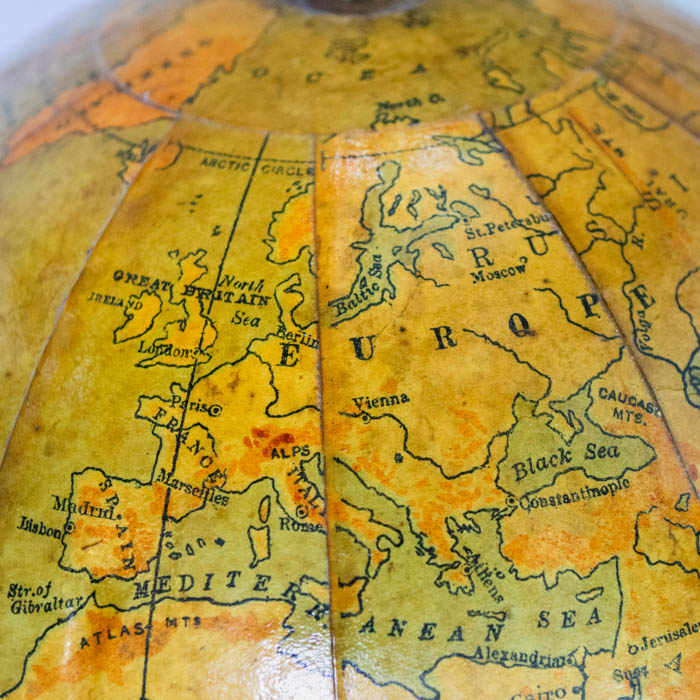
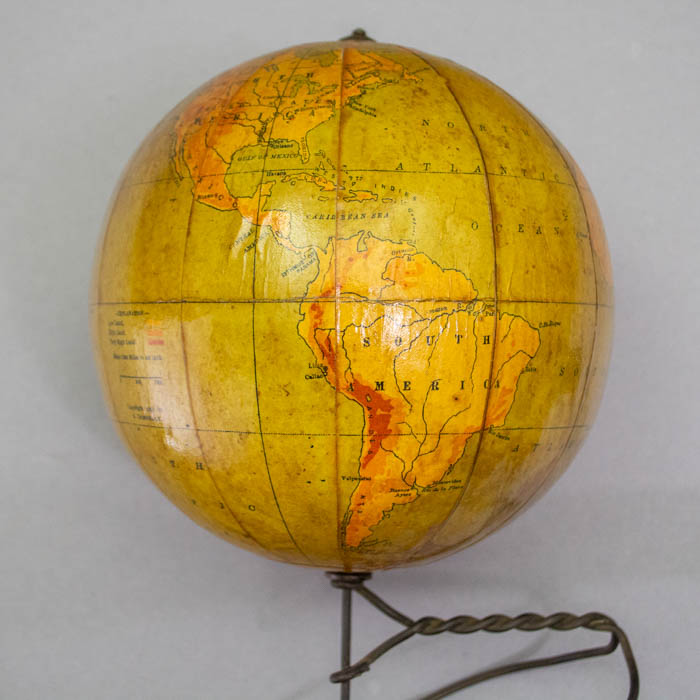
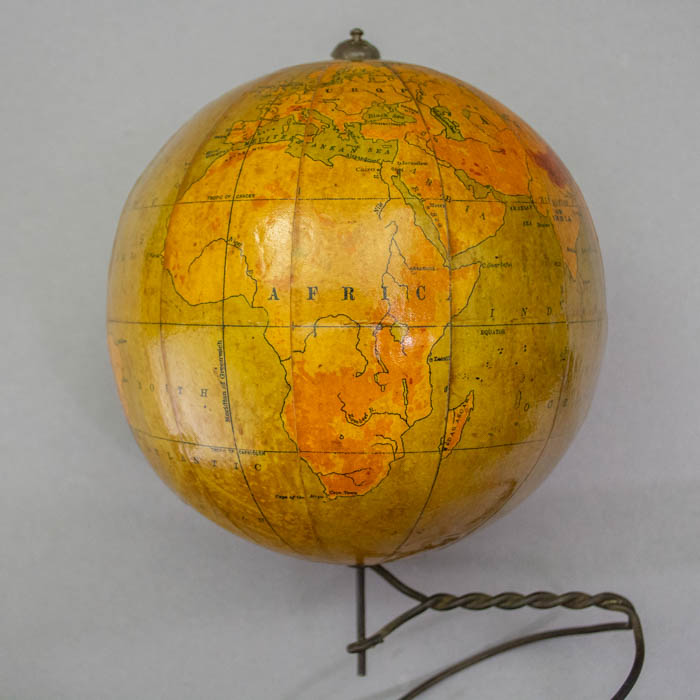
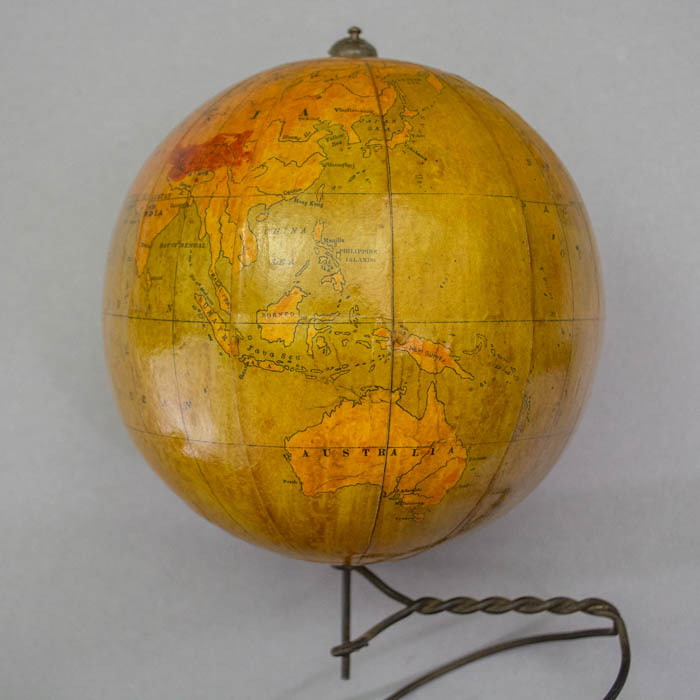
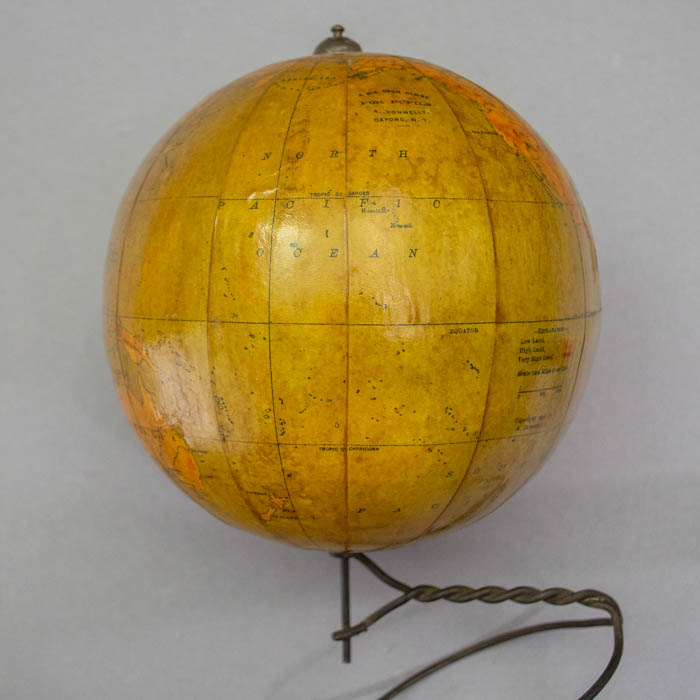
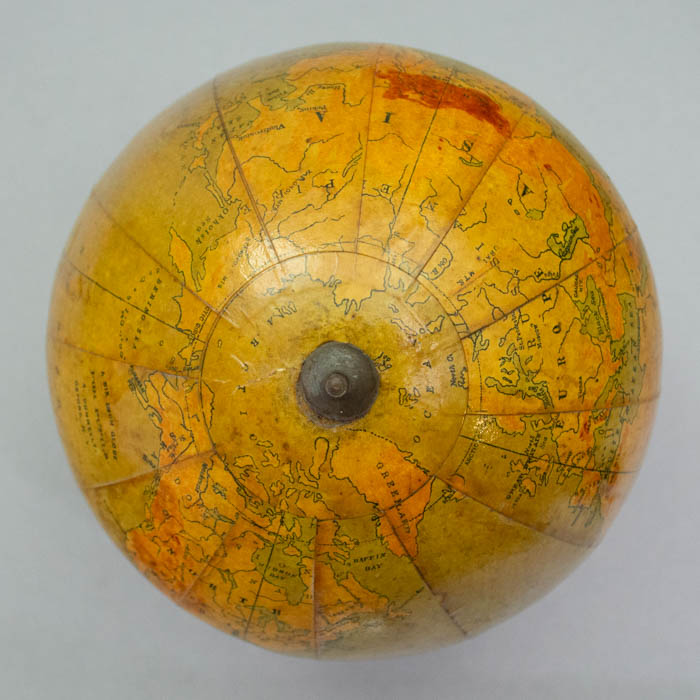
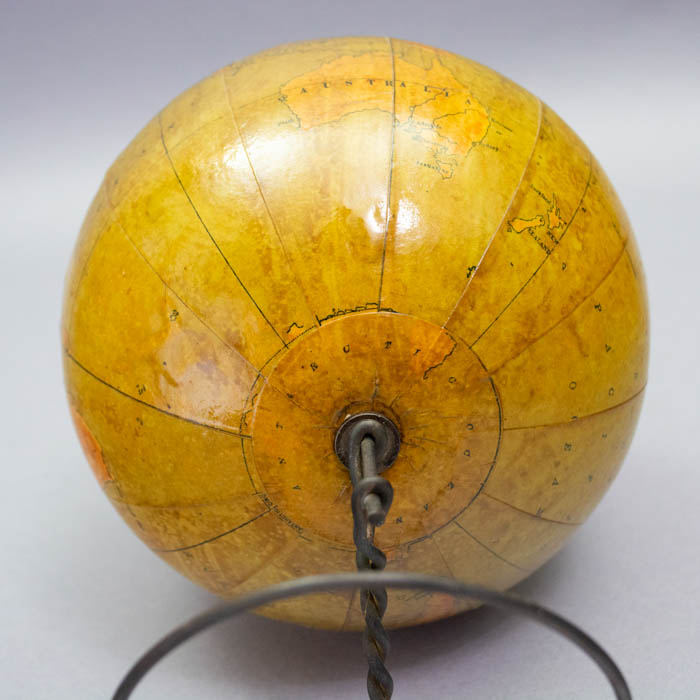
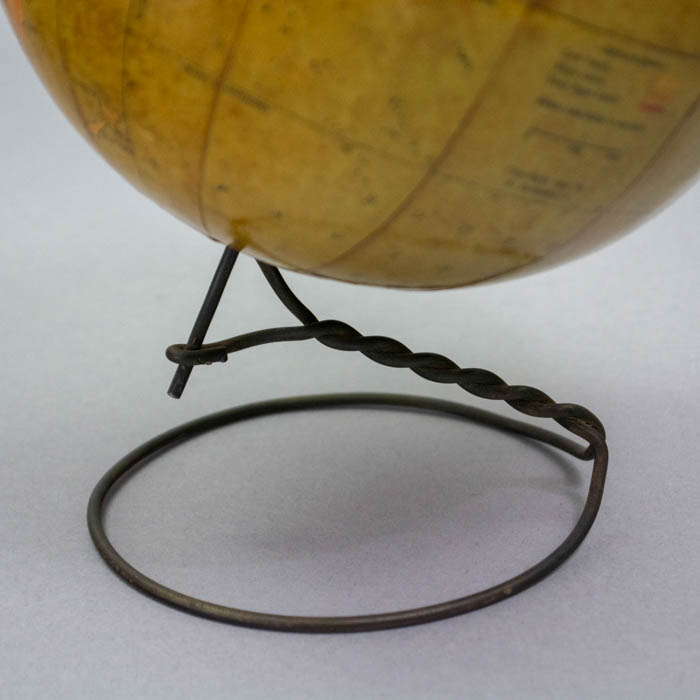
A six-inch terrestrial globe with simple physical geography, originally produced as an inexpensive student’s globe. The stand is a continuous bent iron “wire” — actually a relatively stiff thin rod — that serves as an axis through the globe with a small portion exposed through the North Pole secured by a domed washer. It extends below from the axis at the South Pole with an inclination arm at 23 degrees formed of twisted wire, supported by a round base formed of the wire as bent in a circle. It was titled and marketed by the maker A. Donnelly of Oxford, New York as a “six inch globe for pupils.” The intent apparently was to make it for young school children and the simple construction and wire stand would have made it affordable for such use. Indeed, based on this history of American globes for school use, it was likely intended for one to be purchased by a school and made available to each student in the class. Nonetheless, this globe is quite rare. We have located only one other example, and neither the globe, nor the maker, are listed in Deborah Jean Warner’s standard guide of American globe makers, “The Geography of Heaven and Earth,” published in the Rittenhouse Journal of the American Scientific Instrument Enterprise in 1987.

Product description continues below.

Description

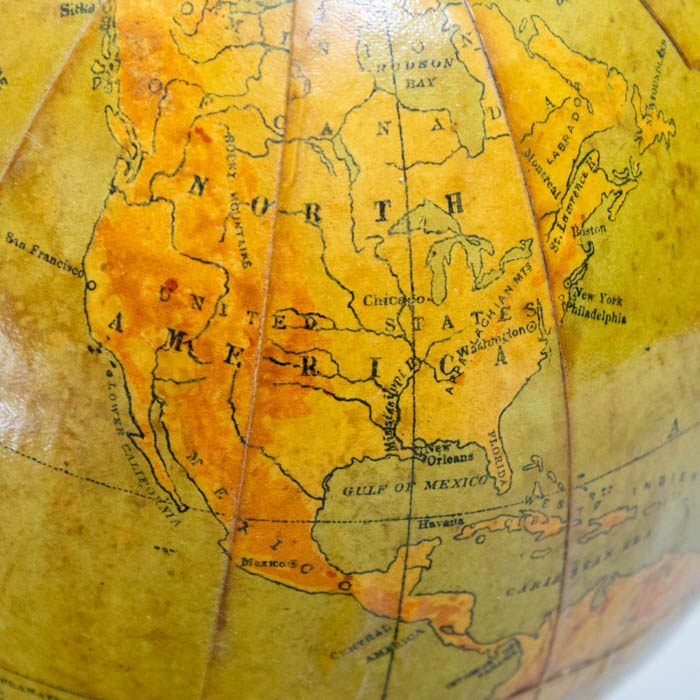
Geographic entities are outlined in green and colored relative to physical geography in three earth tones indicating low land, high land, and very high land. Oceans are green, probably originally blue but now affected by yellow varnish. Geography shows just a few very major cities, even in America. Indeed, no American states are named other than Florida. St. Petersburg is shown in Russia confirming a date before 1914. Rivers are shown but only a few are named. Lines for the equator, l tropics of Cancer and Capricorn and Meridian of Greenwich are present, but without latitude and longitude lines. The northern coast of Antarctica is only partially mapped, with the rest labeled Antarctic Ocean. There is an oval analemma in the Pacific Ocean.

We have not located any biographic information in applicable directories or genealogies of the maker A. Donnelly of Oxford, New York. This globe was nonetheless mentioned in two different geography study guides around the time of its issue in 1902. There is precedence for the style of iron stand of the Donnelly 6-inch globe by other markers, including Rand McNally & Co., of Chicago, Illinois, one of the leading American manufacturers of globes. A 1902 Rand McNally trade catalog illustrates and describes such a globe – originally copyrighted in 1892 — as “No. 1. 6-inch, wire stand Globe, $0.50.”

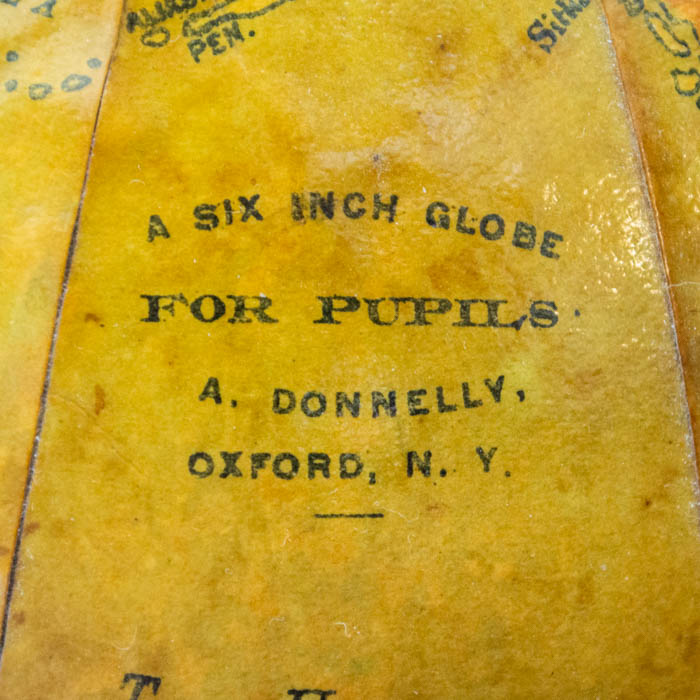
Cartouche: A SIX INCH GLOBE/ FOR PUPILS/ A. DONNELLY,/ OXFORD, N.Y.

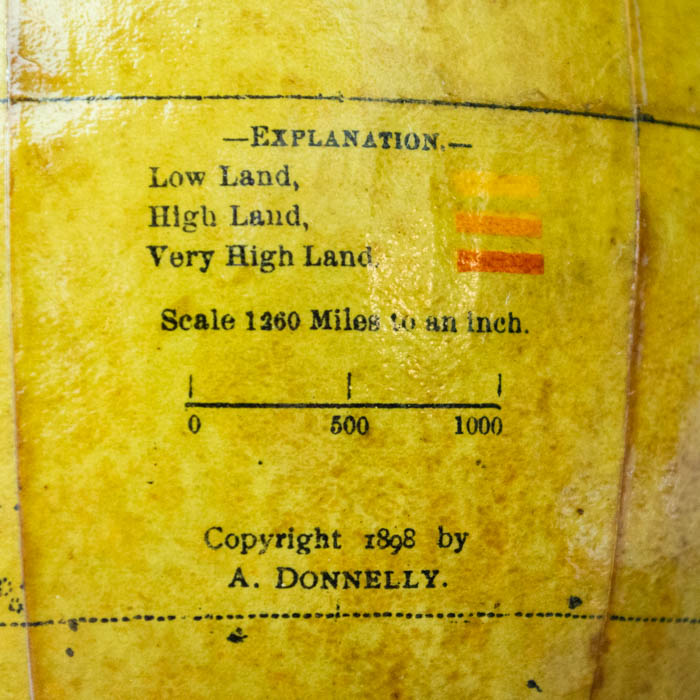
Additional Legend: –EXPLANATION–/ Low Land,/ High Land,/ Very High Land./ Scale 1260 Miles to an inch./ Copyright 1898 by/ A. DONNELLY.

Condition: Generally very good, the colors fairly bright, the globe fairly clean, with only minor toning, wear, and handling.

Reference:

A Descriptive Catalogue of Maps, Globes, and School Supplies 1902. 2nd ed. Chicago: Rand, McNally & Company, 1902. p. 86.

Additional information

Maker Location

Maker

Globe Type

Terrestrial

Material

Iron

Century

20th Century

Stand

Wire