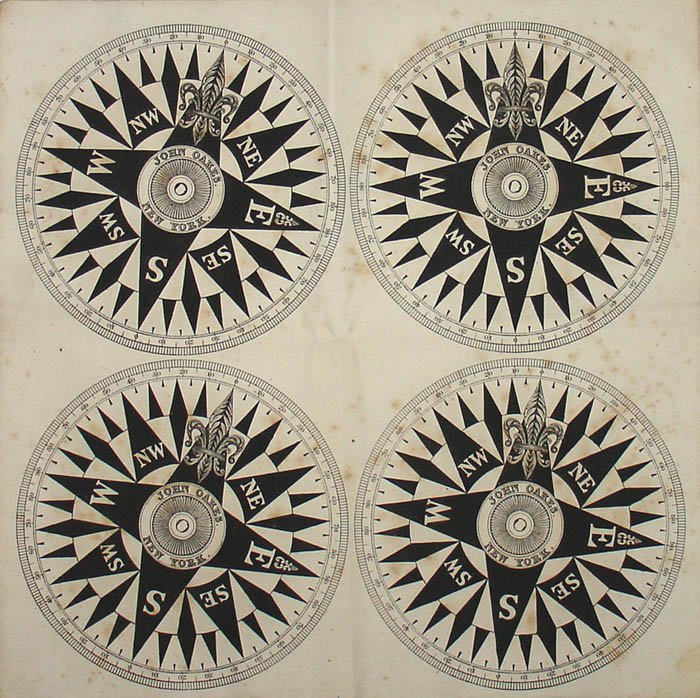
compass rose

  • Click main image below to view enlargements and captions.

    Globes, Specialty, Printed Designs, Compass, John Oakes, New York, mid 19th Century

    This globe is currently on reserve among numerous extremely fine and rare American globes to be sold as a single collection. Meanwhile it has been placed here in our American Globe Guide as a service for researchers and collectors.

    Browse our currently available Globes & Planetaria or search our site to see globes offered for individual purchase.

    John Oakes (1818-1910)
    Compass Rose (Dial) Designs
    New York: 2nd Half 19th Century
    Lithograph, uncolored
    13.75 x 14 inches, overall
    6.5 inches diameter, each compass

    An exceptionally rare and unusual surviving example of a 19th-century compass rose print, featuring four identical individual compass dial cards arranged on a single uncut sheet. Printed in contrasting black and white with intricate detailing. North is marked by an ornate fleur-de-lys, while East features the distinctive “decorated east” motif, typically found on pre-1870s compass designs. This sheet was likely intended to be cut and mounted inside compasses (enough for four), making this intact version particularly scarce. In mounting, they would most likely be added to a circular wooden frame with molded edge, requiring the additional of a magnetized needle, and a glass bezel in the molding to protect it. Some American floor globes employ a compass as this type in the stretcher, though based on extant examples it is unlikely that the Oakes compass was made for this purpose.  Nonetheless, the sheet of four compasses is likely how other such compasses for floor globes were made, as first printed for cutting out followed by full assembly. Oakes also issued surveying compasses of brass, in which the compass was engraved directly into the brass.

    Product description continues below.

    Description

    John Oakes (1818-1910) was a 19th century New York manufacturer and dealer of navigational equipment, such as compasses and charts. He was born at Bloomfield, New Jersey on November 22, 1818 and died at Glen Ridge, New Jersey on March 5, 1910. Active for over forty years in the mid-to-late-1800s, Oakes’ profession is listed in New York City directories from 1848 to 1896 as “a dealer in charts and a manufacturer of nautical instruments.” One surviving example of a brass Oakes compass is documented by the Virtual Musuem of Surveying alongside an entry for John Oakes in the Compass Maker Directory. It is a compass of polished brass with a magnetized needle and glass bevel, within an overall brass structure with two vertical sighting vanes, indicating its use in land-based surveying rather than maritime navigation. The compass face is engraved directly onto the brass dial, rather than employing a lithographed insert, evidencing to Oakes’ versatile designs and diverse manufacturing methods.

    Condition: Generally very good with the usual overall light toning, handling, wear.

    References:

    “John Oakes.” Compass Maker Directory. Virtual Museum of Surveying. http://www.surveyhistory.org/john_oakes.htm (Accessed June 2, 2025).

  • Click main image below to view enlargements and captions.

    Scientific, Instrument, Compass, Travel, Directional, Red Lacquer Wood Case, c. 1900

    This globe is currently on reserve among numerous extremely fine and rare American globes to be sold as a single collection. Meanwhile it has been placed here in our American Globe Guide as a service for researchers and collectors.

    Browse our currently available Globes & Planetaria or search our site to see globes offered for individual purchase.

    $475

    Travel Compass
    c. 1900
    Reddish-lacquer wood case
    2.375 x 2.375 x .375 inches
    $475

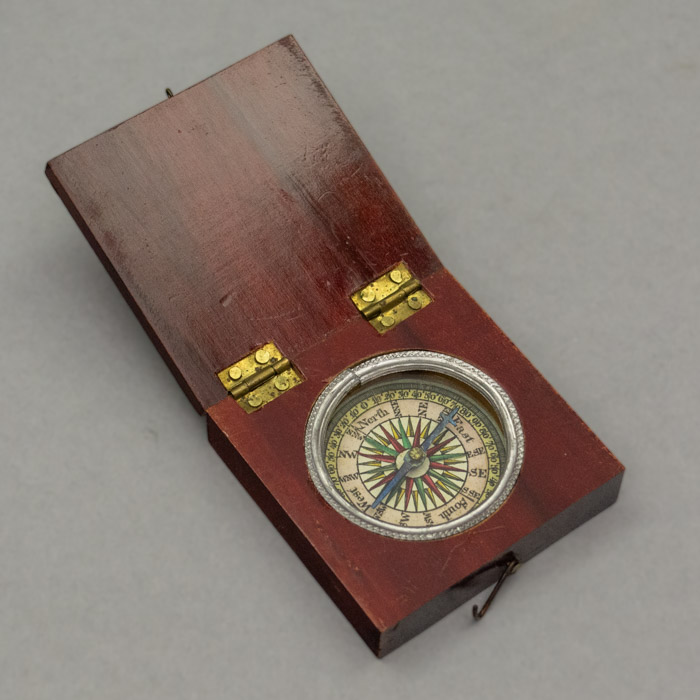
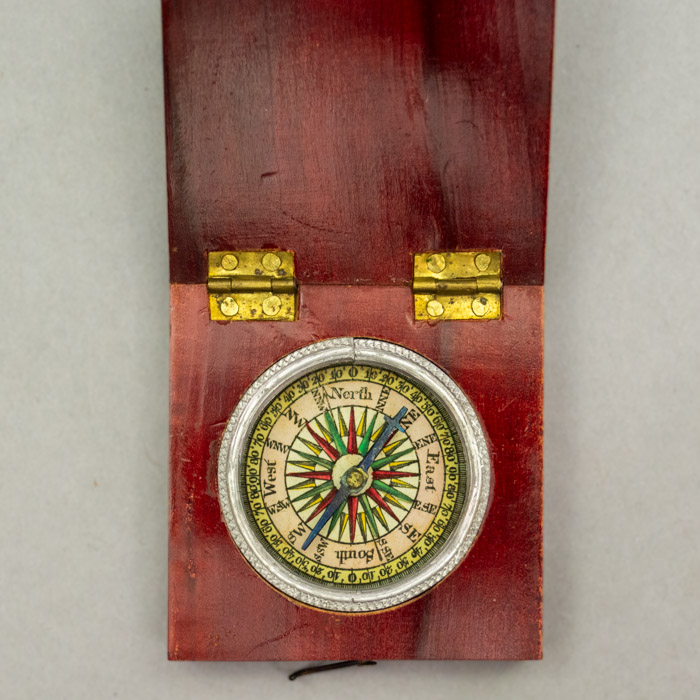
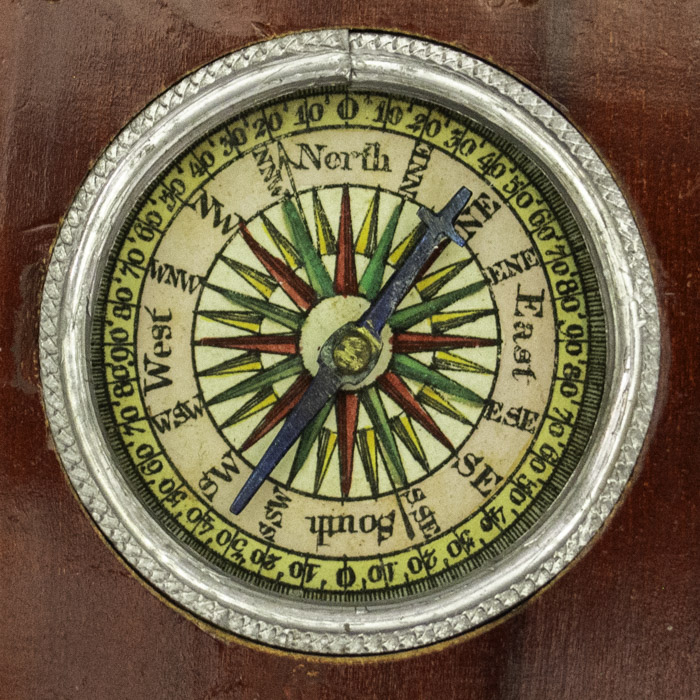
    A traveling directional compass, set into a solid wooden case with reddish lacquer finish. The lid opens by two hinges to reveal the inset compass secured by an aluminum outer rim. The compass has a blue magnetized needle over apaper dial comprised of a central handsome compass rose with directional points brightly colored in red, green and yellow, within a concentric medial pink band with cardinal directions in English, and an outer concentric yellow band numbered in degrees. It closes with a hand-made metal hasp and brass nail head. It could have served multiple uses including travel, navigation, and plotting on a map or chart. The directional band in English suggests that the compass is American or English, though it also might have been Continental and made for export to those markets.

    Condition: Generally very good with the usual overall light handling and wear commensurate with normal use over time.

  • Click main image below to view enlargements and captions.

    Scientific, Instrument, Sundial Pocket Compass, Butterfield Gnomon, Hardwood Case, c. 1900 (Sold)

    This globe is currently on reserve among numerous extremely fine and rare American globes to be sold as a single collection. Meanwhile it has been placed here in our American Globe Guide as a service for researchers and collectors.

    Browse our currently available Globes & Planetaria or search our site to see globes offered for individual purchase.

    Sundial Compass
    Germany, 19th Century
    Hardwood case
    3.75 x 3.75 inches

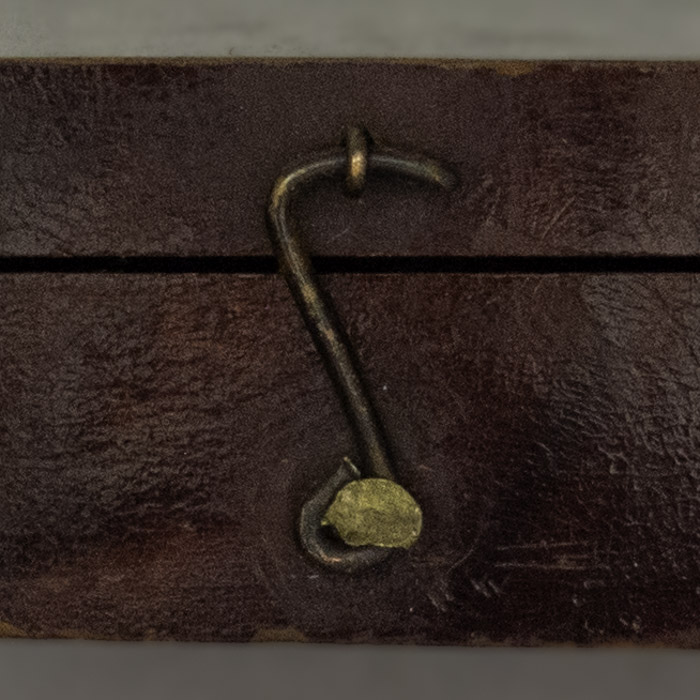
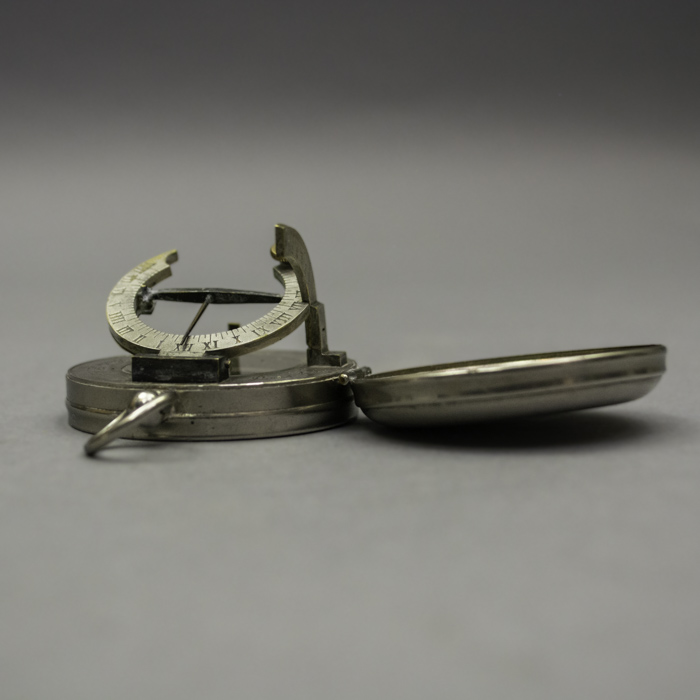
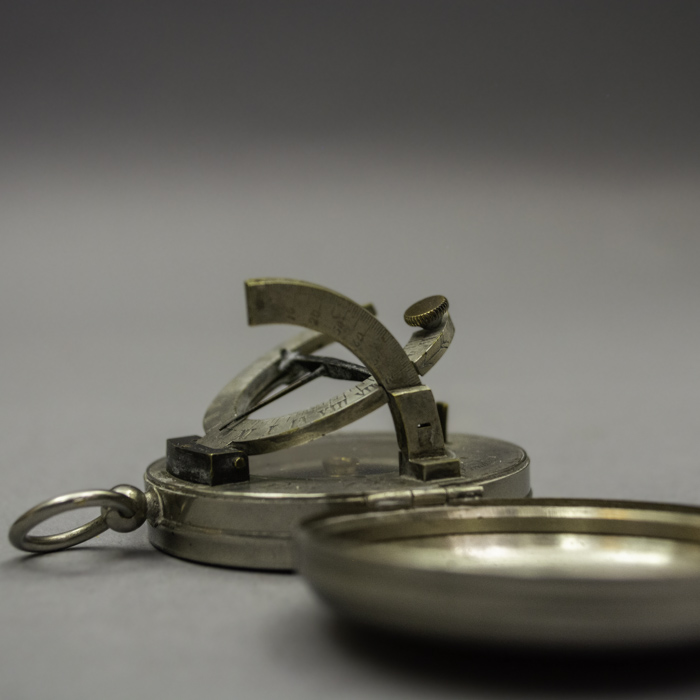
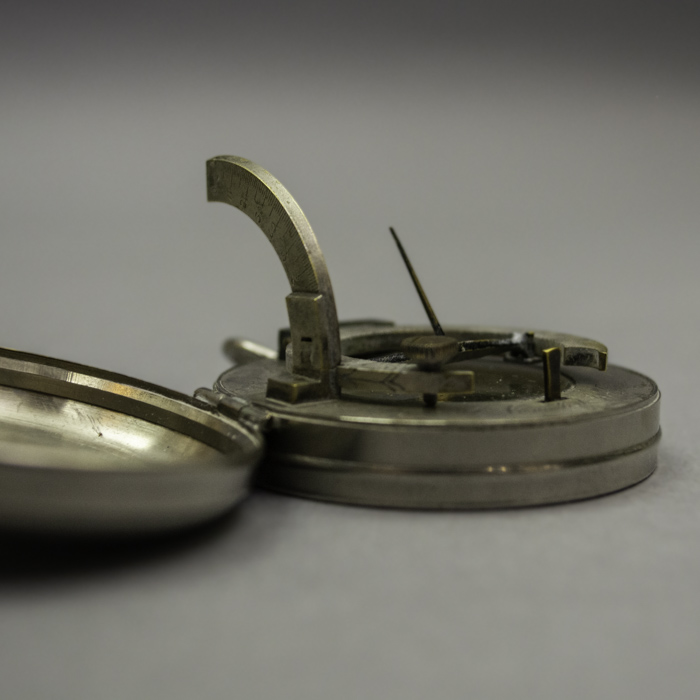
    An unusual portable sundial compass compendium for a traveler to tell time, or simply for navigation or map reading. The 2-part rosewood case opens by two hinges to reveal a sundial inset in the lid, and a compass inset in the base. The sundial has an engraved brass Butterfield-style folding bird gnomon hinged to open or close on a silvered dial with daylight hours, calibrated to latitudes 48, 50, and 52 degrees. The compass has a magnetized needle with a blue pointer side, over a brass dial with engraved compass rose, directional lines and cardinal points with simple letters, such as N, O, S, W, NW, NO, etc., indicating directions. The compass has an outer silvered band with calibrated engraved degree numbers and is secured by a brass ring. The wood case closes with two hooks secured on brass nail heads. German compasses and maps commonly use ‘O’ for “Ost” or “Osten”  (East), ‘S’ for Süden (South), ‘W’ for Westen (West), and ‘N’ for Norden (North).  Thus, the compass likely was made in Germany.

    Product description continues below.

    Description

    In the 17th to 19th Centuries, portable pocket sundials were used to tell local time by aligning them with the sun. An adjustable gnomon cast a shadow on a time dial, and a built-in compass was used to ensure it was oriented correctly for latitude and the time of year. They were used to tell local solar time which could be converted to mean solar time (clock time), with an  equation of time scale. Though not as reliable as mechanical clocks, they offered independent timekeeping for travelers away from indoor clocks. They also offered an alternative to pocket watches which in this period were expensive and of limited accuracy until innovations of the 19th Century. Many pocket sundials were made of brass, sometimes silver or nickel plated, and sometimes with an additional hardshell case. Others were inset in wooden cases. The craftsmanship and accuracy of a pocket sundial manufactured in this period made it both a functional tool and a symbol of status and intellect.

    Reference:

    Compassipedia, Sundial Compasses, https://compassmuseum.com/sundials/sundials.htm