

Description
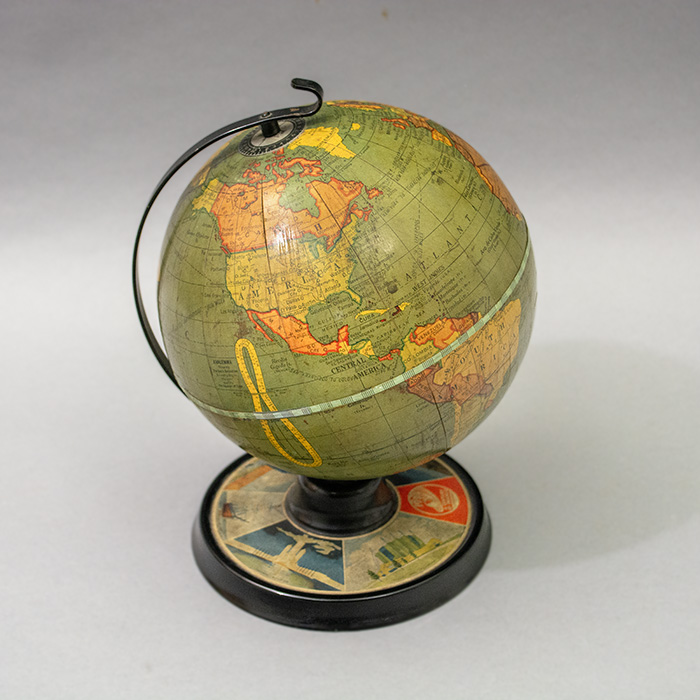
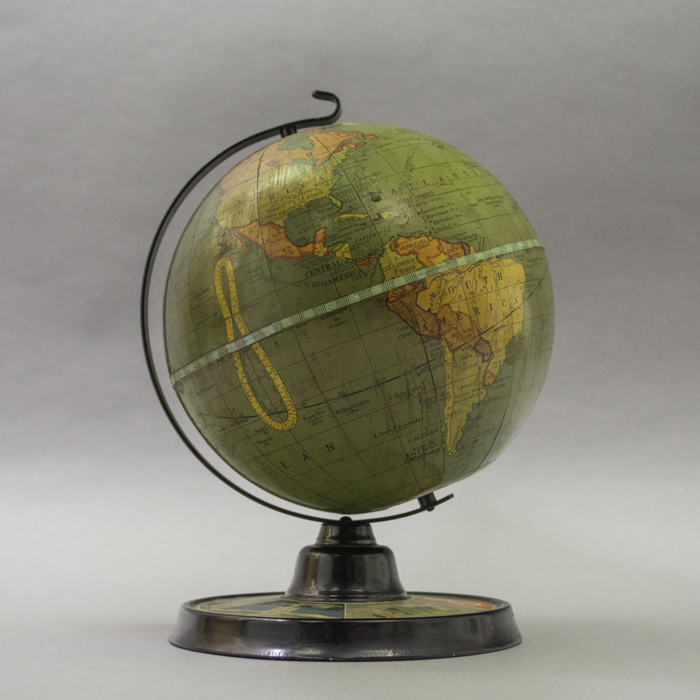
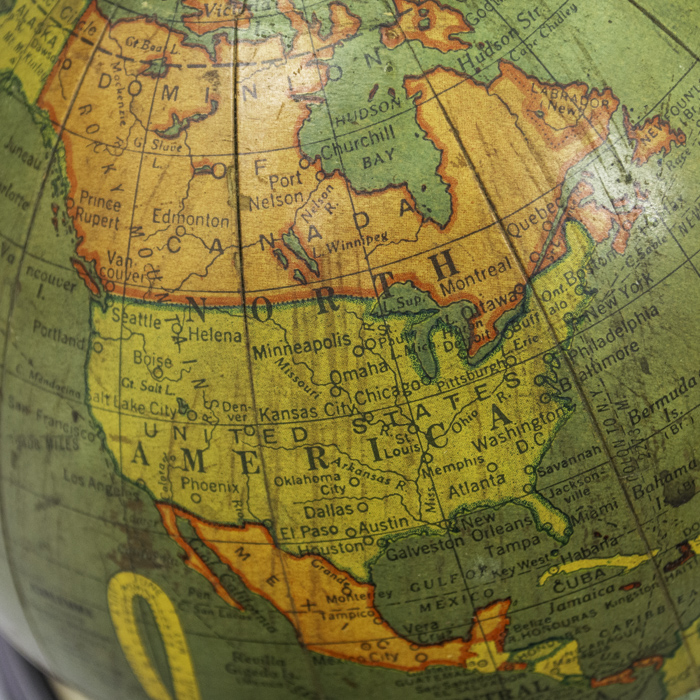
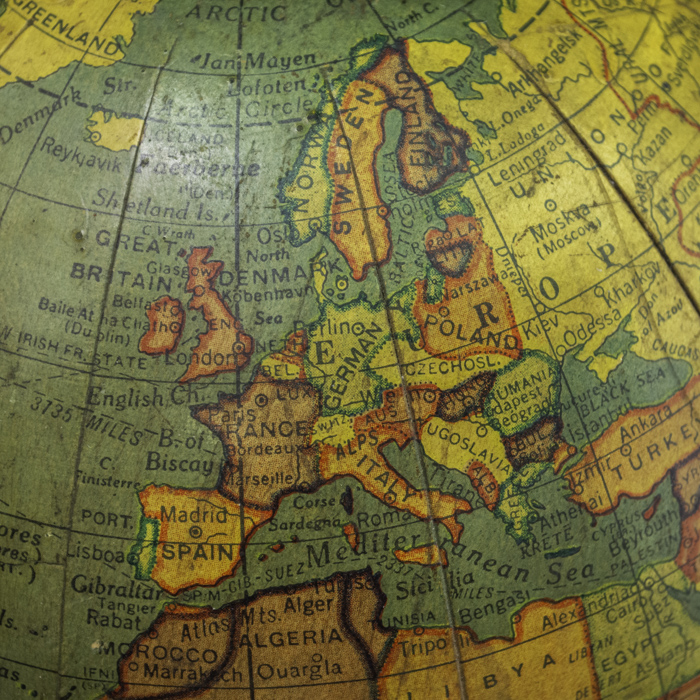
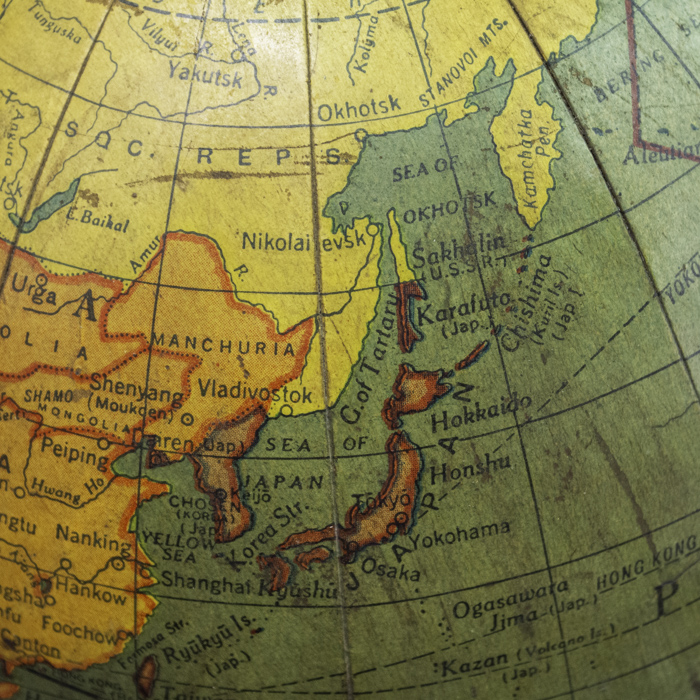
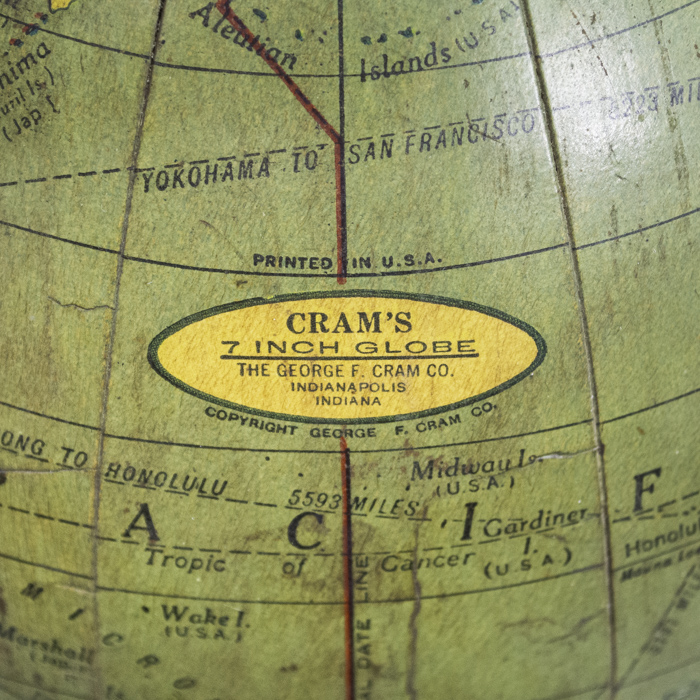
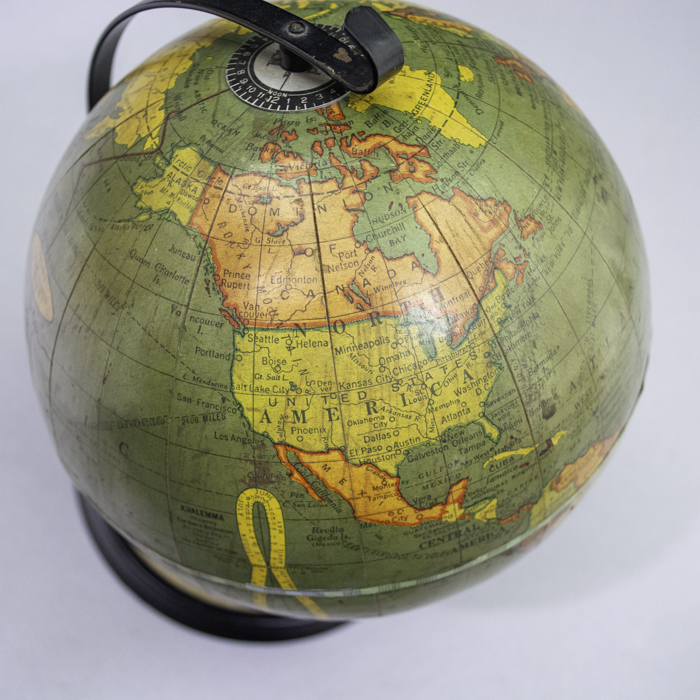
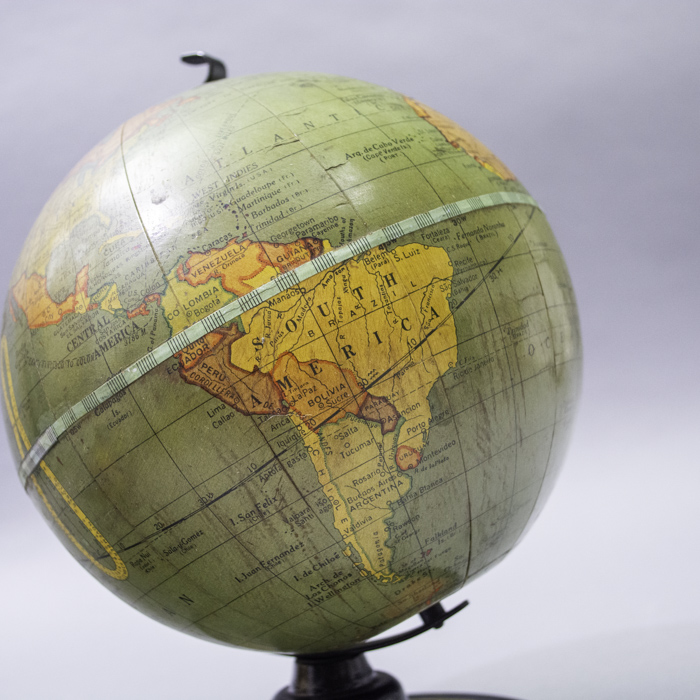
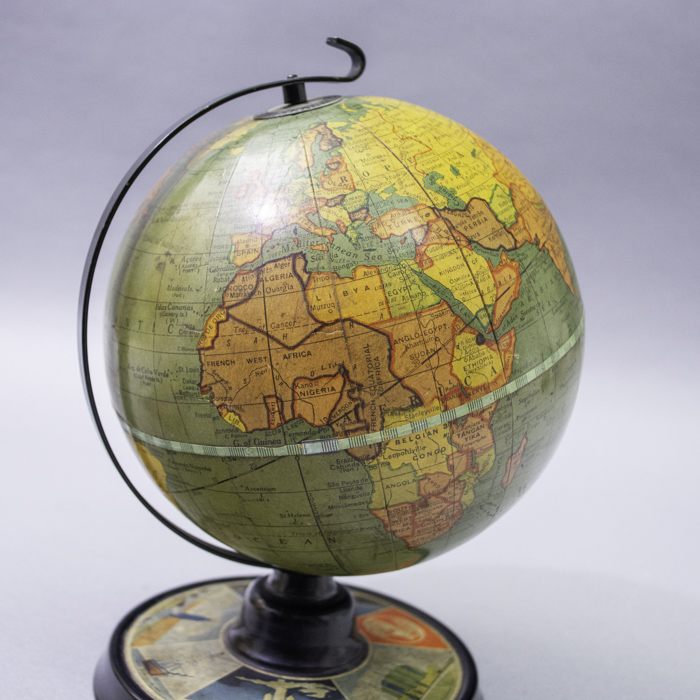
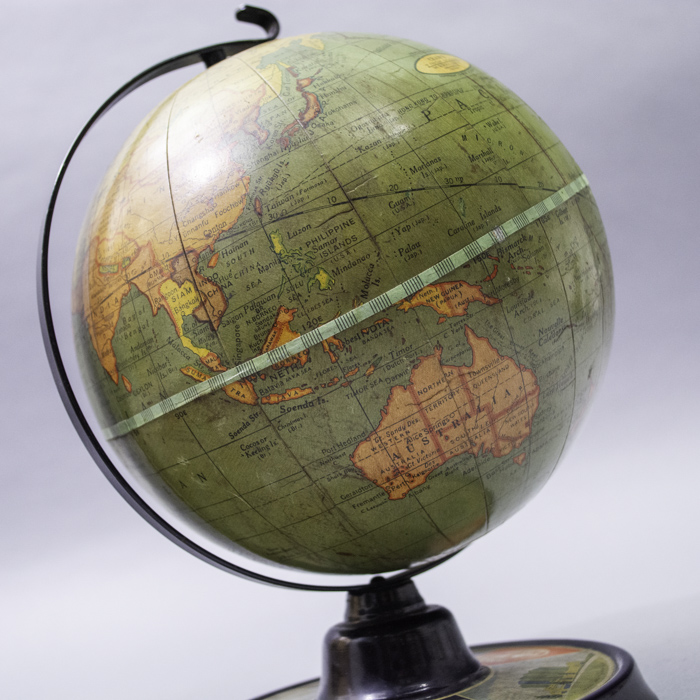
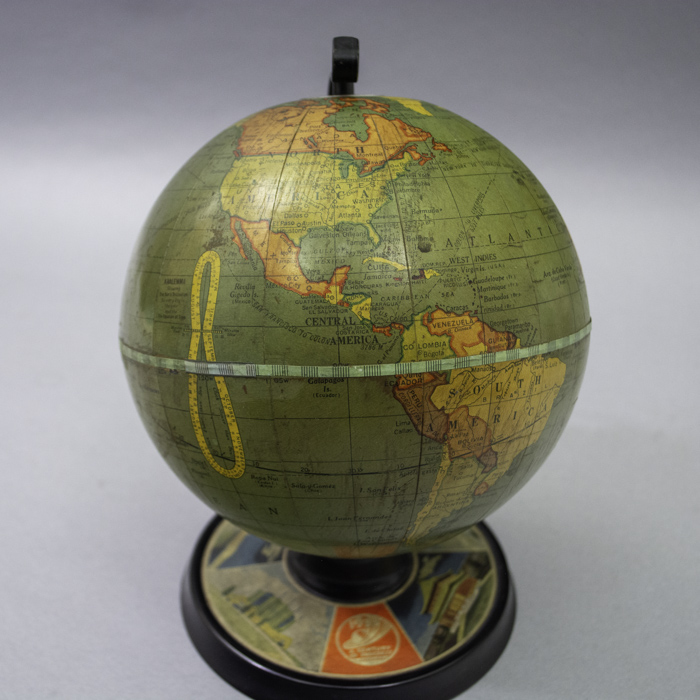
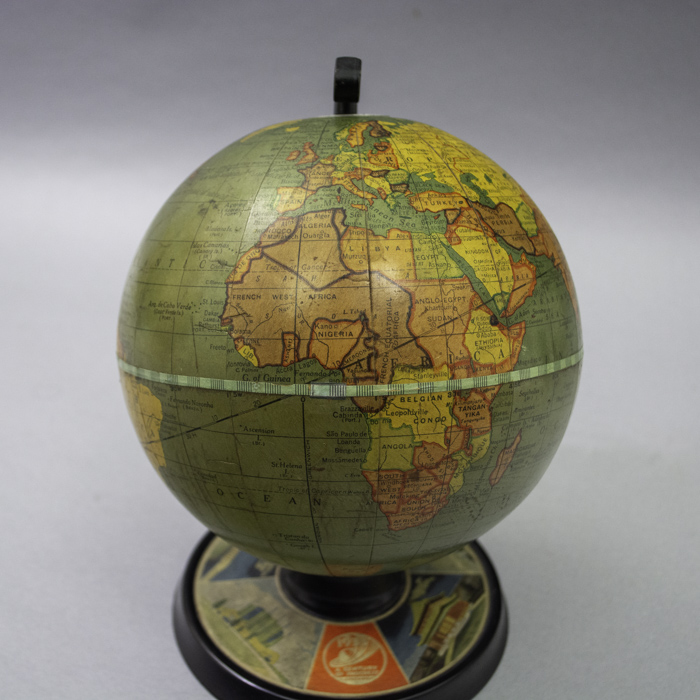
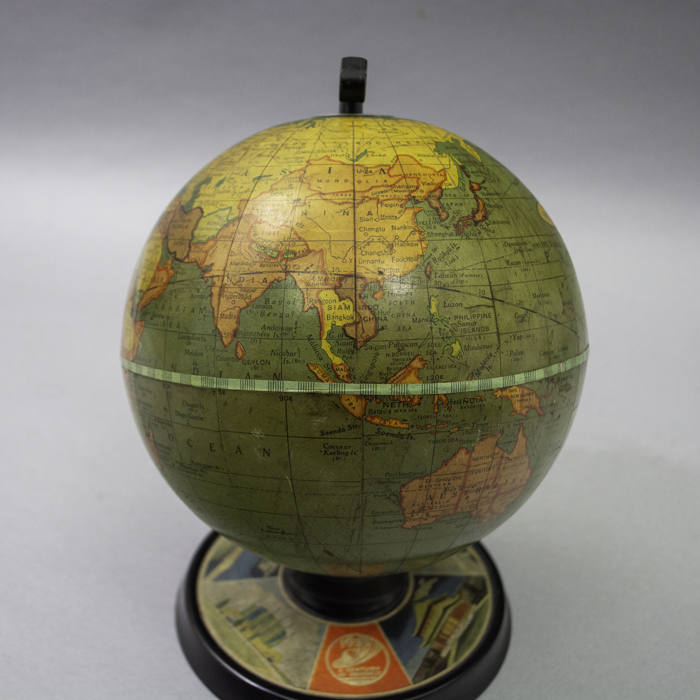
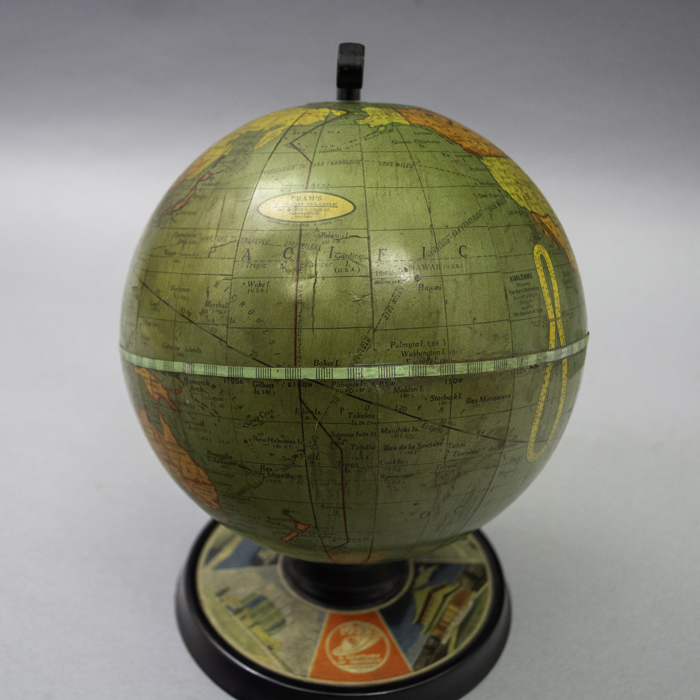
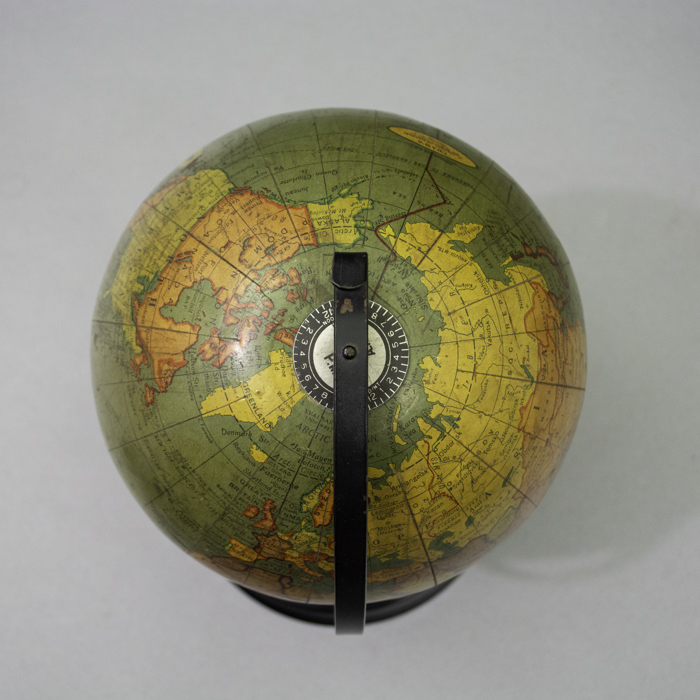
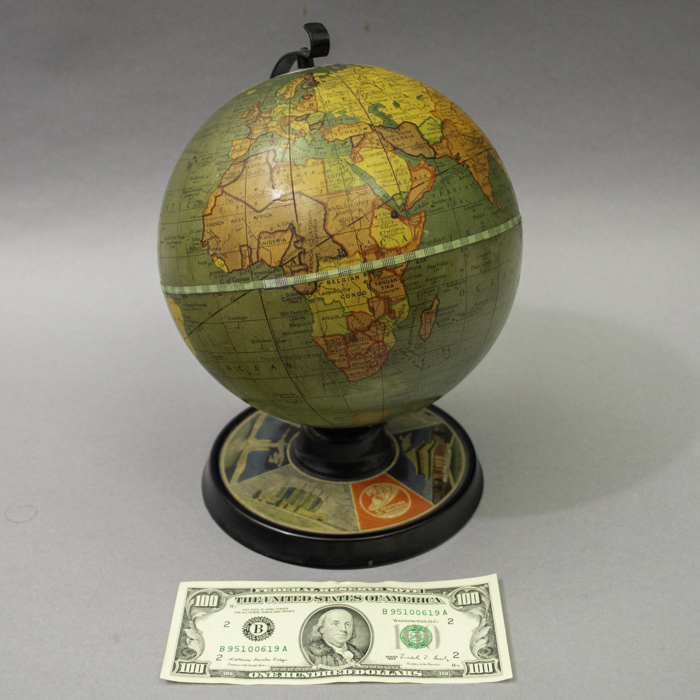
The cartography provides a snapshot of the world during a period of significant territorial shifts. For example, “Chosen (Korea) (Jap)” is so named reflecting the formal Japanese annexation from 1910 to 1945. Central Europe reflects the post-WWI landscape, showing Czechoslovakia (post 1918) and a unified Poland (realized circa 1920s to early 1930s). The city of Leningrad is clearly marked within the borders of the U.S.S.R. dating the globe after 1924. Palestine is shown, indicated a date before 1948. The globe includes a prominent yellow analemma in the Pacific Ocean, used to calculate the sun’s declination and the equation of time.
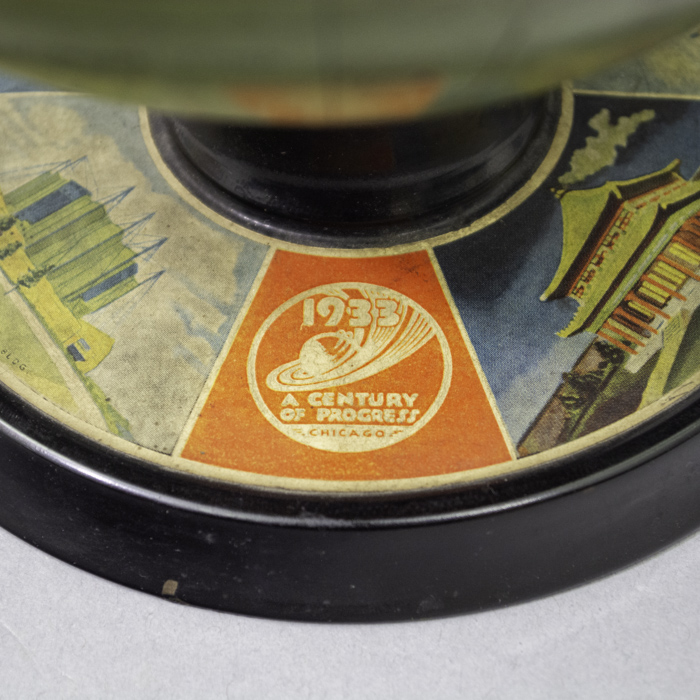
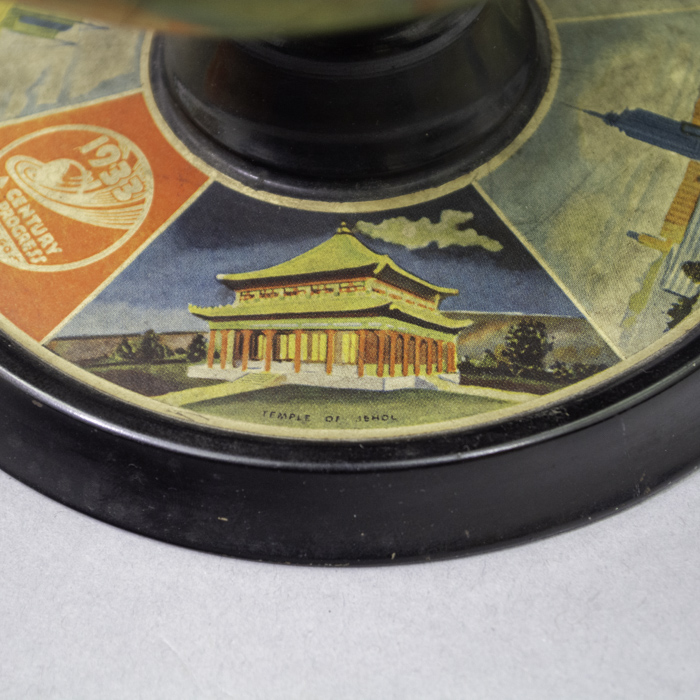
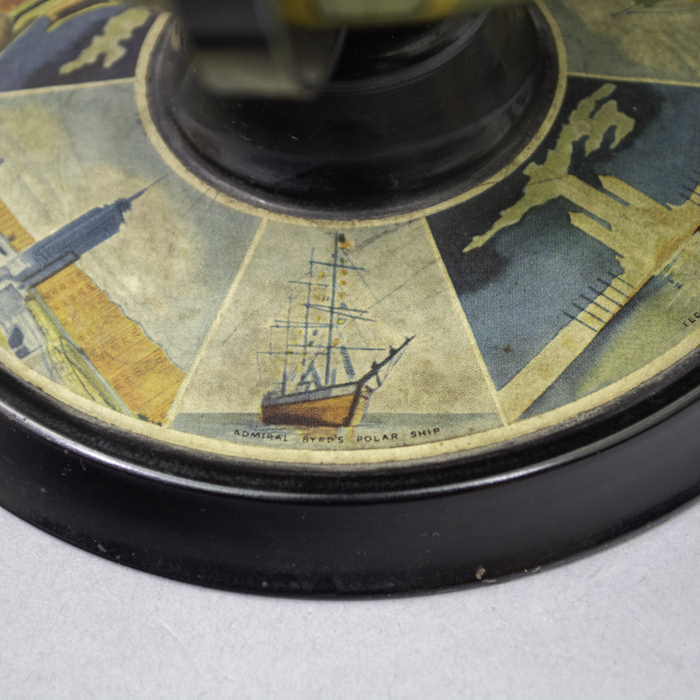
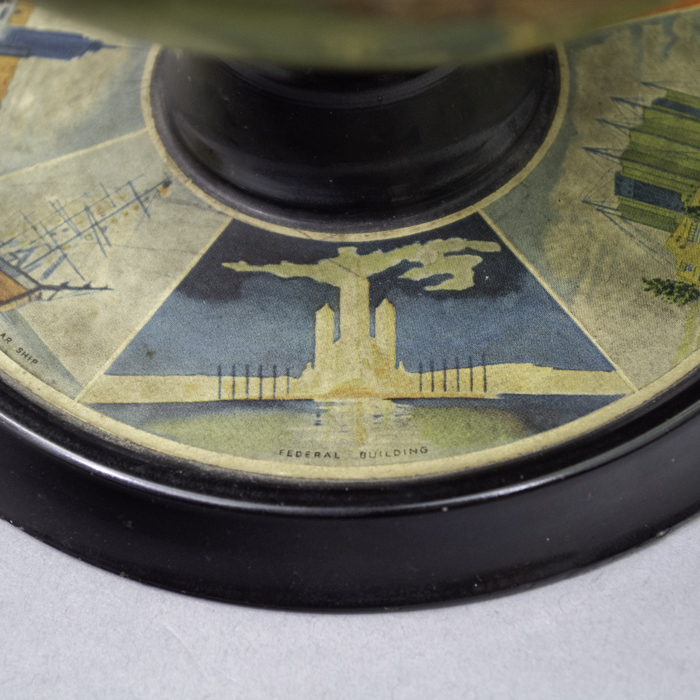
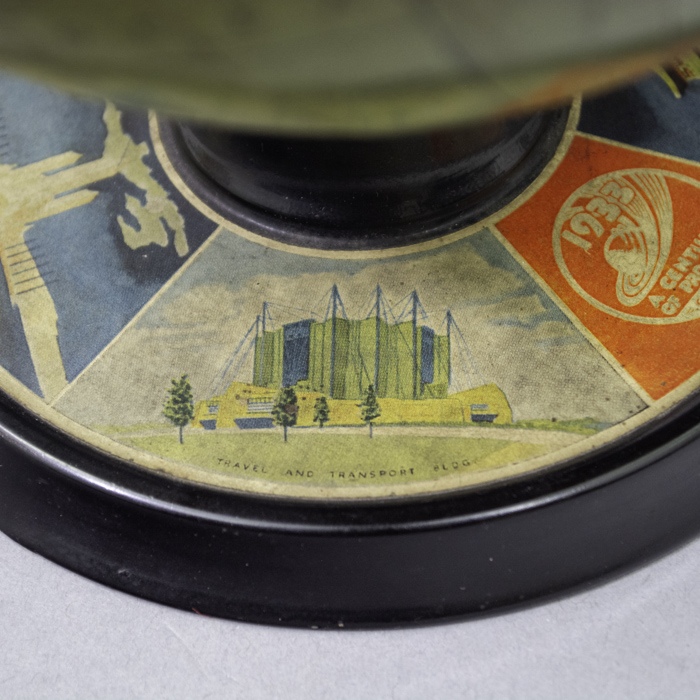
During the early twentieth century, the George F. Cram Company and other American globe makers utilized major international trends and events – in this case the Chicago World’s Fair — to reach new audiences, specifically targeting students and young people. This globe served as an educational geographical souvenir. It enabled visitors to the Fair to bring home a global vision that made the complex geopolitical landscape of the period between the world wars accessible to schoolchildren. While the 1893 World’s Fair announced America’s entry onto the world stage, the 1933 Century of Progress International Exposition promoted the nation as an established powerhouse capable of leading the global economy out of the Great Depression. The 1933 Fair shifted focus from national government displays to massive corporate dominance. Major corporations like General Motors, Sears, and Havoline built their own impressive pavilions to showcase their global reach. The fair’s motto, “Science Finds, Industry Applies, Man Conforms,” explicitly framed America as a prime innovator for the world’s future industries.
The George F. Cram Company, originally a producer of maps and atlases in the 19th century, emerged in the 20th century as one of the leading American globe makers. The company was founded by George Franklin Cram (May 20, 1842 – March 24, 1928). The George F. Cram Company continued even after George F. Cram sold his interest upon retirement in 1920 to the National Map Company. Read more about the George F. Cram Company of globe makers in our Guide to Globe Makers.
This exceptional globe is a notable inclusion in our reserved George Glazer Gallery Special Collection of American globes, representing World’s Fair globes as a specific subgenre of specialty and novelty globes. It represents and promotes the core themes of Chicago’s Century of Progress, symbolizing American internationalism and the country’s emergence as a global economic power represented by its corporations in a variety of fields including manufacturing and retail.
This globe is quite rare, particularly when found in such fine condition. It possesses significant crossover appeal, attracting collectors of both antique cartography and World’s Fair memorabilia. While standard 12-inch Cram globes from this era are more common, the 7-inch novelty Fair edition, with its unique pictorial base with images of sites and attractions of the Fair, is superior for its thematic depth.
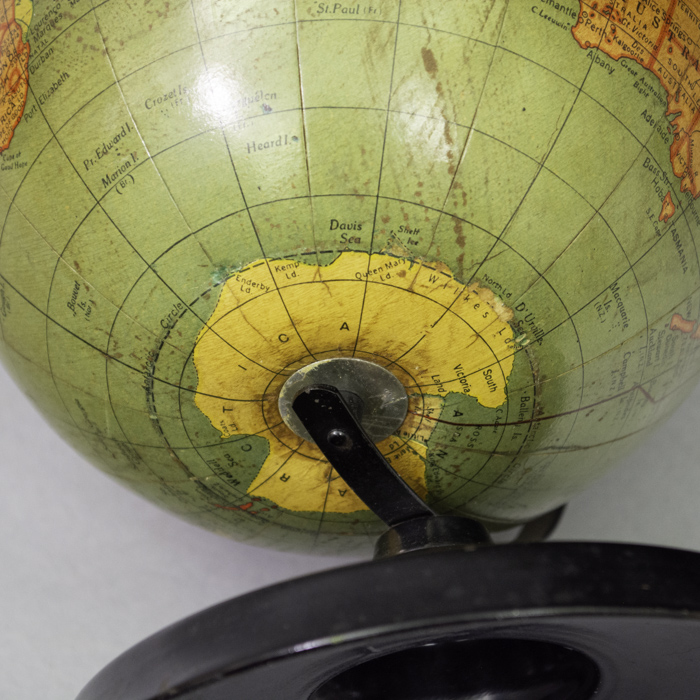
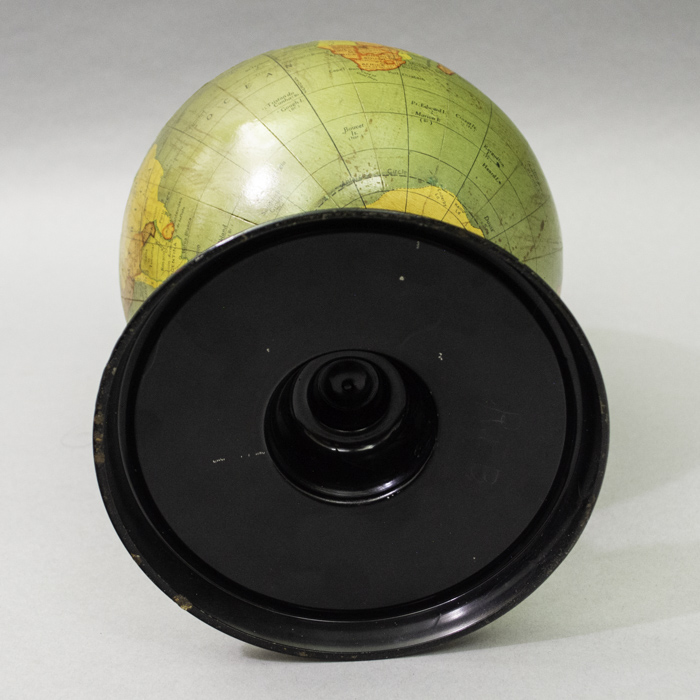
Condition: Globe and applied paper disc to stand generally very good with the usual overall light toning, wear, handling. Few repairs and replacements to small sections of equator tape. Base well-preserved with only light oxidation, handling, abrasions, tiny indentations.
References
“A Century of Progress Exposition Records.” Chicago Public Library, Special Collections.
Cram’s Universal Terrestrial Globe. Indianapolis: The George F. Cram Co., c. 1934.
Danzer, Gerald. “George F. Cram and the American Perception of Space.” Chicago History 13, no. 1 (1984): 32-46.
George Glazer Gallery Archives. “Cram Terrestrial World 12-Inch Table Globe.” Accessed March 4, 2026. https://www.georgeglazer.com/wpmain/product/globe-american-cram-terrestrial-world-12-inch-table-globe-red-ocean-indiana-early-1950s/.