Description
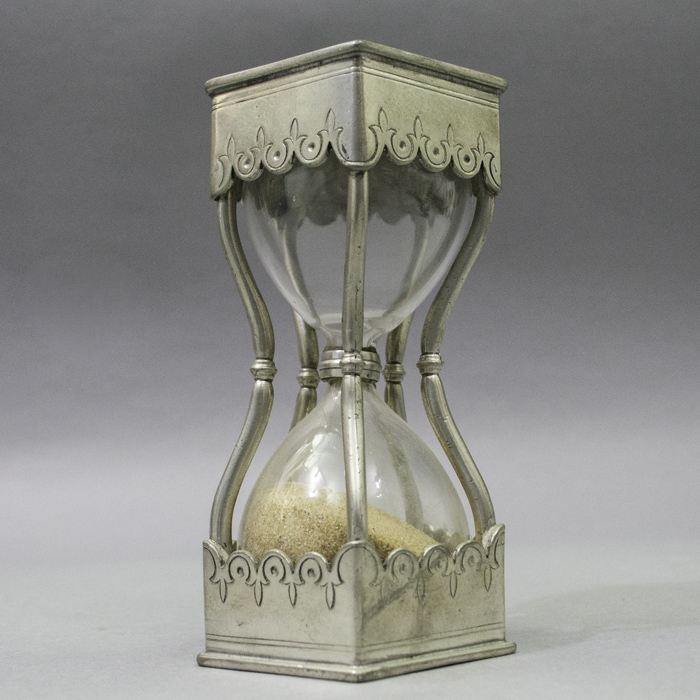
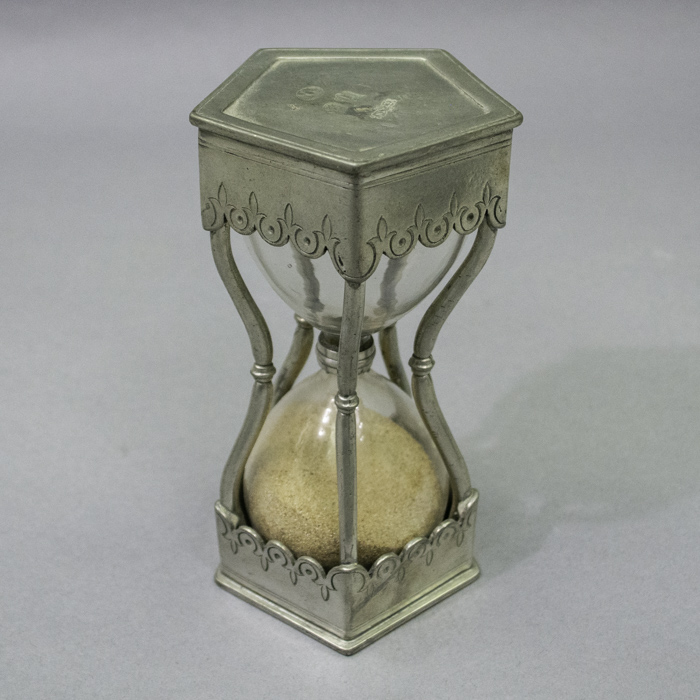
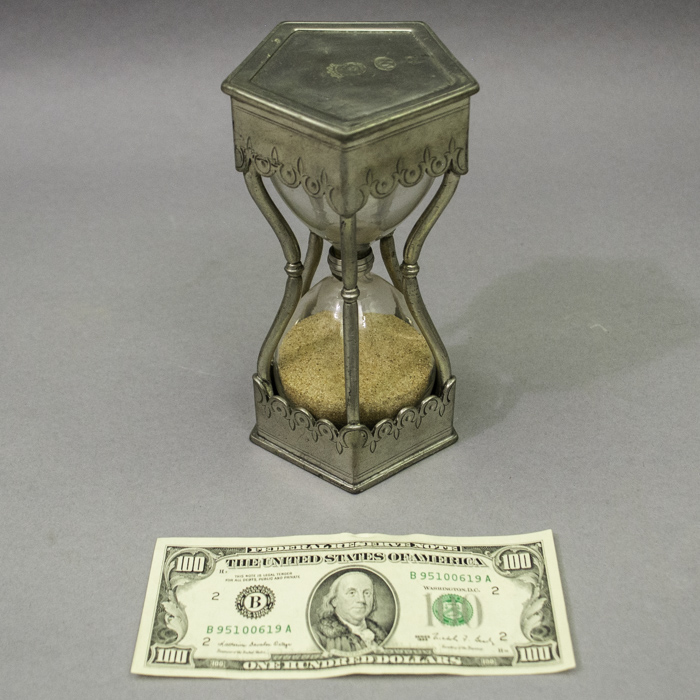
The invention of the hourglass is attributed to an 8th-century monk in Chartres, France, with the marine sandglass appearing as early as the 14th century. In earlier examples the bulbs were connected with a material such as putty or a hardened wax, bound in leather, linen or string. From about 1720, the two bulbs were welded together over a brass bead drilled with a hole, often still bound in leather. From around 1760, the glass was blown in one piece (with the sand inserted in the cooled end before sealing it). Ships would use the glasses to measure time at sea on a given navigational course. The invention of clocks and watches largely superseded the practical need for hourglasses.
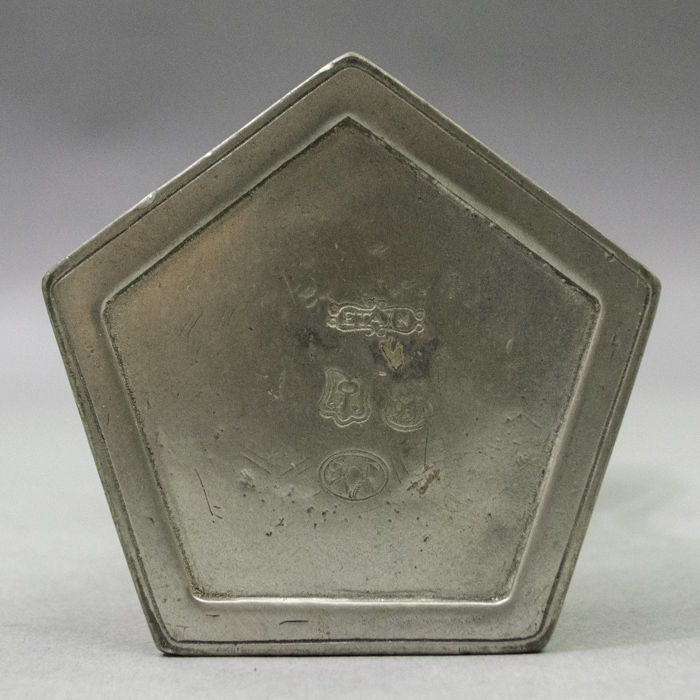
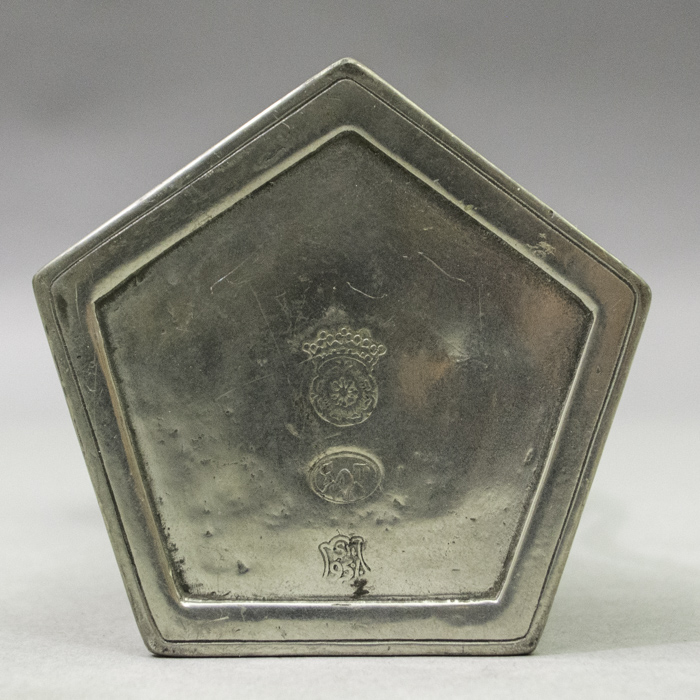
Condition: Very good overall with light oxidation to metal.
References:
“Marine Sandglass.” Wikipedia. 26 March 2015. http://en.wikipedia.org/wiki/Marine_sandglass (24 April 2014).
Pope-Hennessey, John et al. The Encyclopedia of Antiques. New York: Greenwich House, 1982. p. 298.