George Morland (1763-1804) (after)
J. Morris (engraver)
Wood-Cock & Pheasant Shooting
London: c. 1802
Hand-colored etching with mezzotint
13.25 x 14.5 inches, plate mark
14.5 x 16 inches, overall
Sold, please inquire as to the availability of similar items.

Wood-cock & Pheasant Shooting
Etching and mezzotint after George Morland
Etching and mezzotint after George Morland
This item is sold. It has been placed here in our online archives as a service for researchers and collectors.
- Please inquire as to the availability of similar items currently in stock, or use the navigation bar above to browse our site for currently available items.
- Find guidelines for the use of images from georgeglazer.com.
- To see more archived items, view our directory.
- Find information about selling your art and antiques.

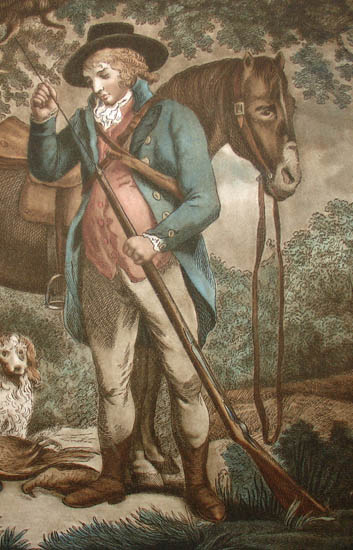
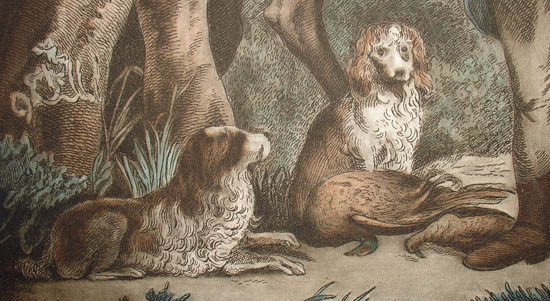
A young hunter cleans his musket under a tree, standing beside his horse and two hunting dogs. At his feet are his catch of a wood-cock and pheasant.
George Morland was a British artist in the first rank of sporting and rural genre artists of the Georgian era. His popularity in his own day was ensured by the publication of many prints after his pictures -- in all, 420 engravings of Morland’s work by 74 English engravers are known to exist, perhaps a record in British art. Morland first exhibited his works at the Royal Academy at the age of 15. His pictures are characterized by picturesque nostalgia reminiscent of similar scenes painted by Dutch and Flemish artists of the 17th century. Morland’s father, mother and grandfather were all artists. He received his early training from his father and then was apprenticed to Philip Dawe. He first exhibited at the Royal Academy at age 15. In 1786, he married the sister of mezzotint engraver William Ward, who, a month later, married Morland’s sister. The two men were close professional associates as well, with Ward engraving much of Morland’s work. From that point on, Morland was a prolific producer of paintings of rural genre subjects; the constant demand for engravings of them made him financially successful. A colorful character, he was a heavy drinker and spent himself into debt, and through much of the 1790s moved from town to town to stay one step ahead of the bailiffs. Nevertheless, he continued to produce paintings – his brother’s books list 792 in the last eight years of his life, along with 1,000 drawings. When the creditors finally caught up with him in London in 1799, Morland was arrested and made to live in the debtors’ district. He paid the price for his profligate lifestyle, and by his late 30s was in poor health, and died at age 41. Morland’s paintings are found the world’s major museums, including the Wallace Collection and National Gallery in London, the Louvre and the Metropolitan Museum of Art in New York.
References:
Redgrave, Samuel. A Dictionary of Artists of the English School: Painters, Sculptors, Architects, Engravers and Ornamentists. London: Longmans, Green, and Col., 1874. pp. 283-284.
Williamson, George C., ed. Bryan 's Dictionary of Painters and Engravers. London: G. Bell and Sons: 1930. Vol. 3, pp. 369-370.