Carl Gustav Jablonsky (1756-1787) and Krüger (after)
Carl Gustav Jablonsky and
Johann F.W. Herbst (1743-1807) (editors)
Ludwig Schmidt et al. (engravers)
Natursystem aller bekannten in- und ausländischen Insecten: Schmetterlinge
[Natural History Survey of Insects, Including Related Foreign Ones: Butterflies]
Pauli/Reimer, Berlin: 1783-1804
Hand-colored engravings
8.25 x 10.25 inches, overall
7 x 8.75 inches, plate mark
Sold, please inquire as to the availability of similar items.

Insect Prints
After Carl Gustav Jablonsky
After Carl Gustav Jablonsky
This item is sold. It has been placed here in our online archives as a service for researchers and collectors.
- Please inquire as to the availability of similar items currently in stock, or use the navigation bar above to browse our site for currently available items.
- Find guidelines for the use of images from georgeglazer.com.
- To see more archived items, view our directory.
- Find information about selling your art and antiques.
 |
 |
 |
 |
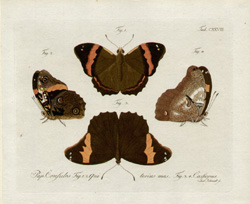 |
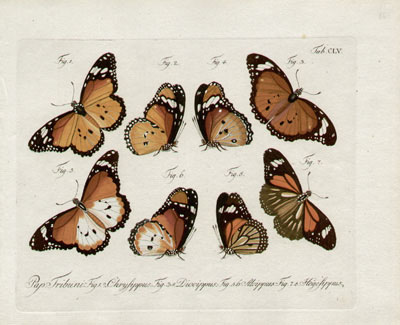
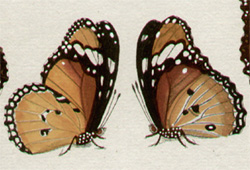
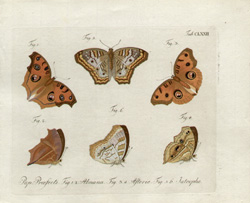
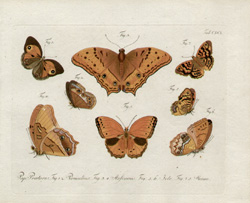
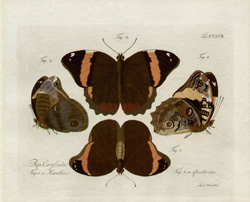
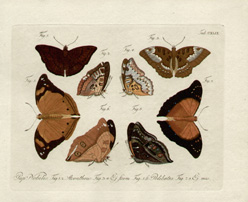
Series of colorful natural history prints from a major entomological work on exotic and European butterflies, originally published with 328 plates. They were produced in the Age of Enlightenment, when various animal species were first classified in accordance with the system developed by Linneaus. Butterflies and other natural specimens were illustrated in hand-colored print sets for biologists, as well as for aristocrats interested in learning about the latest discoveries of flora and fauna. These plates combine scientific accuracy and a sophisticated aesthetic sense, with artistic arrangements of the animals highlighting their natural shapes, colors and decorative patterns.
Carl Gustav Jablonsky was a naturalist who also served as private secretary to the Queen of Prussia. He edited the first two volumes of his major work on butterflies; the remaining nine volumes were edited by Johann F.W. Herbst, a German naturalist and entomologist, after Jablonsky's untimely death at age 31. Jablonsky and Krüger of Berlin designed most of the plates. Jablonsky also began the first complete survey of coleoptera, an order of insects including beetles, borers, weevils and fireflies, a project also taken over by Herbst and published between 1785 and 1806.
References:
"Recent Acquisitions in NCSU Librairies' Special Collections." NCSU Librairies Special Collections. 13 February 2004. http://www.lib.ncsu.edu/archives/exhibits/newbooks99 (22 March 2004).