The Rev. Ferdinand Cartwright Ewer, D.D. (1826-83) (surveyor and cartographer)
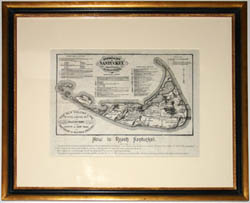
Historical Map of Nantucket
The Old Colony Line, Boston and New York: c. 1895
Woodblock print
11.25 x 14.75 inches, sight size
20.75 x 24.25 inches, framed
Sold, please inquire as to the availability of similar items.

Historical Map of Nantucket by Ewer
Woodblock Print, c. 1895
Woodblock Print, c. 1895
This item is sold. It has been placed here in our online archives as a service for researchers and collectors.
- Please inquire as to the availability of similar items currently in stock, or use the navigation bar above to browse our site for currently available items.
- Find guidelines for the use of images from georgeglazer.com.
- To see more archived items, view our directory.
- Find information about selling your art and antiques.

 |
 |
 |
 |
 |
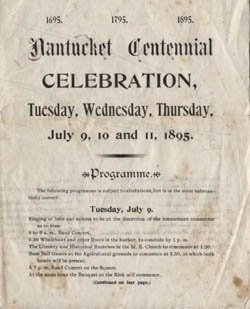 |
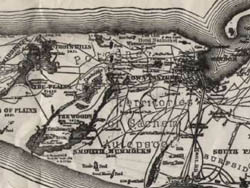
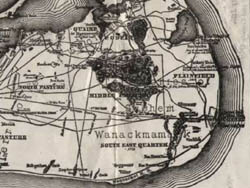
Broadside advertisement for The Old Colony Line for direct ship transportation to Nantucket, incorporating Reverend F.C. Ewer’s historical map. An earlier folio version of this map was published in 1869. Ewer was a surveyor who graduated from Harvard, joined the 1849 Gold Rush and later became a minister after a barroom discussion in a California mining camp led him to recommit himself to Christianity.
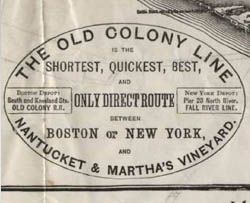
To promote its cruise line business, the Old Colony Line issued Ewer maps in a variety of formats. This example shows “The Shortest, Quickest, Best, and Only Direct Route Between Boston or New York, and Nantucket and Martha’s Vineyard.” Although usually issued as a fold-out map in a guide book to Nantucket, this particular map was separately issued for the Nantucket Centennial Celebration, July 9-11, 1895, as a self-folding pamphlet. The program for the centennial and related information are on the back of the map.
Ferdinand Cartwright Ewer was born in Nantucket, but spent most of his childhood elsewhere before returning to Nantucket at age 13, where he remained until entering Harvard University at age 18. After graduating he joined the California Gold Rush of 1849 in San Francisco, working briefly in a surveyor's office drafting maps until landing a job as a newspaper editor. He remained in the newspaper business in various capacities over the next several years, when a barroom conversation caused him to recommit himself to Christianity and resolve to become a clergyman. After a period of self-study, he passed his examinations and was ordained as an Episcopal priest in 1858. He became a popular preacher in San Francisco, and his church reluctantly allowed him to resign two years later when he decided to return to the Northeast. He eventually became rector of Christ's Church in New York City. An independent and articulate thinker, he followed his convictions, even when it meant taking controversial positions. He preached that science, even aspects of Darwinism, were not necessarily incompatible with religious revelation. He also became involved in the passionate debate within the Anglican Church about incorporating more "Catholicity," which caused him to leave his post at Christ's Church and establish the St. Ignatius of Antioch Episcopal Church, also in New York City, where he remained until his death.
References:
Congdon, Charles Taber. "Memoir of the Reverend Ferdinand Cartwright Ewer, S.T.D." from Sanctity and Other Sermons by the Rev. Ferdinand Cartwright Ewer, S.T.D. New York: E. & J. B. Young & Co, 1884. Project Canterbury. pp xxvii-lxxxiii. http://anglicanhistory.org/usa/fcewer/memoir.html (12 January 2006).
"History of St. Ignatius' Church." St. Ignatius of Antioch Episcopal Church. 6 january 2006. http://www.saintignatiusnyc.org/history.htmn (12 January 2006).