Home Libraries
The 17th century was an era of constant new information about the mapping of the world and the flora, fauna and native peoples of these faraway places. Wealthy Europeans kept up with the latest discoveries by purchasing colorplate books by subscription, and kept them in an elegant room designated as the library. Over the centuries, such works have entered the marketplace when the
|
 |
 |
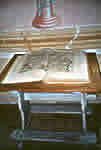 (above) An atlas sits on a stand in a Swedish library. It was produced by the Blaeu family, who were among the greatest cartographic publishers during the golden age of Dutch map making.
 |
|
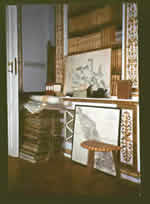
Wealthy Swedish collectors kept their books, prints and maps in private libraries such as the ones pictured here. |
|
contents of houses were sold, and those are the prints that are galleries like ours sell to contemporary collectors. In the historic houses of Sweden, some of these home libraries and their contents have been preserved. |
 |
 |
 |
Contents
Next -> |
|
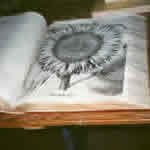
A bound volume of botanical prints by Basilius Besler from his massive landmark
work, Hortus Eysttensis, photographed in another Swedish home (above left).
Published in an edition of 300 in 1613, this work is considered one of
the greatest botanical books ever created. Ironically, the gardens in Eichstätt,
Germany, that Besler documented were destroyed by invading Swedish troops
in 1634. The set shown above was left uncolored. Other owners had their
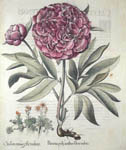
Besler prints hand-colored, see
examples on our web site (above center). |
Leather book sets and antique library furniture are available on our web site in the Decorating the Home Library section. |


