John Frederick Herring, Sr. (1795-1865) (after)
Charles Hunt (engraver)
Portraits of British Racehorses
Hand-colored engravings
18.75 x 22.75 inches, overall, each
22.5 x 26 inches in Hogarth ebonized frames
Spaniel, The Winner of the Derby Stakes at Epsom, 1831
S. & J. Fuller, London: August 15, 1831
15 x 19.5 inches, plate mark
12.5 x 17 inches, image
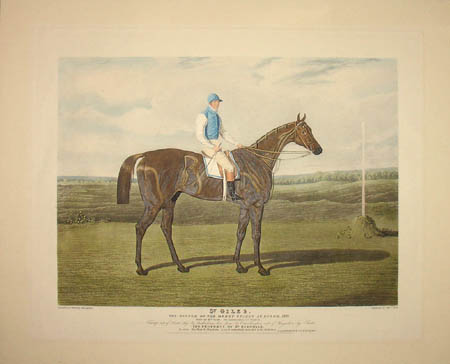
St. Giles. The Winner of the Derby Stakes at Epsom, 1832
S. & J. Fuller, London: August 12, 1832
15.5 x 19.25 inches, plate mark
15.5 x 17 inches, image
Sold, please inquire as to the availability of similar items.

Pair of Portraits of British Racehorses
After John Frederick Herring, Sr.
After John Frederick Herring, Sr.
This item is sold. It has been placed here in our online archives as a service for researchers and collectors.
- Please inquire as to the availability of similar items currently in stock, or use the navigation bar above to browse our site for currently available items.
- Find guidelines for the use of images from georgeglazer.com.
- To see more archived items, view our directory.
- Find information about selling your art and antiques.
 |
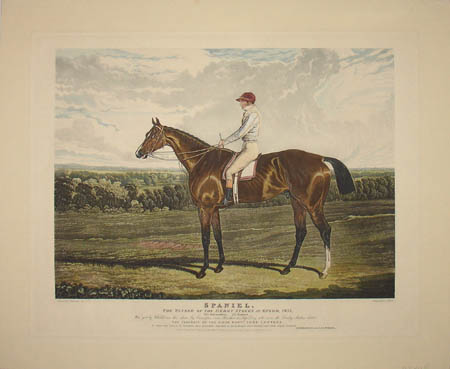 |
Pair of portraits of important 19th century British racehorses, winners of the Derby Stakes at Epsom, in 1831 and 1832. The 1831 winner, Spaniel, stands alert, sleek and glowing in a sunlit field, his jockey sitting astride his back, the sun casting a long shadow. St. Giles, who won in 1832, is similarly posed with jockey William Scott.
Portrait paintings of champion racehorses were a popular genre in British art from the late 18th Century through mid 20th century. They were frequently issued as prints as well. Also popular were British horse prints of steeplechase races and foxhunting, some of which were satirical showing the follies of wealthy aristocrats in their weekend country house pursuits. Racehorse portraits, however, tended to be straight forward documentation of the horses, expertly and majestically rendered, together with their jockeys done to real likeness, and including statistics of each horse’s breeding, owners, and winnings.
John Frederick Herring Sr. was an English sporting and equestrian painter. It is said that before becoming an artist, he drove a stagecoach. Whether or not this is true, it is evident from his paintings that he was deeply familiar with horses, their posture and personalities, and the specific details of their surroundings. He specialized in painting English thoroughbred racehorses and farmyard scenes such as these, and they were frequently made into prints. His son, J.F. Herring, Jr., continued the family tradition, painting similar horse and sporting scenes.
Charles Hunt was a British engraver of horse and sporting subjects active during the 19th century. He came from a family of engravers and was noted for his fine engravings after Pollard, Alken, Herring and other painters working in the genre.
Inscription lower margin, Spaniel: Spaniel, The Winner of the Derby Stakes at Epson, 1831, 105 Subscribers -- 23 Started. Was got by Whalebone, his dam by Canopus, own Brother to Lap Dog who won the Derby Stakes, 1826. The Property of the Right Hon'ble Lord Lowther, To whom this Print is by Permission most Respectfully Dedicated by his Lordship's most Obedient and much obliged Servants, J.F. Herring and S. & J. Fuller, London. Published Aug't. 15, 1831 by S. & J. Fuller, at their Sporting Gallery, 34, Rathbone Place. Painted by J.F. Herring, Doncaster. Engraved by C. Hunt.
Inscription lower margin, St. Giles: St. Giles. The Winner of the Derby Stakes at Epsom, 1832. Rode by William Scott. 101 Subscribers, 22 Started. [illegible] Tramp out of Arcot Lass by Androssen her dam by Cramlington out of Floyerkin by Stride. The Property of Mr. Ridsdale, To Whom this Print by Permission is most respectfully dedicated by the Publishers, J.F. Herring & S. & J. Fuller. London Published August 12th 1832 by S. & J. Fuller at the Sporting Gallery, 34, Rathbone Place, and by J.F. Herring Six Mile bottom near Newmarket. Painted by J.F. Herring, Newmarket. Engraved by Chas. Hunt.
References:
Bénézit, E. Dictionnaire critique et documentaire des Peintres, Sculpteurs, Dessinateurs et Graveurs. France: Librairie Gründ, 1966. Vol. 5, p. 30 (Hunt).