Johann Christoph Volckamer (1662-1744) (editor)
Dehne, F.P. Lindner, L. Glotch, et al. (engravers)
Botanical Prints
from Nurnbergische Hesperides
Nuremberg: 1708-1714
Hand-colored engravings
14 x 9 inches
Sold, please inquire as to the availability of similar items.
To see other Volckamer prints on our site, use our site search engine.

Volckamer Flowers
from Nurnbergische Hesperides
from Nurnbergische Hesperides
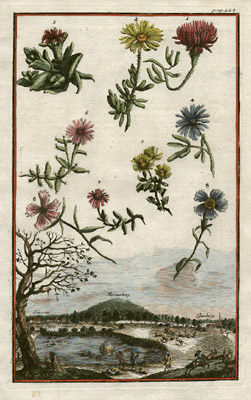
Title in Ribbon: [Flowers] |
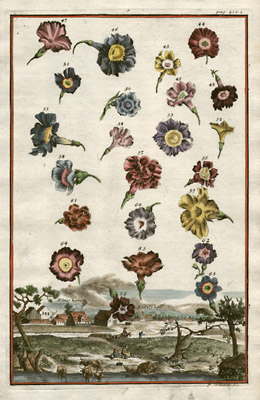
Title in Ribbon: [Flowers] |
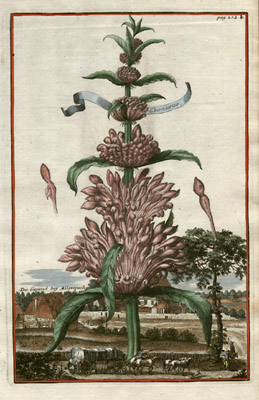
Title in Ribbon: Leonurus |
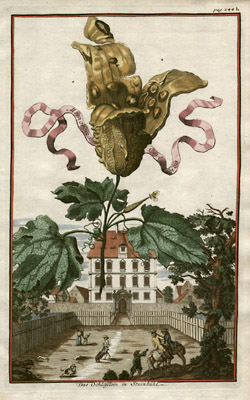
Title in Ribbon: Momordica Ceylandica |
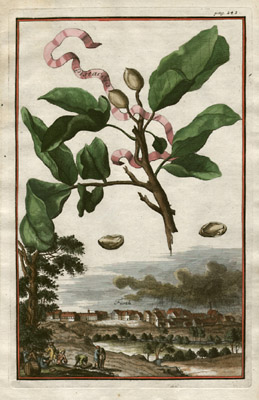
Title in Ribbon: Pistaccia [Pistachio] |
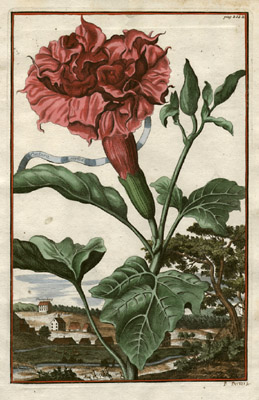
Title in Ribbon: Datura Ægyptia |
Prints of citrus fruits, made during a time period in which it was fashionable among the aristocracy in Central Europe to grow these Mediteranean fruits despite the cold winter climate. Wealthy people built tall greenhouses or "orangeries" to shelter the trees during the winter, and had the plants moved outdoors in the summer. Volckamer's Nurnbergische Hesperides was originally issued in two volumes. The prints follow a distinctive format, in which prize varieties of citrus fruits in monumental scale float in the sky above bird's-eye views or the plants tower over Lilliputian landscapes of the formal gardens, palazzos and country houses where they were grown. The places shown are in Nuremberg and northern Italy, especially around Verona. Each specimen is decorated with a ribbon bearing its name. The prints were engraved by various artists.