Pierre Francois Hugues "d'Hancarville" (editor)
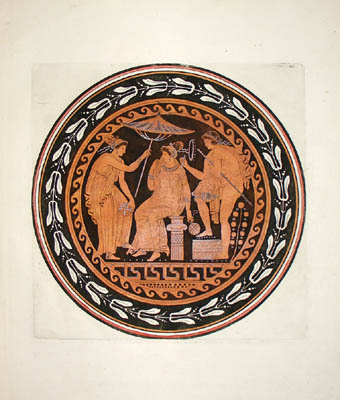
[Circular Study of a Vase, Pl. 45]
from Antiquites Etrusques, Greques et Romanes. Tirées du Cabinet de M. Hamilton, Enoye Extraordinaire de S.M. Britannique à la Cour de Naples
[Etruscan, Greek and Roman Antiquties. Taken from the Cabinet of Mr. Hamilton, British Envoy Extraordinaire to the Court of Naples]
Francois Morelli, Naples: c. 1766-77
Etching printed black on terra cotta colors with white and grey highlights
10.5 x 10.25 inches, platemark
18 x 14 inches, overall
Sold, please inquire as to the availability of similar items.

Hamilton's Vases Etching
Naples, 1766-67
Naples, 1766-67
This item is sold. It has been placed here in our online archives as a service for researchers and collectors.
- Please inquire as to the availability of similar items currently in stock, or use the navigation bar above to browse our site for currently available items.
- Find guidelines for the use of images from georgeglazer.com.
- To see more archived items, view our directory.
- Find information about selling your art and antiques.
 |
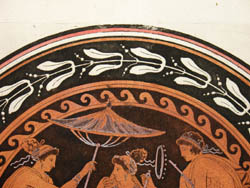 |
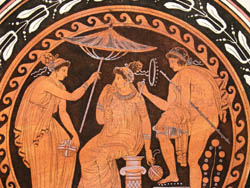
Etching from a series of prints illustrating Greek and Roman terra cotta vases in the collection of Sir William Hamilton. The prints in this work showed British and European audiences recent archaeological discoveries of the art of antiquity.
Sir William Hamilton (1730-1806) was a prominent collector and enthusiast of the arts and sciences at the height of the Age of Enlightenment. Born to an aristocratic Scottish family, he assembled one of the world's finest collections of Greek and Roman antiquities as British Envoy Extraordinaire to the two Sicilies from 1764-1800. Most of the antiquities he collected came from excavations in Southern Italy and Sicily, and he later sold the majority to the British Museum. In 1766, he watched the excavation of the Trebbia Tomb, and decided to produce accurate drawings of the vases found there. The glories of his vase collection were recorded in color-plate folios, which served as souvenirs for the great libraries of Grand Tour travelers and patrons, and provided inspiration to decorative art designers in England, such as Josiah Wedgwood. View a portrait of Hamilton by Sir Joshua Reynolds.
References:
Burgess, June. "Sir William Hamilton: a Scottish Neapolitan." IRC-CNR Napoli. http://www.irc.na.cnr.it/CI/26symp/hamilton.html (14 June 2002).
"Italy on the Grand Tour: Witness Ceremonies and Theater." J. Paul Getty Trust. 2001. http://www.getty.edu/art/exhibitions/grand_tour/t7_spectacle.html (14 June 2002).