
  |
|
Click on image to view enlargement. |
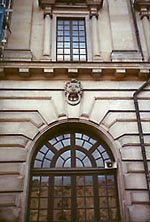
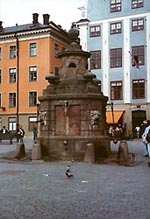
Shown right, a couple of Baroque architectural details inspired by classical sources that
caught my eye: a building facade with a lion head inset in the keystone of the arch over a
window, and a fountain in the heart of Stockholm.
 At the George Glazer Gallery, we have a selection of prints tracing the history of
architecture in continental Europe and England.
(See our Architectural Renderings.)
Frequently such prints were compiled in collections as source material, disseminating the
latest styles to architects in far-flung locations.
Views of Swedish country houses
from Suecia Antiqua et Hodierna
[Ancient and Modern Sweden] (left), a major 17th century
collection of engravings edited by Swedish Count Erik Dahlberg, show the magnificent buildings of
the aristocracy, a grand vision of Sweden during its period as a world power.
At the George Glazer Gallery, we have a selection of prints tracing the history of
architecture in continental Europe and England.
(See our Architectural Renderings.)
Frequently such prints were compiled in collections as source material, disseminating the
latest styles to architects in far-flung locations.
Views of Swedish country houses
from Suecia Antiqua et Hodierna
[Ancient and Modern Sweden] (left), a major 17th century
collection of engravings edited by Swedish Count Erik Dahlberg, show the magnificent buildings of
the aristocracy, a grand vision of Sweden during its period as a world power.
Our Volckamer prints (below left) show prize varieties of citrus fruits in monumental scale floating in the sky above bird's-eye views of the formal gardens, palazzos and country houses where they were grown. The engravings of Palladian facades in Vitruvius Britannicus (below center) influenced the spread of this style in England in the early 18th century. A century earlier, Bockler's engravings of fountains (below right) served as source material for designers. The architects and craftsmen of England, France, Germany and Italy were the style-setters for the rest of Europe in the 18th and 19th centuries, including Sweden. Pictured above left: Throughout Europe, the aristocracy built grand country estates, such as this one in England. Pictured above right: A building facade in Sweden (top) and a fountain in the heart of Stockholm (bottom). |
 |
||
 Volckamer prints on our web site.
 |
 British Country House Architectural Facades from Vitruvius Britannicus on our web site.
 |
 Bockler Baroque Fountain Designs on our web site. Bockler Baroque Fountain Designs on our web site. |
Contents
|